Lake Sturgeon
The lake sturgeon (Acipenser fulvescens) is a large freshwater fish of the Great Lakes, Hudson Bay and Mississippi basins, reaching about 2.7 meters. It is a living remnant of an ancient lineage.
The lake sturgeon (Acipenser fulvescens) is a large freshwater fish of the Great Lakes, Hudson Bay and Mississippi basins, reaching about 2.7 meters. It is a living remnant of an ancient lineage.
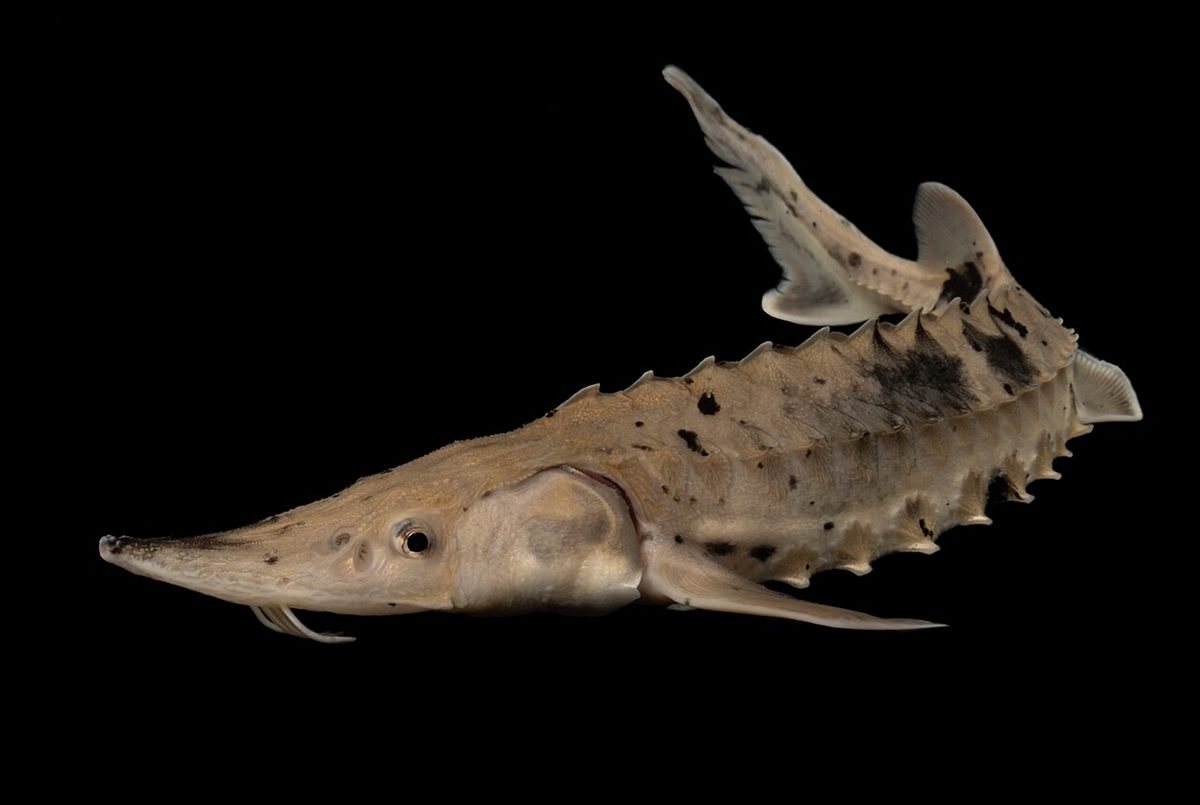
🧬 Field Guide Specimen: Open Lake Sturgeon in the CRV Science Field Guide to log the specimen, see its place among the Vertebrates lineages in the Cladogram Explorer, and test your recall in the Red List conservation game.
Slow and Long-Lived
Females may live more than a century, but do not breed until their twenties or later, and spawn only every four to six years. The slow pace makes the species vulnerable to overfishing.
From Nuisance to Rarity
In the 1800s lake sturgeon were so numerous that fishermen sometimes regarded them as a nuisance, and they were killed in large numbers. Harvest for caviar and smoked flesh nearly eliminated them from much of their range.
Recovery Efforts
Stocking, dam removal and protection of spawning rapids help the recovery. Tribes in the Great Lakes region have led restoration programs. See White Sturgeon.
Lake Sturgeon at a Glance
| Property | Value |
|---|---|
| Scientific name | Acipenser fulvescens |
| Kingdom | Animalia |
| Phylum | Chordata |
| Class | Actinopterygii |
| Order | Acipenseriformes |
| Family | Acipenseridae |
| Field Guide group | Marine and Freshwater Fish |
| Diagnostic feature (Field Guide) | Bottom-feeder of the Great Lakes with a toothless sucking mouth, four barbels, bony scutes, and a lifespan of over 150 years. |
| IUCN Red List status | Endangered (EN), assessed 2022 |
| Maximum length | About 2.7 meters |
| Spawning interval | Every 4 to 6 years for females |