Sea Lamprey
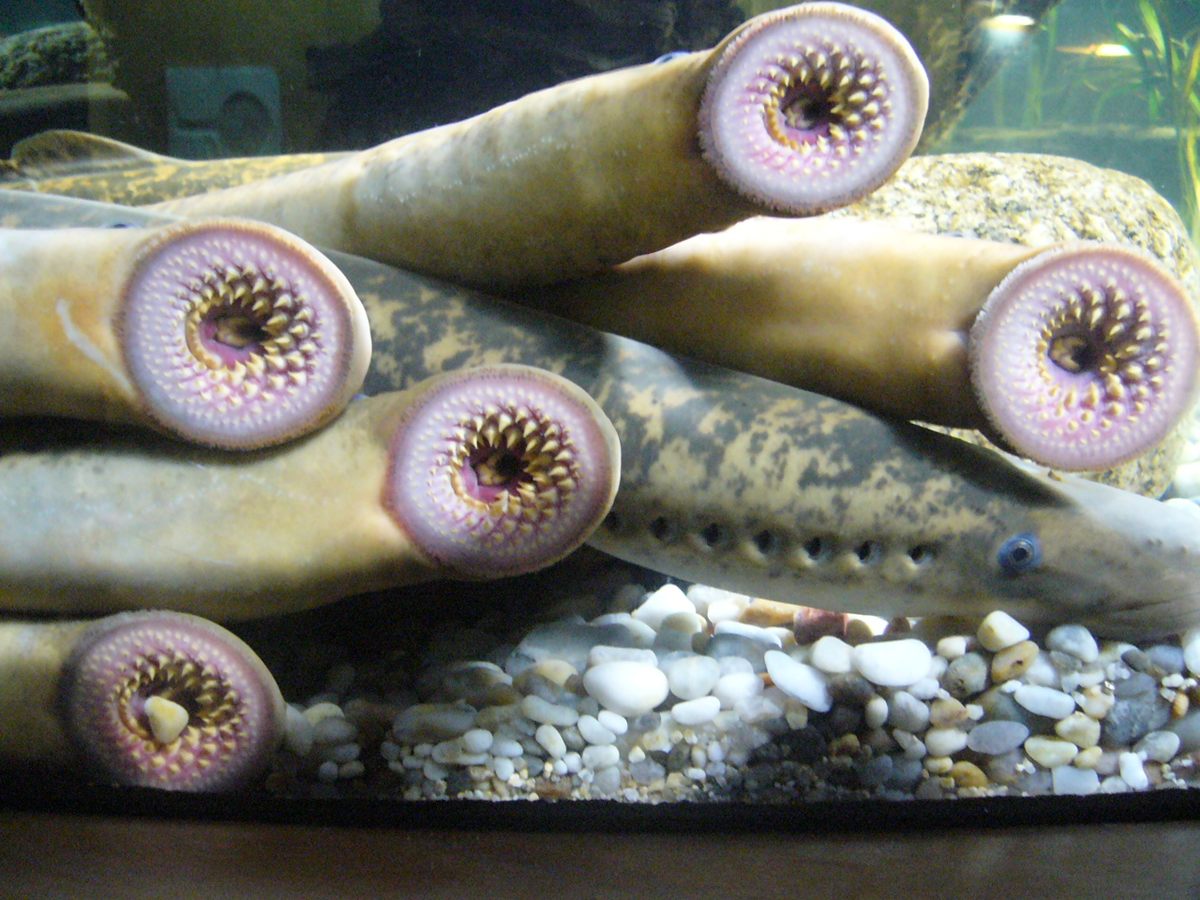
The sea lamprey (Petromyzon marinus) is a jawless, eel-like fish native to the North Atlantic, whose adults attach to other fish with a toothed sucker and feed on their blood. It invaded the Great Lakes of North America and devastated native fisheries.
The sea lamprey (Petromyzon marinus) is a jawless, eel-like fish native to the North Atlantic, whose adults attach to other fish with a toothed sucker and feed on their blood. It invaded the Great Lakes of North America and devastated native fisheries.
🧬 Field Guide Specimen: Open Sea Lamprey in the CRV Science Field Guide to log the specimen, see its place among the Vertebrates lineages in the Cladogram Explorer, and test your recall in the Red List conservation game.
A Parasite With a Sucker: How Does It Feed?
The oral disc is lined with rows of horny teeth and a rasping tongue. The lamprey cuts through the skin of its host and secretes an anticoagulant in its saliva. A single lamprey can kill many fish over its adult life.
Invasion of the Great Lakes
The Welland Canal opened a route around Niagara Falls, and sea lampreys reached Lake Erie in 1921 and Lake Superior by 1938. Lake trout and other species collapsed. Control since the 1950s has relied on a selective larvicide (TFM), dams and traps, coordinated by the Great Lakes Fishery Commission.
Life Cycle
Larvae (ammocoetes) live in stream sediment for several years, filter feeding. They then transform into adults and migrate to the sea or lake, return to rivers to spawn, and die. In its native range the species is not considered threatened.
Sea Lamprey at a Glance
| Property | Value |
|---|---|
| Scientific name | Petromyzon marinus |
| Kingdom | Animalia |
| Phylum | Chordata |
| Class | Petromyzontida |
| Field Guide group | Marine and Freshwater Fish |
| Diagnostic feature (Field Guide) | Eel-like body with a round sucking oral disc ringed by horny teeth, a cartilaginous skeleton, and seven gill pores; invasive parasite in the Great Lakes. |
| IUCN Red List status | Least Concern (LC), assessed 2024 |
| Class | Petromyzontida |
| Great Lakes arrival | Lake Erie by 1921 |