Nine-banded Armadillo
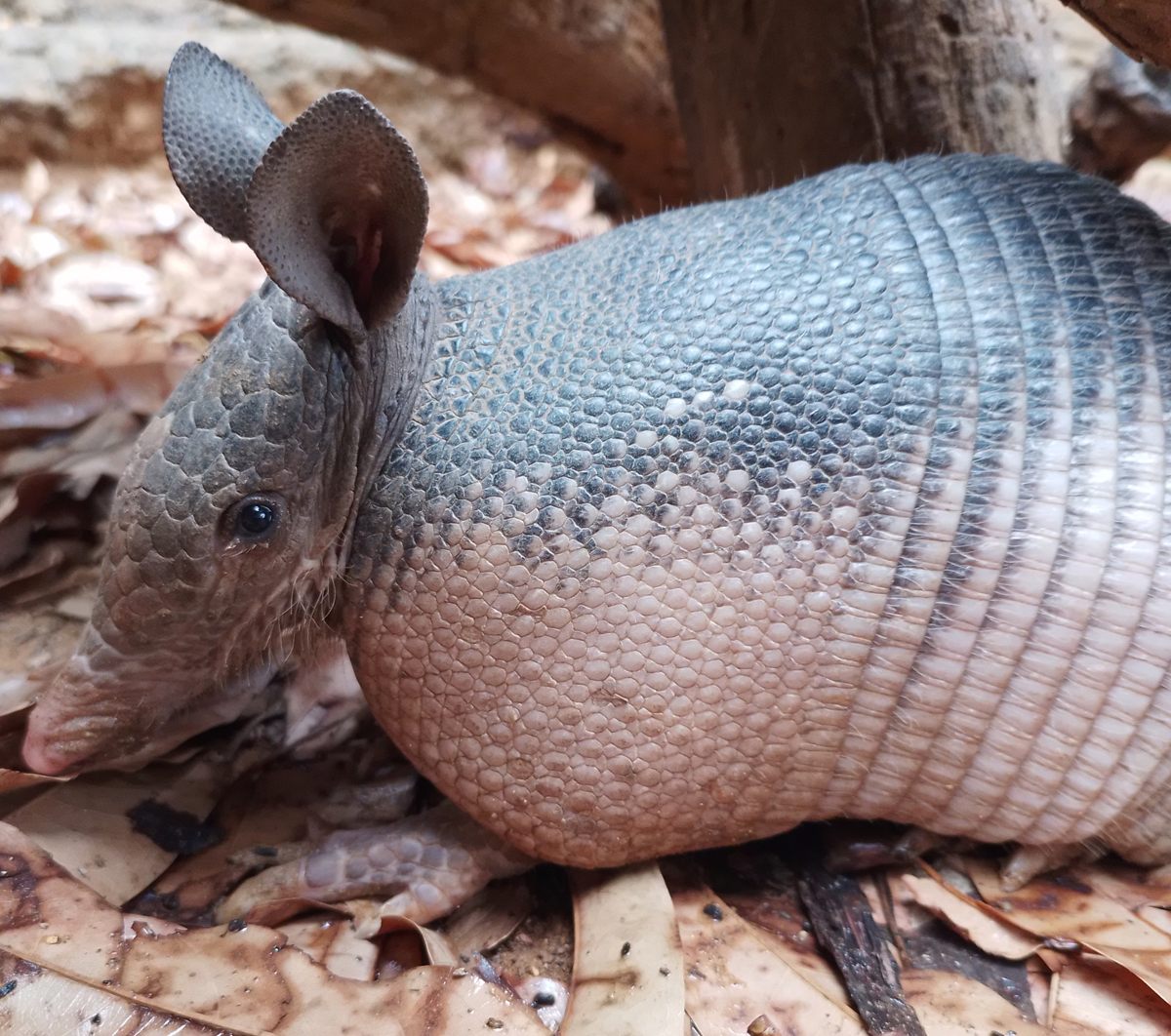
The nine-banded armadillo (Dasypus novemcinctus) is an armored mammal that has spread northward from South America into the southern United States. A mother nearly always gives birth to identical quadruplets, and the species carries the leprosy bacterium.
The nine-banded armadillo (Dasypus novemcinctus) is an armored mammal that has spread northward from South America into the southern United States. A mother nearly always gives birth to identical quadruplets, and the species carries the leprosy bacterium.
🧬 Field Guide Specimen: Open Nine-banded Armadillo in the CRV Science Field Guide to log the specimen, see its place among the Mammals lineages in the Cladogram Explorer, and test your recall in the Red List conservation game.
Identical Quadruplets: How Does One Egg Make Four?
A single fertilized egg splits into four embryos, a form of polyembryony. The young are genetically identical, and the strategy is rare among mammals. The female can also delay implantation of the embryo for several months.
A Reservoir for Leprosy
Armadillos are one of the few animals naturally infected with Mycobacterium leprae, and the bacterium grows well in their cool bodies. A few people in the southern United States have been infected after contact. The disease is treatable with antibiotics. See Bacteria.
Armor and Habits
The bony plates (osteoderms) form a shell, but the animal cannot roll up completely. It digs for insects and can hold its breath for minutes, or inflate its gut with air to cross streams.
Nine-banded Armadillo at a Glance
| Property | Value |
|---|---|
| Scientific name | Dasypus novemcinctus |
| Kingdom | Animalia |
| Phylum | Chordata |
| Class | Mammalia |
| Superorder | Xenarthra |
| Order | Cingulata |
| Field Guide group | Mammals: Eutheria (Placentals) |
| Diagnostic feature (Field Guide) | Notable for obligate polyembryony and a natural leprosy reservoir. |
| IUCN Red List status | Least Concern (LC), assessed 2014 |
| Litter | Identical quadruplets |
| Group | Xenarthra |
See Also
- Bacteria — the leprosy bacterium
- Climate change — northward range expansion