Linnaeus's Two-toed Sloth
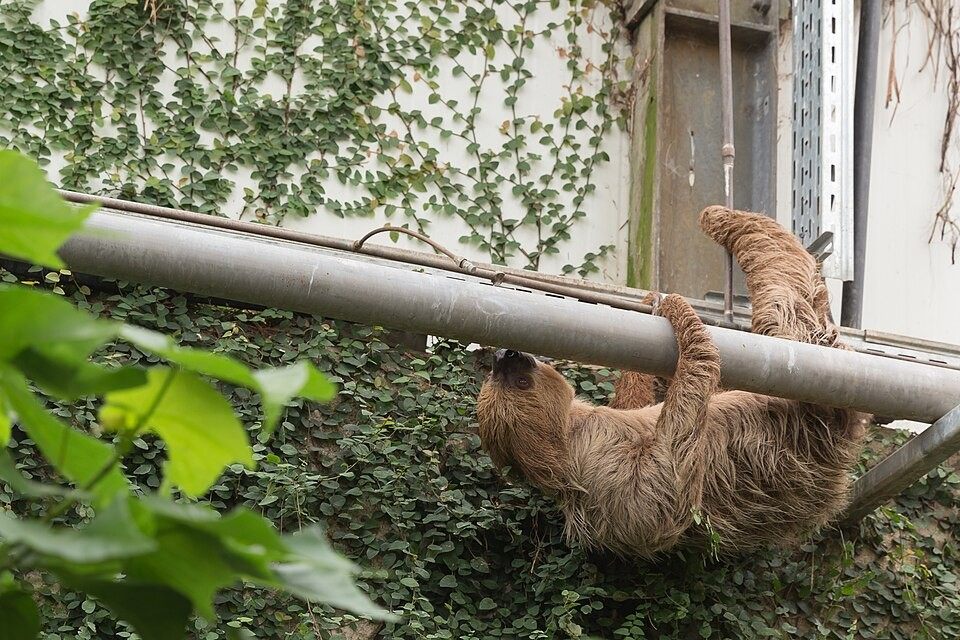
Linnaeus's two-toed sloth (Choloepus didactylus) is a slow-moving, tree-dwelling mammal of the rainforests of northern South America. It hangs upside down in the canopy and eats leaves.
Linnaeus's two-toed sloth (Choloepus didactylus) is a slow-moving, tree-dwelling mammal of the rainforests of northern South America. It hangs upside down in the canopy and eats leaves.
🧬 Field Guide Specimen: Open Linnaeus's Two-toed Sloth in the CRV Science Field Guide to log the specimen, see its place among the Mammals lineages in the Cladogram Explorer, and test your recall in the Red List conservation game.
Living Slowly: How Does a Leaf Diet Work?
Leaves provide little energy, so sloths have a low metabolic rate, a stomach with several chambers that ferments leaves for days and a body temperature that varies. They move slowly to conserve energy.
A Garden in the Fur
Algae grow in grooves in the sloth's hair, giving it a greenish tint that helps camouflage it. Moths, beetles and mites live in the fur. Once a week, sloths climb down to the forest floor to defecate, which is a risky trip.
Two Toes, Three Toes: Convergence
Two-toed and three-toed sloths are only distantly related and evolved their tree-hanging lifestyle independently. Both belong to Xenarthra with armadillos and anteaters. See Nine-banded Armadillo.
Linnaeus's Two-toed Sloth at a Glance
| Property | Value |
|---|---|
| Scientific name | Choloepus didactylus |
| Kingdom | Animalia |
| Phylum | Chordata |
| Class | Mammalia |
| Order | Pilosa |
| Family | Choloepodidae |
| Field Guide group | Mammals: Eutheria (Placentals) |
| Diagnostic feature (Field Guide) | Two syndactylous curved claws on forelimbs, slow suspensory locomotion, fur housing symbiotic green algae colonies. |
| IUCN Red List status | Least Concern (LC), assessed 2014 |
| Order | Pilosa |
| Diet | Leaves, fruit and flowers |
See Also
- Nine-banded Armadillo — a fellow xenarthran
- Aardvark — another slow, specialized mammal