Harpy Eagle
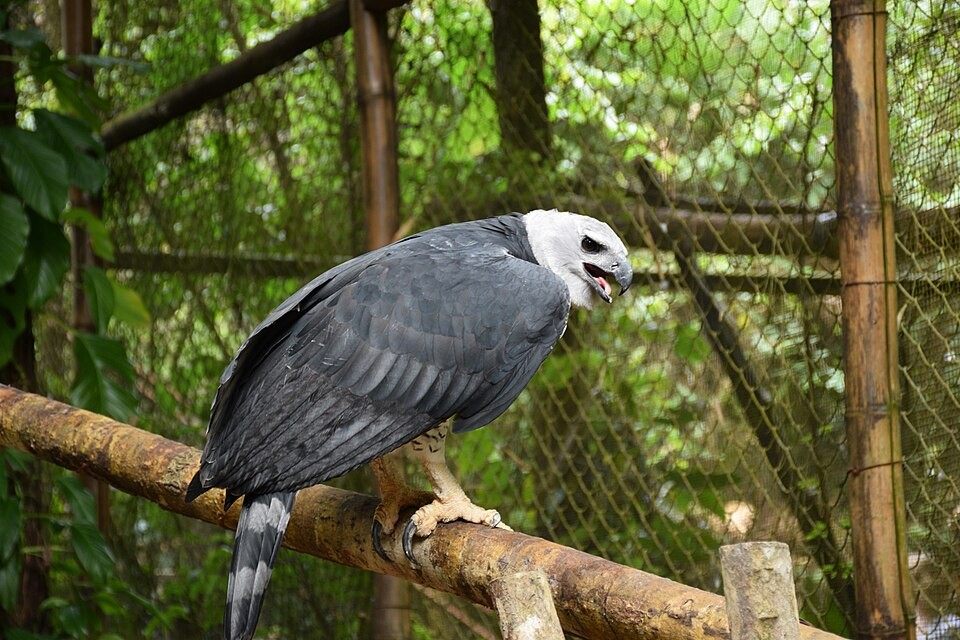
The harpy eagle (Harpia harpyja) is one of the largest and most powerful eagles in the world, a top predator of Central and South American rainforests. It hunts sloths and monkeys in the canopy with talons as big as a bear's claws.
The harpy eagle (Harpia harpyja) is one of the largest and most powerful eagles in the world, a top predator of Central and South American rainforests. It hunts sloths and monkeys in the canopy with talons as big as a bear's claws.
🧬 Field Guide Specimen: Open Harpy Eagle in the CRV Science Field Guide to log the specimen, see its place among the Reptilia lineages in the Cladogram Explorer, and test your recall in the Red List conservation game.
Built to Hunt in the Trees
Short, broad wings and a long tail let the eagle maneuver between branches. It grabs prey in its huge talons, the rear ones up to about 12 centimeters long, and carries it off to a perch. Facial feathers form a disc like an owl's that may help it hear prey.
A Slow Breeder
A pair raises a single chick every two to three years, and the young eagle depends on its parents for a long time. Because it reproduces so slowly, the loss of adults is hard to replace.
Forest Loss
The eagle needs large tracts of intact forest and big emergent trees to nest. Deforestation and hunting are the major threats. See Two-toed Sloth for a typical prey.
Harpy Eagle at a Glance
| Property | Value |
|---|---|
| Scientific name | Harpia harpyja |
| Kingdom | Animalia |
| Phylum | Chordata |
| Class | Aves |
| Order | Accipitriformes |
| Family | Accipitridae |
| Field Guide group | Reptilia: Aves (Birds) |
| Diagnostic feature (Field Guide) | Apex rainforest raptor, divided erectile occipital feather crest, massive talons up to 13 cm matching grizzly bear claws. |
| IUCN Red List status | Vulnerable (VU), assessed 2021 |
| Prey | Sloths, monkeys and other canopy animals |
| Breeding | One chick every 2 to 3 years |
See Also
- Linnaeus's Two-toed Sloth — typical prey
- Bald Eagle — a North American eagle