Numbat
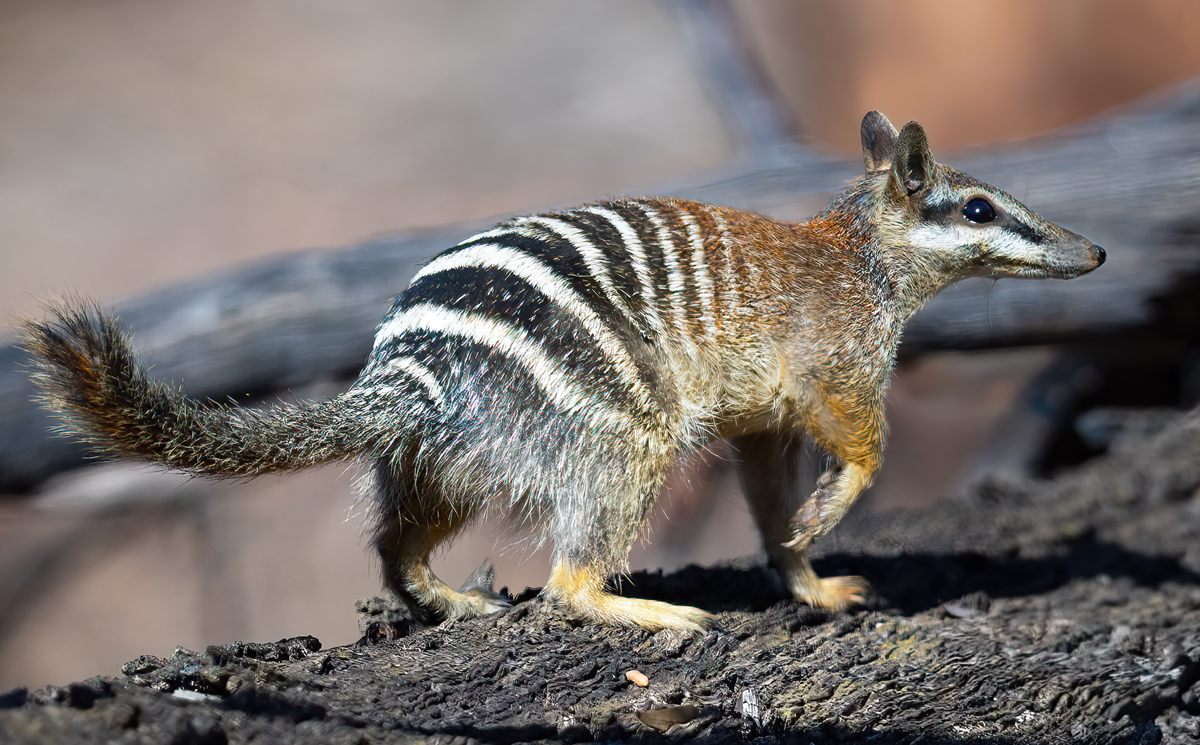
The numbat (Myrmecobius fasciatus) is a slender, striped marsupial of southwestern Australia that eats almost nothing but termites.
The numbat (Myrmecobius fasciatus) is a slender, striped marsupial of southwestern Australia that eats almost nothing but termites. Unlike most marsupials it is active by day. Fox control and translocations into fenced reserves led the IUCN to move it from Endangered to Near Threatened in 2026, although it is still listed as Endangered under Australian law.
🧬 Field Guide Specimen: Open Numbat in the CRV Science Field Guide to log the specimen, see its place among the Mammals lineages in the Cladogram Explorer, and test your recall in the Red List conservation game.
A Termite Specialist
The numbat uses a long, sticky tongue, up to about 10 centimeters, to extract termites from shallow galleries, and may eat thousands in a day. Its teeth are reduced and it has no pouch; young cling to the mother's belly hair.
Daytime Hunting: Why Is It Diurnal?
Termites in the open woodland are most active in the day, so the numbat forages when they are available. This exposes it to birds of prey and, since European settlement, to introduced foxes and cats.
Recovery
Fox control and reintroductions into fenced sanctuaries have helped numbat numbers recover enough for the 2026 downlisting. It is the faunal emblem of Western Australia.
Numbat at a Glance
| Property | Value |
|---|---|
| Scientific name | Myrmecobius fasciatus |
| Kingdom | Animalia |
| Phylum | Chordata |
| Class | Mammalia |
| Order | Dasyuromorphia |
| Family | Myrmecobiidae |
| Field Guide group | Mammals: Marsupialia (Metatherians) |
| Diagnostic feature (Field Guide) | Diurnal termite-feeder, striped dorsal coat, degenerate cheek teeth, exceptionally long sticky tongue. |
| IUCN Red List status | Near Threatened (NT), assessed 2026 |
| Diet | Termites |