Pompeii Worm
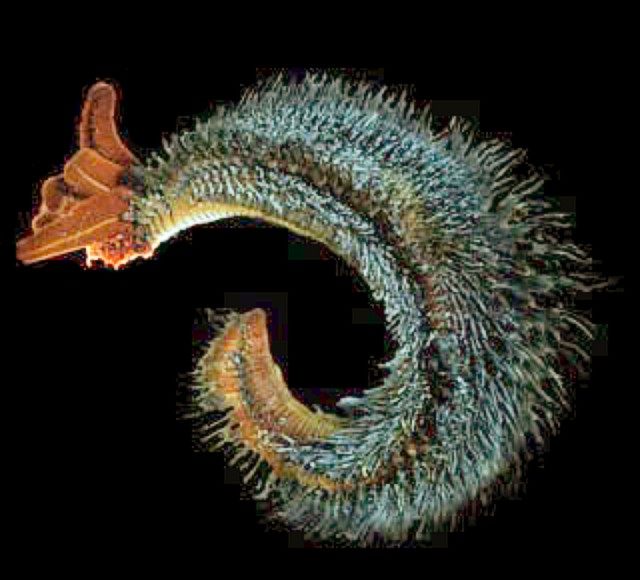
The Pompeii worm (Alvinella pompejana) lives on the chimneys of hydrothermal vents in the East Pacific, one of the most heat-tolerant animals known. Its tail sits in water near 80 °C while its head is in cooler water.
The Pompeii worm (Alvinella pompejana) lives on the chimneys of hydrothermal vents in the East Pacific, one of the most heat-tolerant animals known. Its tail sits in water near 80 °C while its head is in cooler water.
🧬 Field Guide Specimen: Open Pompeii Worm in the CRV Science Field Guide to log the specimen, see its place among the Lophotrochozoa lineages in the Cladogram Explorer, and test your recall in the Red List conservation game.
Living in Extreme Heat
The worm lives in tubes on the sides of black smoker chimneys, where the temperature varies from about 20 °C near its head to higher near its tail. Its proteins are adapted to heat, and heat-stable collagen has been studied.
A Bacterial Fleece
The worm's back is covered with a layer of bacteria, which feed on mucus secreted by the worm. The bacteria may insulate it or detoxify metals and sulfide.
Vent Life
Like the giant tube worm, the Pompeii worm depends on chemical energy from vents. See Giant Tube Worm.
Pompeii Worm at a Glance
| Property | Value |
|---|---|
| Scientific name | Alvinella pompejana |
| Kingdom | Animalia |
| Phylum | Annelida |
| Class | Polychaeta |
| Order | Terebellida |
| Family | Alvinellidae |
| Field Guide group | Lophotrochozoa: Worms, Shells & Allies |
| Diagnostic feature (Field Guide) | Deep-sea hydrothermal vent polychaete up to 13 cm long with red tentacular gills on its head and a fleece-like dorsal coat of symbiotic sulfur-oxidizing bacteria that insulates it in 80 °C water. |
| Class | Polychaeta |
| Habitat | Hydrothermal vent chimneys |
See Also
- Giant Tube Worm — another vent worm
- Yeti Crab — a vent crab