Purple Rock Urchin
The purple rock urchin (Paracentrotus lividus) is a sea urchin of the Mediterranean and northeastern Atlantic that excavates shallow burrows in rock. Its roe is a delicacy in Mediterranean cuisine.
The purple rock urchin (Paracentrotus lividus) is a sea urchin of the Mediterranean and northeastern Atlantic that excavates shallow burrows in rock. Its roe is a delicacy in Mediterranean cuisine.
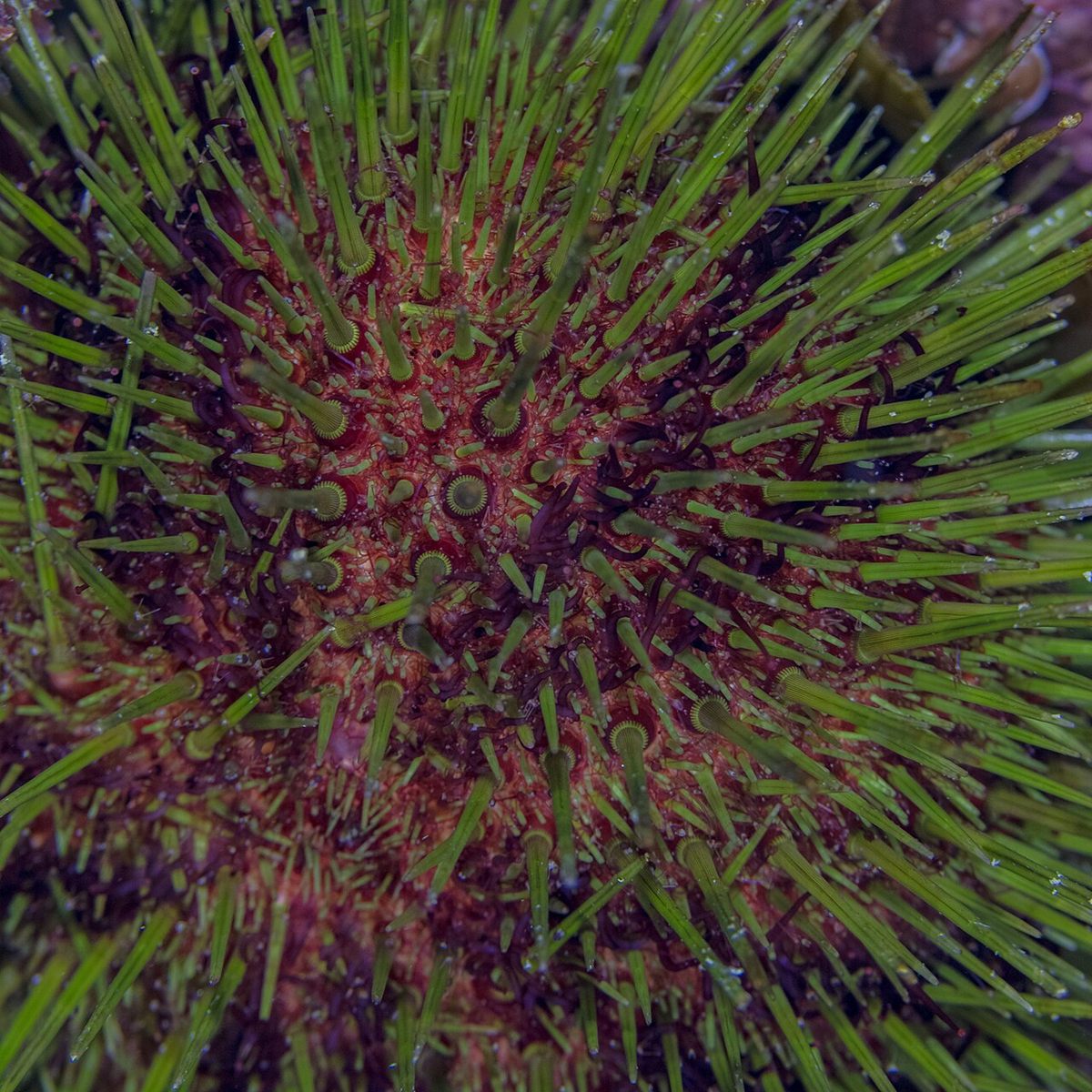
🧬 Field Guide Specimen: Open Purple Rock Urchin in the CRV Science Field Guide to log the specimen, see its place among the Deuterostomia lineages in the Cladogram Explorer, and test your recall in the Red List conservation game.
Rock Borers and Algal Grazers
The urchin rasps rock with its teeth and spines to carve a pit that protects it from waves. It grazes algae and seagrass such as Posidonia. When predators are fished out, urchin numbers can explode and strip rocky reefs, creating barrens. See Neptune Grass.
An Overharvested Delicacy
Urchin gonads are eaten fresh. Overharvesting has depleted local populations in the Mediterranean and Ireland, and harvest rules include size limits and seasons.
A Research Organism
The urchin's eggs and larvae are used in studies of fertilization and development, and also to test the effects of pollutants and ocean acidification on larval skeletons.
Purple Rock Urchin at a Glance
| Property | Value |
|---|---|
| Scientific name | Paracentrotus lividus |
| Kingdom | Animalia |
| Phylum | Echinodermata |
| Class | Echinoidea |
| Order | Camarodonta |
| Family | Parechinidae |
| Field Guide group | Deuterostomia: Echinodermata (Sea Stars & Allies) |
| Diagnostic feature (Field Guide) | Globular test bristling with long purple-to-olive spines, often wearing shells and algae as camouflage; bores into rock with its teeth. |
| IUCN Red List status | Not Evaluated (NE): no global IUCN assessment |
| Class | Echinoidea |
| Use | Roe is eaten; embryos used in research |
See Also
- Purple Sea Urchin — a Pacific relative
- Neptune Grass — a food plant