Queensland Lungfish
The Queensland lungfish (Neoceratodus forsteri) is a large, long-lived lungfish confined to a few rivers of southeastern Queensland, Australia.
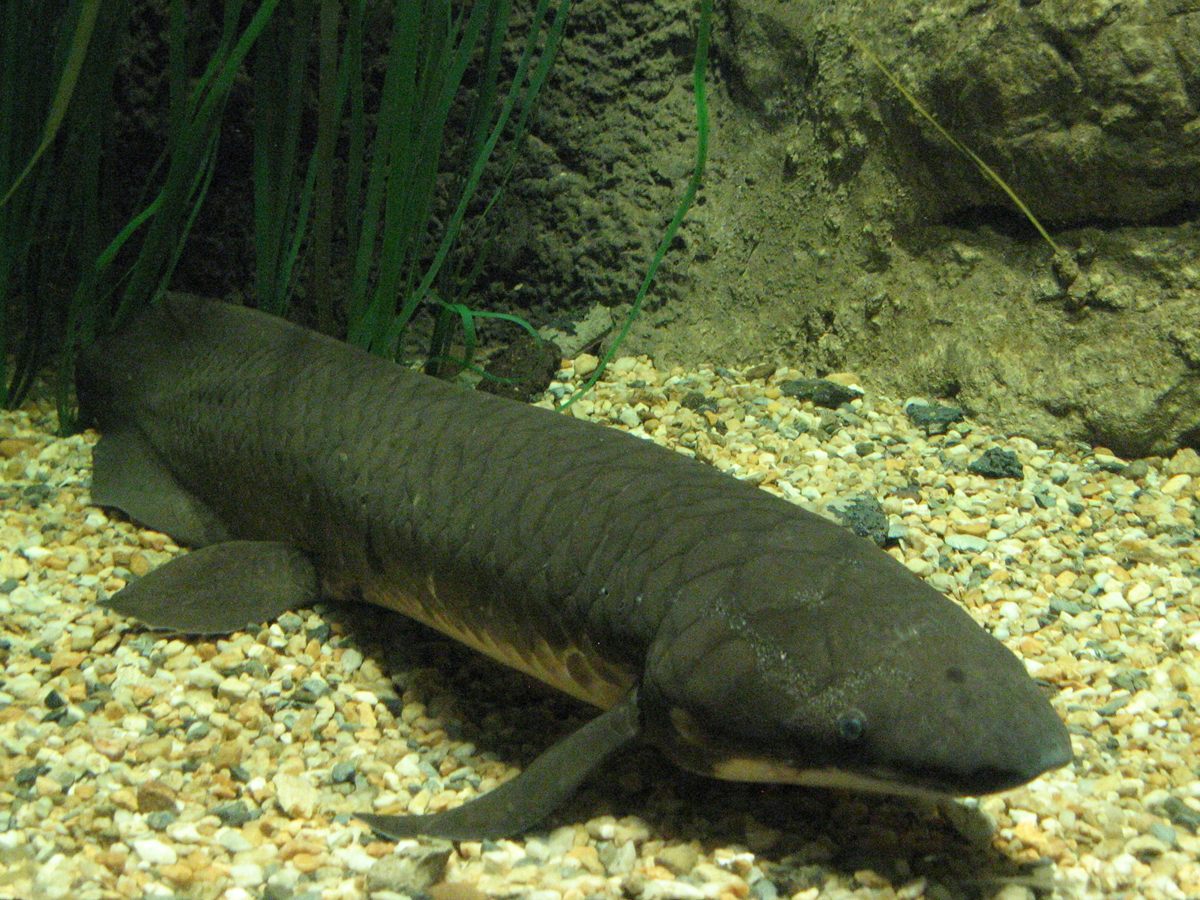
The Queensland lungfish (Neoceratodus forsteri) is a large, long-lived lungfish confined to a few rivers of southeastern Queensland, Australia. It is the most ancient-looking of the living lungfishes, with a body plan little changed from fossils hundreds of millions of years old.
🧬 Field Guide Specimen: Open Queensland Lungfish in the CRV Science Field Guide to log the specimen, see its place among the Vertebrates lineages in the Cladogram Explorer, and test your recall in the Red List conservation game.
One Lung and Paddle-Like Fins
Unlike African and South American lungfishes, which have two lungs, the Australian lungfish has just one. It uses gills as well and gulps air only when water is low in oxygen. Fleshy, paddle-like fins sit on bony stalks, and it cannot survive being dried out in mud.
A Giant Genome
Sequencing in 2021 showed that its genome is about 43 billion base pairs long, the largest animal genome sequenced at that time, about 14 times the size of the human genome. Comparison with other genomes confirmed that lungfishes are the closest living fish relatives of land vertebrates.
Protected, Slow Growing
Individuals can live for decades. Dams, river regulation and loss of the aquatic plants where it lays eggs are threats, and the species is protected under Australian law.
Queensland Lungfish at a Glance
| Property | Value |
|---|---|
| Scientific name | Neoceratodus forsteri |
| Kingdom | Animalia |
| Phylum | Chordata |
| Class | Sarcopterygii |
| Subclass | Dipnoi |
| Field Guide group | Marine and Freshwater Fish |
| Diagnostic feature (Field Guide) | Archaic Australian fish with heavy flipper-like lobed fins, large overlapping scales, and a single air-breathing lung. |
| IUCN Red List status | Endangered (EN), assessed 2019 |
| Lungs | One |
| Genome size | About 43 billion base pairs |