West African Lungfish
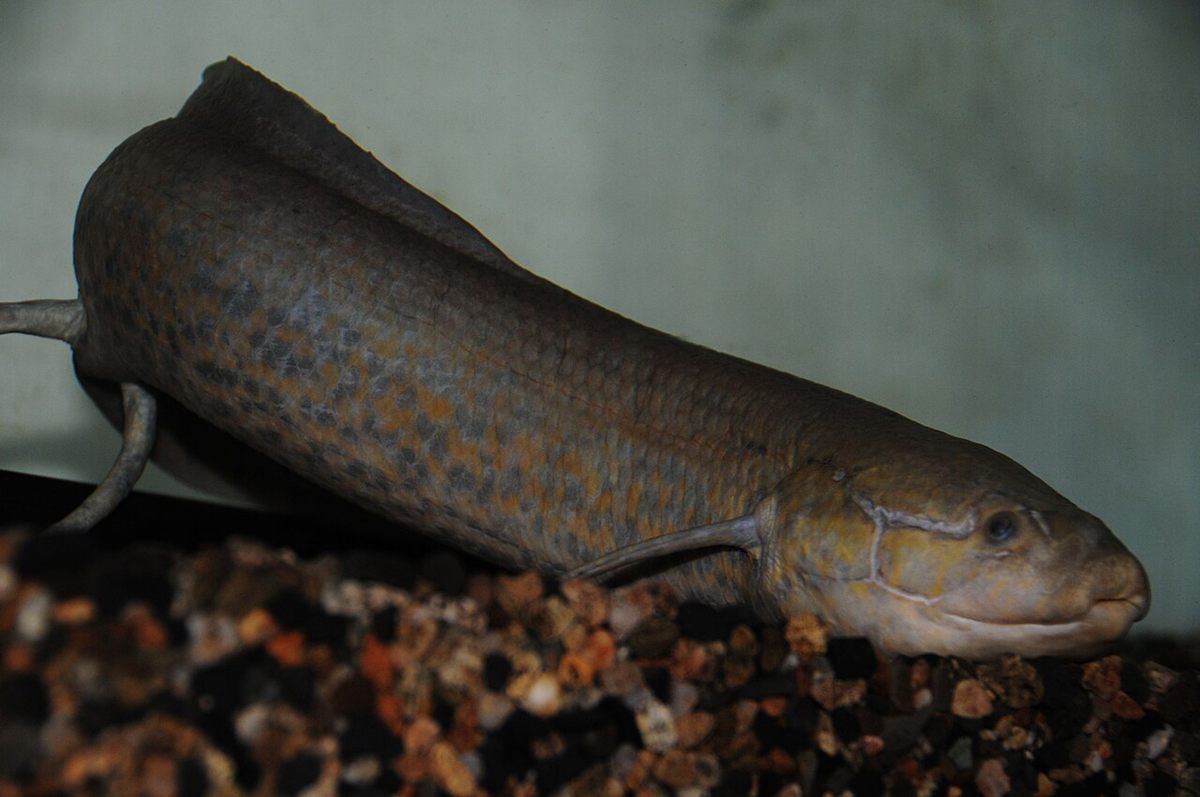
The West African lungfish (Protopterus annectens) is an eel-like fish of seasonal swamps in West Africa that survives dry seasons buried in a cocoon of mud. Its genome, published in 2021, is one of the largest sequenced.
The West African lungfish (Protopterus annectens) is an eel-like fish of seasonal swamps in West Africa that survives dry seasons buried in a cocoon of mud. Its genome, published in 2021, is one of the largest sequenced.
🧬 Field Guide Specimen: Open West African Lungfish in the CRV Science Field Guide to log the specimen, see its place among the Vertebrates lineages in the Cladogram Explorer, and test your recall in the Red List conservation game.
Aestivation: Sleeping Through Drought
When the water dries up, the fish burrows into the mud and secretes a mucus cocoon with a breathing opening. It slows its metabolism and breathes air with its lungs for months, converting waste to urea. It revives when the rains return.
A Genome of Giants
The genome is about 40 billion base pairs, more than ten times the human genome, largely made of repeating DNA. Comparisons with it have helped confirm that lungfishes are the closest living fish relatives of tetrapods.
Parental Care
The male guards the nest and young. See Marbled Lungfish.
West African Lungfish at a Glance
| Property | Value |
|---|---|
| Scientific name | Protopterus annectens |
| Kingdom | Animalia |
| Phylum | Chordata |
| Class | Sarcopterygii |
| Subclass | Dipnoi |
| Order | Lepidosireniformes |
| Family | Protopteridae |
| Field Guide group | Marine and Freshwater Fish |
| Diagnostic feature (Field Guide) | Eel-like fish with thread-like paired fins; when swamps dry up it burrows into mud inside a mucus cocoon and breathes air for months. |
| IUCN Red List status | Least Concern (LC), assessed 2020 |
| Order | Lepidosireniformes |
| Genome size | About 40 billion base pairs |