South American Lungfish
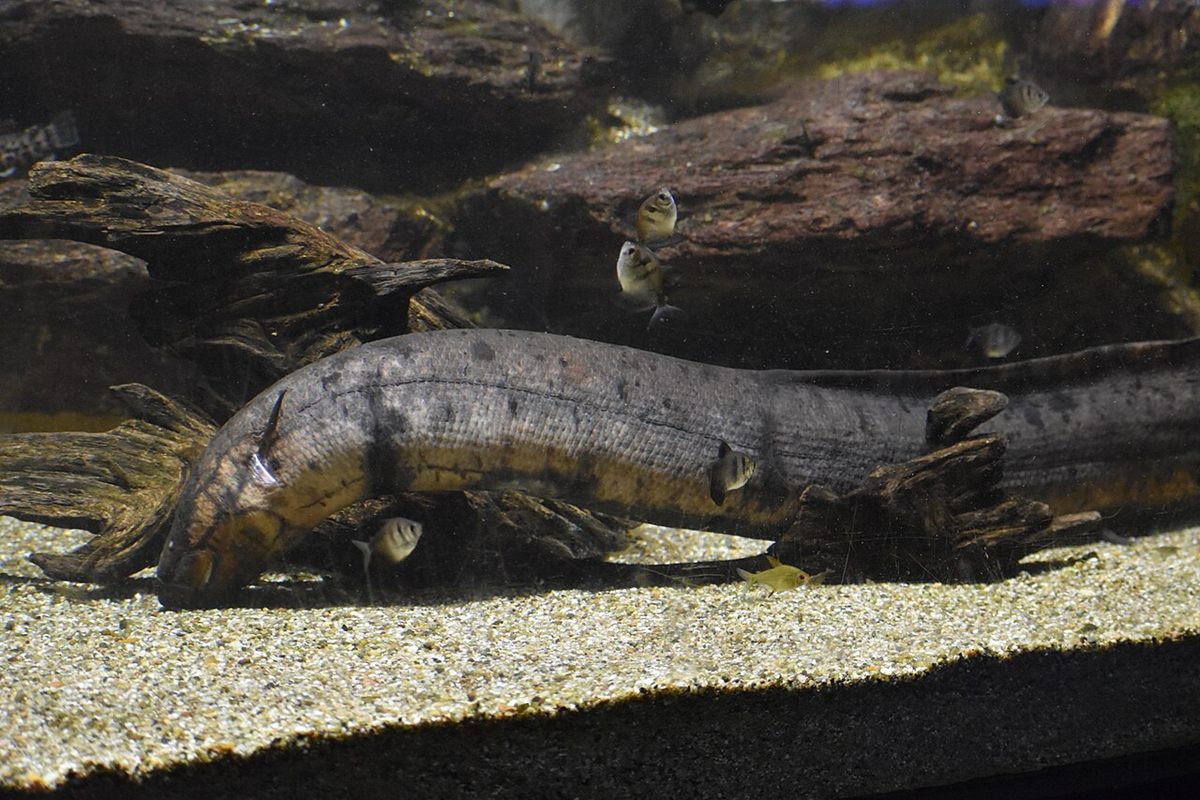
The South American lungfish (Lepidosiren paradoxa) is an eel-like air-breathing fish of swamps and floodplains in the Amazon, Paraguay and Paraná basins. It has two functioning lungs and tiny, thread-like fins.
The South American lungfish (Lepidosiren paradoxa) is an eel-like air-breathing fish of swamps and floodplains in the Amazon, Paraguay and Paraná basins. It has two functioning lungs and tiny, thread-like fins.
🧬 Field Guide Specimen: Open South American Lungfish in the CRV Science Field Guide to log the specimen, see its place among the Vertebrates lineages in the Cladogram Explorer, and test your recall in the Red List conservation game.
Almost an Air-Breather Only
The adult depends on its lungs for oxygen and drowns if it cannot reach the surface. Its gills are reduced. In dry spells it burrows into mud and aestivates like its African relatives.
Fins That Release Oxygen
During breeding, the male develops fleshy, blood-filled filaments on his pelvic fins. They are thought to release oxygen into the nest water, helping the eggs in oxygen-poor swamp water.
An Ancient Lineage
Lungfishes are a group of lobe-finned fishes that goes back to the Devonian. See West African Lungfish.
South American Lungfish at a Glance
| Property | Value |
|---|---|
| Scientific name | Lepidosiren paradoxa |
| Kingdom | Animalia |
| Phylum | Chordata |
| Class | Sarcopterygii |
| Subclass | Dipnoi |
| Order | Lepidosireniformes |
| Family | Lepidosirenidae |
| Field Guide group | Marine and Freshwater Fish |
| Diagnostic feature (Field Guide) | Dark eel-shaped fish of Amazon swamps that must breathe air; breeding males grow feathery red fins that release oxygen to their eggs. |
| IUCN Red List status | Least Concern (LC), assessed 2022 |
| Lungs | Two |
| Male breeding feature | Oxygen-releasing pelvic filaments |