Rosy Feather Star
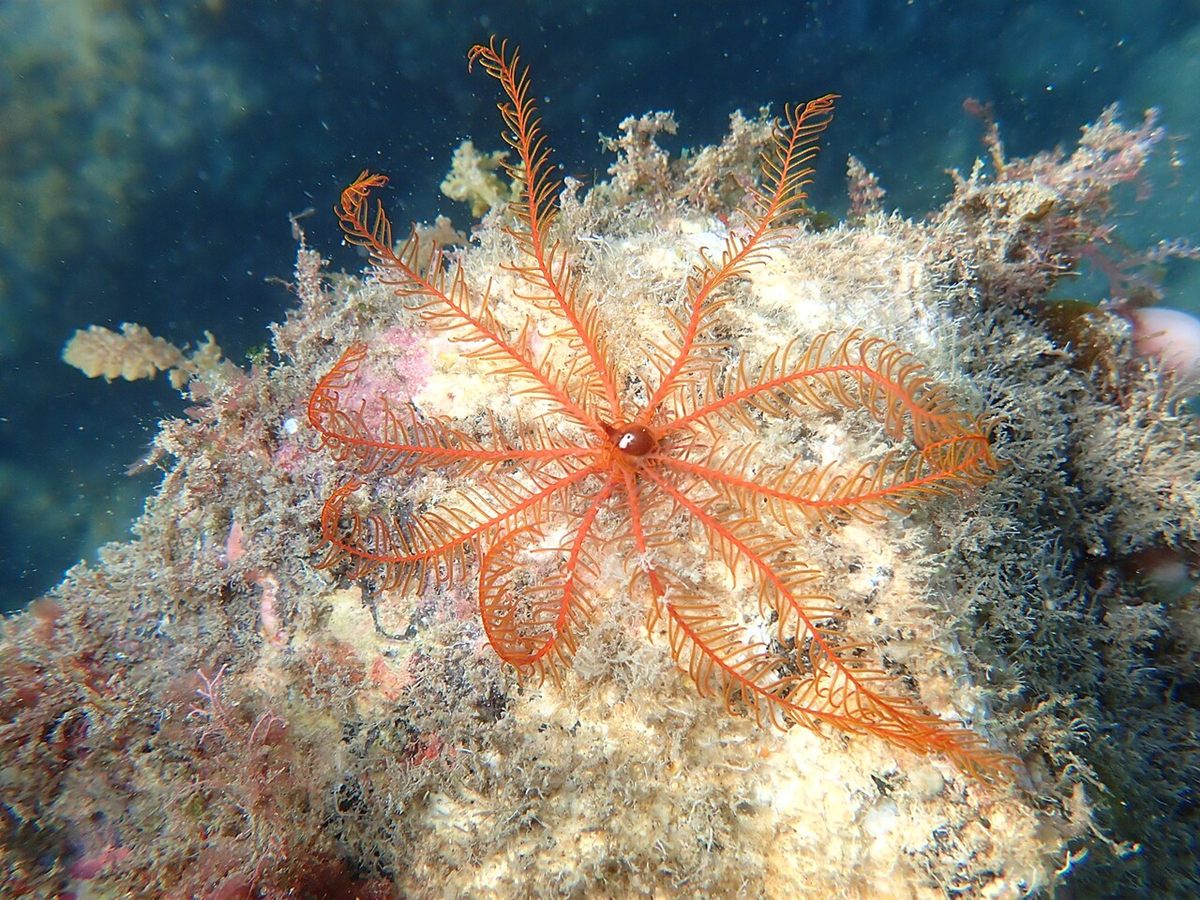
The rosy feather star (Antedon bifida) is a crinoid of the northeastern Atlantic, a free-swimming relative of the sea lilies. Crinoids were abundant in Paleozoic seas, and their fossils form entire layers of limestone.
The rosy feather star (Antedon bifida) is a crinoid of the northeastern Atlantic, a free-swimming relative of the sea lilies. Crinoids were abundant in Paleozoic seas, and their fossils form entire layers of limestone.
🧬 Field Guide Specimen: Open Rosy Feather Star in the CRV Science Field Guide to log the specimen, see its place among the Deuterostomia lineages in the Cladogram Explorer, and test your recall in the Red List conservation game.
A Stalked Past: How Does a Feather Star Differ From a Sea Lily?
Sea lilies remain attached to the seabed by a stalk for life. Feather stars like Antedon start life stalked, then break free and live unattached, gripping rocks with claw-like cirri and swimming with their arms when disturbed.
Feeding With Feathery Arms
The ten arms carry fine branches (pinnules) with tube feet that catch plankton from the current. Food is passed along grooves to the mouth, which faces upward, unlike in sea stars and urchins.
Crinoids in Deep Time
Crinoid fragments form thick limestone beds across the world. The Permian extinction nearly eliminated crinoids, and the modern groups arose from the few survivors. See Evolution.
Rosy Feather Star at a Glance
| Property | Value |
|---|---|
| Scientific name | Antedon bifida |
| Kingdom | Animalia |
| Phylum | Echinodermata |
| Class | Crinoidea |
| Order | Comatulida |
| Family | Antedonidae |
| Field Guide group | Deuterostomia: Echinodermata (Sea Stars & Allies) |
| Diagnostic feature (Field Guide) | Central cup calyx bearing ten long pinnulate feather-like arms, mouth facing upwards, grasping claw-like cirri on aboral base. |
| Class | Crinoidea |
| Arms | Ten |