Common Starfish
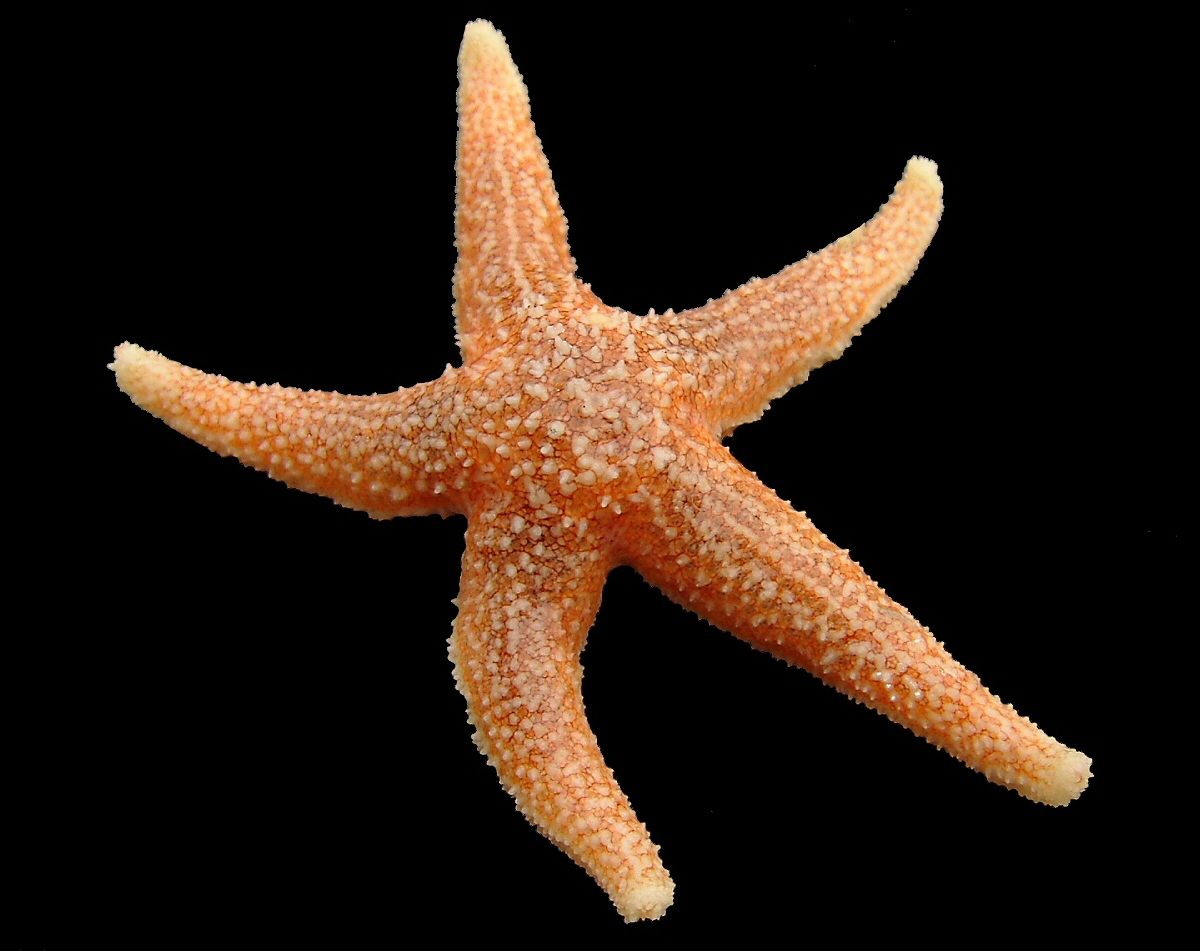
The common starfish (Asterias rubens) is a five-armed sea star of the northeastern Atlantic, abundant on rocky shores and mussel beds.
The common starfish (Asterias rubens) is a five-armed sea star of the northeastern Atlantic, abundant on rocky shores and mussel beds. Sea stars are echinoderms, relatives of sea urchins and sea cucumbers, and are more closely related to vertebrates than to most invertebrates.
🧬 Field Guide Specimen: Open Common Starfish in the CRV Science Field Guide to log the specimen, see its place among the Deuterostomia lineages in the Cladogram Explorer, and test your recall in the Red List conservation game.
Hydraulic Feet: How Does a Starfish Move?
Hundreds of tube feet, each operated by water pressure from a network of canals called the water vascular system, grip surfaces by suction and move in coordinated waves. Sea stars have no brain, only a nerve ring and radial nerves, and eyespots at the arm tips detect light.
Eating Mussels: Digestion Outside the Body
The starfish pulls a mussel's shell slightly open with its tube feet and pushes its stomach out through its mouth into the gap, digesting the prey in place. A gap of a fraction of a millimeter is enough. This makes sea stars major predators of shellfish beds.
Five-Fold Adults From Two-Sided Larvae
Larvae are bilaterally symmetrical, and the adult develops a radial body plan through metamorphosis, a clue to the animal's ancestry. Sea stars can regenerate lost arms.
Common Starfish at a Glance
| Property | Value |
|---|---|
| Scientific name | Asterias rubens |
| Kingdom | Animalia |
| Phylum | Echinodermata |
| Class | Asteroidea |
| Order | Forcipulatida |
| Family | Asteriidae |
| Field Guide group | Deuterostomia: Echinodermata (Sea Stars & Allies) |
| Diagnostic feature (Field Guide) | Secondary pentaradial symmetry, five tapering arms, open ambulacral grooves with suction-cupped tube feet, eversible cardiac stomach. |
| Class | Asteroidea |
| Symmetry | Five-fold (adult), bilateral (larva) |
See Also
- Ochre Sea Star — a keystone sea star
- Blue Mussel — its typical prey