Shingleback Skink
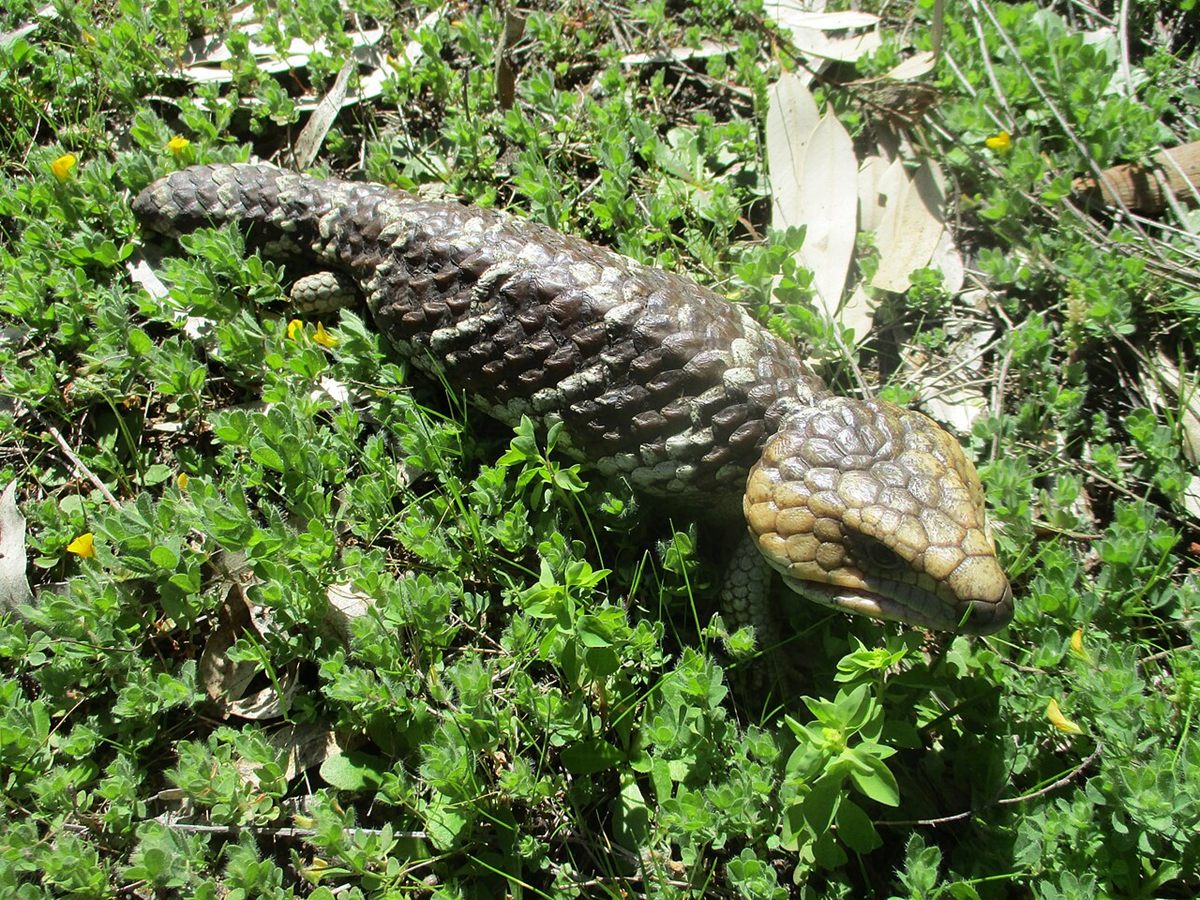
The shingleback skink (Tiliqua rugosa) is a stocky Australian lizard covered in rough, pinecone-like scales with a short, blunt tail. It is also called the sleepy lizard or stumpy-tail.
The shingleback skink (Tiliqua rugosa) is a stocky Australian lizard covered in rough, pinecone-like scales with a short, blunt tail. It is also called the sleepy lizard or stumpy-tail.
🧬 Field Guide Specimen: Open Shingleback Skink in the CRV Science Field Guide to log the specimen, see its place among the Reptilia lineages in the Cladogram Explorer, and test your recall in the Red List conservation game.
Which End Is the Head?
The stubby tail resembles the head, which may confuse predators about which way the lizard will run. The tail stores fat for the winter. Like its blue-tongued relatives, it also displays a blue tongue when threatened.
Faithful Pairs
Shinglebacks form monogamous pairs that reunite every spring for decades. Pairs travel together, with the male guarding the female and following her closely. The young are born live, usually two or three.
Slow and Omnivorous
The lizards eat flowers, fruit, snails and carrion. Cars are a major danger to them as they cross roads slowly. See Blue-tongued Skink.
Shingleback Skink at a Glance
| Property | Value |
|---|---|
| Scientific name | Tiliqua rugosa |
| Kingdom | Animalia |
| Phylum | Chordata |
| Class | Reptilia |
| Order | Squamata |
| Family | Scincidae |
| Field Guide group | Reptilia (Reptiles) |
| Diagnostic feature (Field Guide) | Stout Australian lizard with large pinecone-like scales, a stumpy fat-storing tail that resembles its head, and a blue tongue. |
| IUCN Red List status | Least Concern (LC), assessed 2017 |
| Reproduction | Live birth |
| Social system | Long-term pair bonds |
See Also
- Blue-tongued Skink — a close relative
- Solomon Islands Skink — a giant skink