Blue-tongued Skink
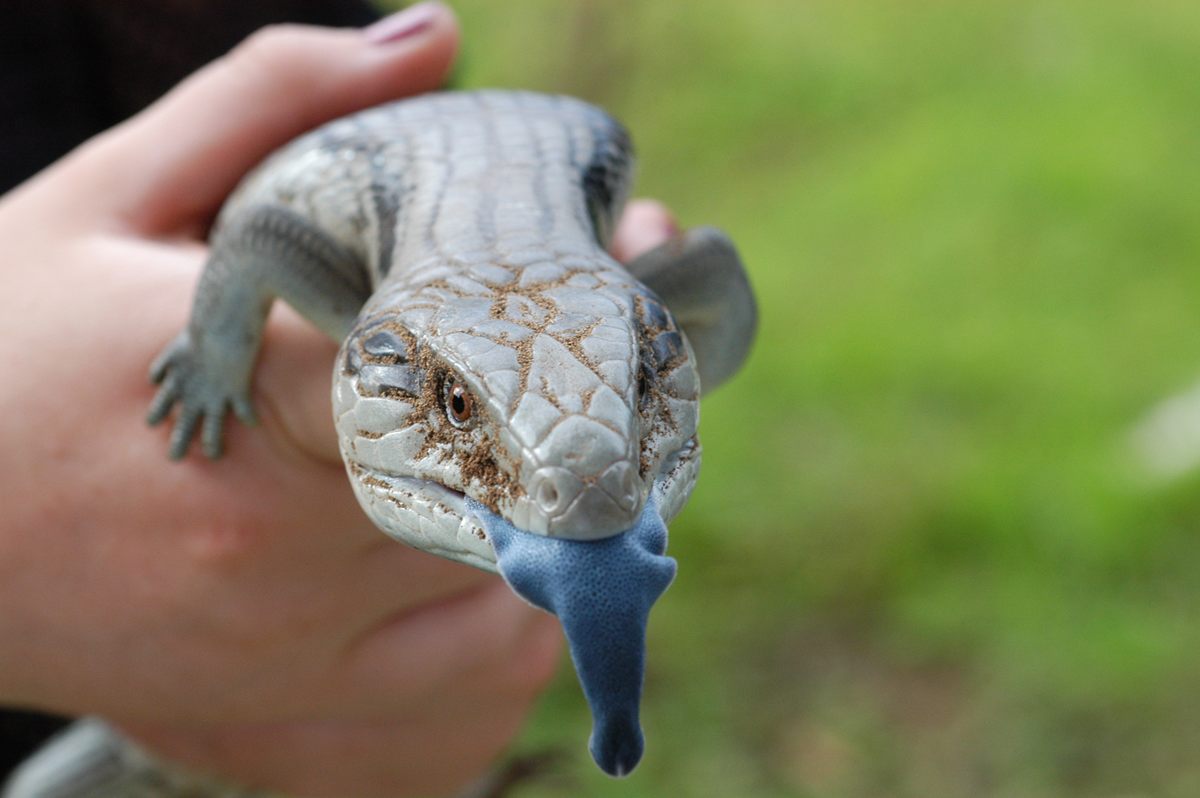
The blue-tongued skink (Tiliqua scincoides) is a stout, short-legged lizard of Australia and New Guinea named for its bright blue tongue. It is common in gardens and woodland and is not considered threatened.
The blue-tongued skink (Tiliqua scincoides) is a stout, short-legged lizard of Australia and New Guinea named for its bright blue tongue. It is common in gardens and woodland and is not considered threatened.
🧬 Field Guide Specimen: Open Blue-tongued Skink in the CRV Science Field Guide to log the specimen, see its place among the Reptilia lineages in the Cladogram Explorer, and test your recall in the Red List conservation game.
A Startling Display: Why the Blue Tongue?
When threatened, the skink opens its mouth wide, hisses and flashes its tongue. The bright color and contrasting pink mouth may startle predators and give the lizard time to escape.
Live Birth
Female blue-tongues give birth to live young, which develop in eggs retained in the body, an arrangement known as ovoviviparity. Litters can contain up to about two dozen babies.
Omnivorous Diet
The lizard eats snails, insects, fruit and flowers, and often helps gardeners by eating slugs. Its smooth, shiny scales are typical of skinks.
Blue-tongued Skink at a Glance
| Property | Value |
|---|---|
| Scientific name | Tiliqua scincoides |
| Kingdom | Animalia |
| Phylum | Chordata |
| Class | Reptilia |
| Order | Squamata |
| Family | Scincidae |
| Field Guide group | Reptilia (Reptiles) |
| Diagnostic feature (Field Guide) | Vivid cobalt-blue tongue for deimatic antipredator display, smooth osteoderm-reinforced body scales. |
| IUCN Red List status | Least Concern (LC), assessed 2017 |
| Birth | Live birth (ovoviviparous) |
| Defense | Blue tongue display |
See Also
- Natural selection — startle displays
- Komodo Dragon — another lizard of the Indo-Australian region