Southern Cassowary
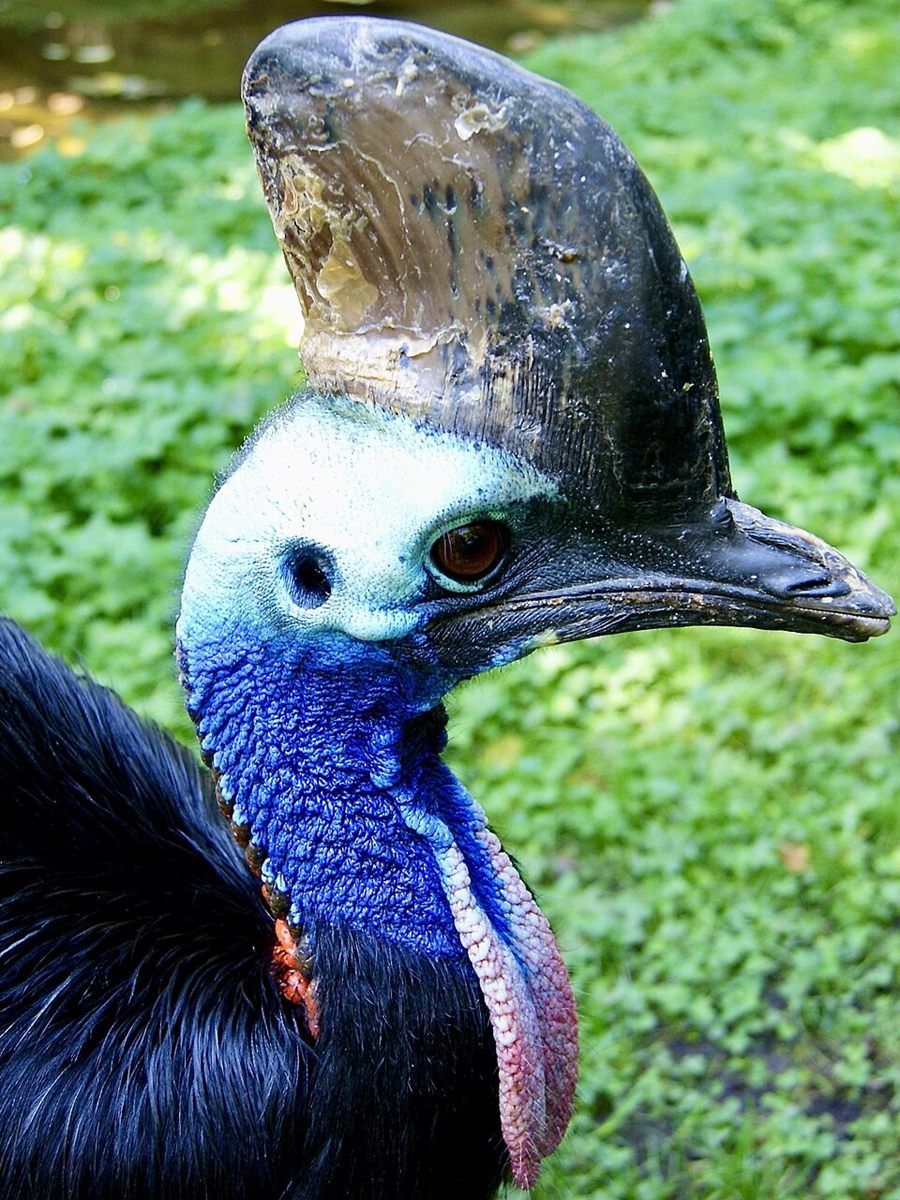
The southern cassowary (Casuarius casuarius) is a large, flightless bird of the rainforests of New Guinea and northeastern Australia. It has glossy black plumage, a blue neck and a horn-like casque on its head, and is capable of dangerous kicks.
The southern cassowary (Casuarius casuarius) is a large, flightless bird of the rainforests of New Guinea and northeastern Australia. It has glossy black plumage, a blue neck and a horn-like casque on its head, and is capable of dangerous kicks.
🧬 Field Guide Specimen: Open Southern Cassowary in the CRV Science Field Guide to log the specimen, see its place among the Reptilia lineages in the Cladogram Explorer, and test your recall in the Red List conservation game.
Forest Gardeners
Cassowaries swallow whole fruits and pass the seeds intact, dispersing the seeds of more than a hundred plant species, some of which have fruit too large for other animals to move. Without them, forest regeneration may suffer.
Dads Do the Parenting
The male incubates the green eggs for about 50 days and then raises the striped chicks alone for months. The female may mate with several males.
A Dangerous Neighbor
A long, dagger-like claw on the inner toe can inflict serious injury. The bird makes extremely low-frequency booms that may travel far through the forest. In Australia, the Wet Tropics population is listed as endangered, with vehicle strikes and habitat loss among the causes.
Southern Cassowary at a Glance
| Property | Value |
|---|---|
| Scientific name | Casuarius casuarius |
| Kingdom | Animalia |
| Phylum | Chordata |
| Class | Aves |
| Order | Casuariiformes |
| Family | Casuariidae |
| Field Guide group | Reptilia: Aves (Birds) |
| Diagnostic feature (Field Guide) | Flightless giant with a tall horn-covered helmet (casque), vivid blue neck with twin red wattles, and 12 cm dagger-like inner claws. |
| IUCN Red List status | Least Concern (LC), assessed 2018 |
| Distribution | New Guinea and northeastern Australia |
| Parenting | Males incubate and rear chicks |