Emu
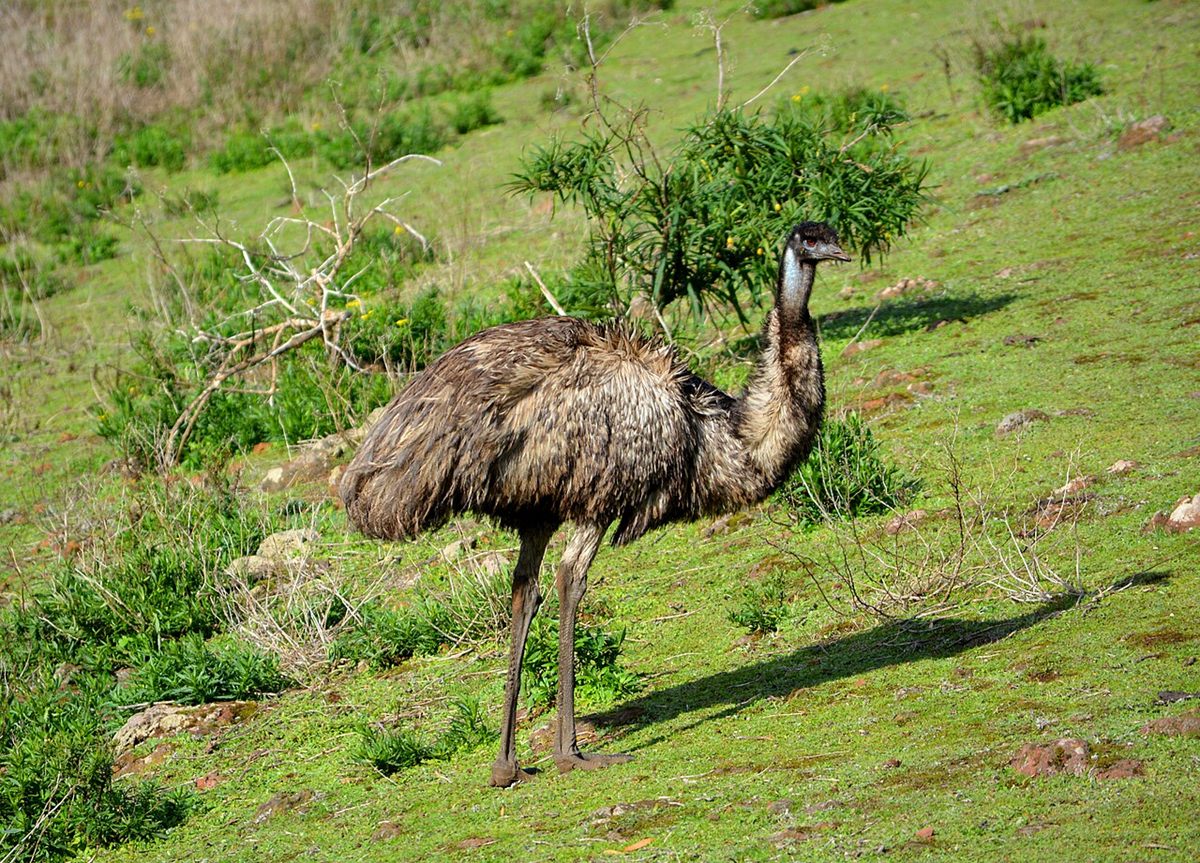
The emu (Dromaius novaehollandiae) is a tall, flightless bird of Australia, the second-largest bird in the world after the ostrich. It stands up to about 1.9 meters, runs fast, and roams widely across the continent in search of food and water.
The emu (Dromaius novaehollandiae) is a tall, flightless bird of Australia, the second-largest bird in the world after the ostrich. It stands up to about 1.9 meters, runs fast, and roams widely across the continent in search of food and water.
🧬 Field Guide Specimen: Open Emu in the CRV Science Field Guide to log the specimen, see its place among the Reptilia lineages in the Cladogram Explorer, and test your recall in the Red List conservation game.
Fathers Raise the Chicks
After mating, the female lays a clutch of dark green eggs and leaves. The male incubates them for about eight weeks, hardly eating or drinking, and then cares for the striped chicks for months.
Built for Distance
Emus can run at about 50 kilometers per hour and travel long distances. They have three toes on each foot, and strong legs that can deliver a powerful kick. Seeds eaten by emus are spread over large areas.
The Great Emu War
In 1932 the Australian military was deployed against emus that were damaging wheat crops in Western Australia. The birds proved hard to hit, and the operation was widely regarded as a failure. See Common Ostrich.
Emu at a Glance
| Property | Value |
|---|---|
| Scientific name | Dromaius novaehollandiae |
| Kingdom | Animalia |
| Phylum | Chordata |
| Class | Aves |
| Order | Casuariiformes |
| Family | Dromaiidae |
| Field Guide group | Reptilia: Aves (Birds) |
| Diagnostic feature (Field Guide) | Tall flightless Australian runner with shaggy double-shafted feathers, tiny wings, and a flat breastbone without a keel. |
| IUCN Red List status | Least Concern (LC), assessed 2018 |
| Order | Casuariiformes |
| Incubation | By the male, about 8 weeks |
See Also
- Common Ostrich — the largest bird
- Southern Cassowary — a close relative