Greater Rhea
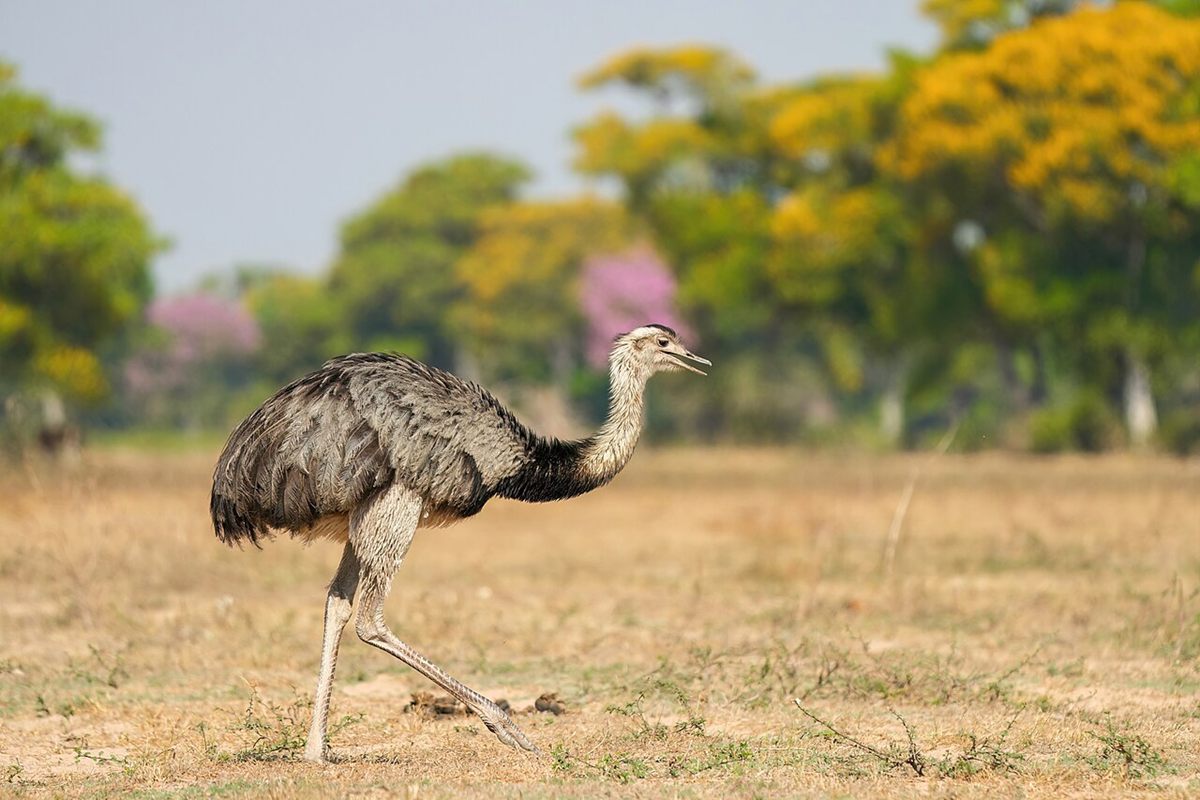
The greater rhea (Rhea americana) is a large, flightless bird of the grasslands of South America and the largest bird in the Americas, standing about 1.5 meters tall. It is listed as Near Threatened.
The greater rhea (Rhea americana) is a large, flightless bird of the grasslands of South America and the largest bird in the Americas, standing about 1.5 meters tall. It is listed as Near Threatened.
🧬 Field Guide Specimen: Open Greater Rhea in the CRV Science Field Guide to log the specimen, see its place among the Reptilia lineages in the Cladogram Explorer, and test your recall in the Red List conservation game.
A Shared Nest
A male builds a nest on the ground, and several females lay their eggs in it, sometimes dozens in total. The male incubates the eggs and guards the chicks alone. Rheas live in groups outside the breeding season.
Running on Open Plains
Rheas run at high speed and use their wings, spread out like sails, to balance and make sharp turns. They eat grasses, seeds, insects and small vertebrates.
Ratites and Habitat Loss
Rheas are ratites, like ostriches, emus and kiwis. Conversion of grasslands to farmland and hunting for meat and feathers have reduced their numbers. See Common Ostrich.
Greater Rhea at a Glance
| Property | Value |
|---|---|
| Scientific name | Rhea americana |
| Kingdom | Animalia |
| Phylum | Chordata |
| Class | Aves |
| Order | Rheiformes |
| Family | Rheidae |
| Field Guide group | Reptilia: Aves (Birds) |
| Diagnostic feature (Field Guide) | Gray-brown flightless grassland runner of South America with three toes; males incubate eggs from several females. |
| IUCN Red List status | Near Threatened (NT), assessed 2022 |
| Nesting | Male incubates a communal clutch |
See Also
- Emu — an Australian ratite
- Common Ostrich — an African ratite