Common Ostrich
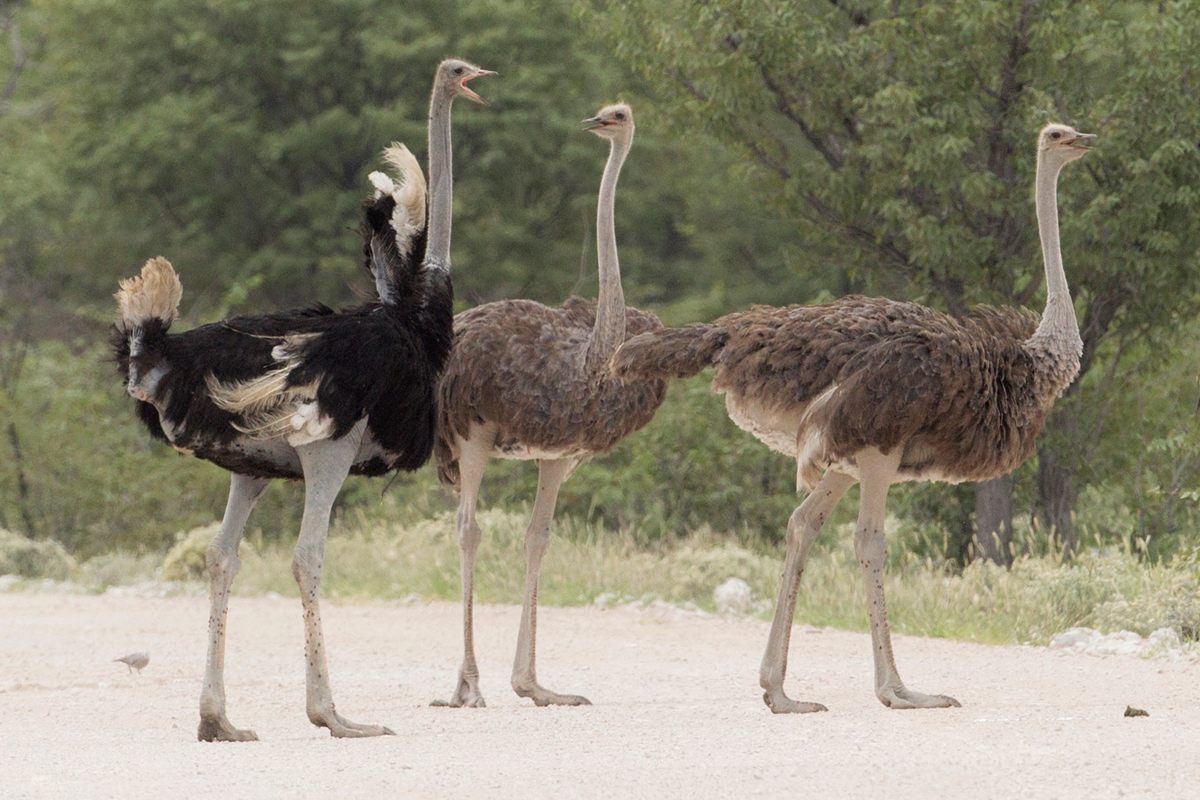
The common ostrich (Struthio camelus) is the largest and heaviest living bird, standing up to about 2.7 meters tall and weighing up to about 150 kilograms. It cannot fly but is the fastest runner of any bird, reaching around 70 kilometers per hour.
The common ostrich (Struthio camelus) is the largest and heaviest living bird, standing up to about 2.7 meters tall and weighing up to about 150 kilograms. It cannot fly but is the fastest runner of any bird, reaching around 70 kilometers per hour.
🧬 Field Guide Specimen: Open Common Ostrich in the CRV Science Field Guide to log the specimen, see its place among the Reptilia lineages in the Cladogram Explorer, and test your recall in the Red List conservation game.
Built to Run: Why Only Two Toes?
The ostrich has just two toes on each foot, the only living bird to do so, and the larger one ends in a hoof-like nail. Long legs and an elastic tendon allow long stride lengths. The eyes are the largest of any land vertebrate.
Eggs and Parenting
Ostrich eggs are the largest of any living bird, around 1.4 kilograms. A dominant pair shares incubation, with the male sitting at night and the cryptically colored female by day. Several hens may lay in the same nest.
Myth and Status
Ostriches do not bury their heads in the sand; they lower their necks to the ground when resting or turning eggs. Two species are now recognized, the common and Somali ostrich, and the North African subspecies is critically endangered.
Common Ostrich at a Glance
| Property | Value |
|---|---|
| Scientific name | Struthio camelus |
| Kingdom | Animalia |
| Phylum | Chordata |
| Class | Aves |
| Order | Struthioniformes |
| Family | Struthionidae |
| Field Guide group | Reptilia: Aves (Birds) |
| Diagnostic feature (Field Guide) | Two-toed running feet (didactyly), enormous eyes, powerful cursorial legs reaching 70 km/h. |
| IUCN Red List status | Least Concern (LC), assessed 2018 |
| Top speed | About 70 km/h |
See Also
- North Island Brown Kiwi — another ratite
- Dodo — another large flightless bird