Trona
Trona is a sodium carbonate-bicarbonate mineral, Na₃(CO₃)(HCO₃)·2H₂O, that forms thick evaporite beds in alkaline lakes. It is the main source of natural soda ash.
Trona is a sodium carbonate-bicarbonate mineral, Na₃(CO₃)(HCO₃)·2H₂O, that forms thick evaporite beds in alkaline lakes. It is the main source of natural soda ash.
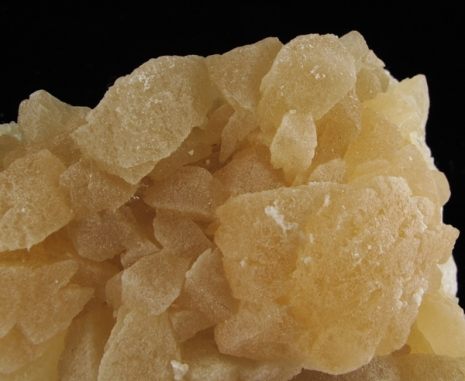
🪨 Geology Guide Specimen: Open Trona Evaporite in the CRV Science Rock & Mineral ID Guide to log the specimen, compare it with the other 6 subgroups of Sedimentary, and test your eye in LithoClade.
Soda Lakes: How Does Trona Form?
Rivers and springs feeding a closed basin in dry regions can carry dissolved sodium and carbonate, but not enough calcium to remove carbonate as limestone. As the lake evaporates, the brine becomes strongly alkaline and trona precipitates in radiating bladed crystals, in contrast to the sodium chloride of marine rock salt.
Green River Basin: Where Is the World's Largest Deposit?
Southwestern Wyoming holds the world's largest known trona deposit in the Eocene Green River Formation, the same lake system famous for fossil fish and the oil shale beds. Lake Magadi in Kenya is a modern soda lake where trona is still forming.
Soda Ash: Why Does It Matter?
Trona is processed to sodium carbonate, called soda ash, which is a key ingredient of glass, detergents, paper and many chemicals. See sodium for the element at the center of these products.
Trona at a Glance
| Property | Value |
|---|---|
| Type / variety | Alkaline Lacustrine Sodium Sesquicarbonate |
| Composition | Na₃(CO₃)(HCO₃)·2H₂O (Hydrated Sodium Carbonate-Bicarbonate) |
| Geology Guide group | Sedimentary Rocks (Clastic, Chemical & Biogenic) |
| Rock Classification | Evaporites (Saline Precipitates) |
| Mohs hardness | Mohs 2.5–3 |
| Texture / habit | Radiating bladed crystal sprays and fibrous bedded seams |
| Density | 2.11–2.17 g/cm³ |
| Lustre and cleavage | Vitreous silky amber-brown to yellowish-white blades; alkaline taste |
| Geological setting | Closed alkaline continental playa lakes (e.g., Green River Basin, Lake Magadi) |
| Diagnostic feature (Geology Guide) | Amber-tan to cream bedded salt seam composed of radiating bladed crystals that dissolve in water and fizz in acid, formed in closed continental soda lakes rather than marine lagoons. |
| Formula | Na₃(CO₃)(HCO₃)·2H₂O |
| Main use | Soda ash for glass and chemicals |