West Indian Manatee
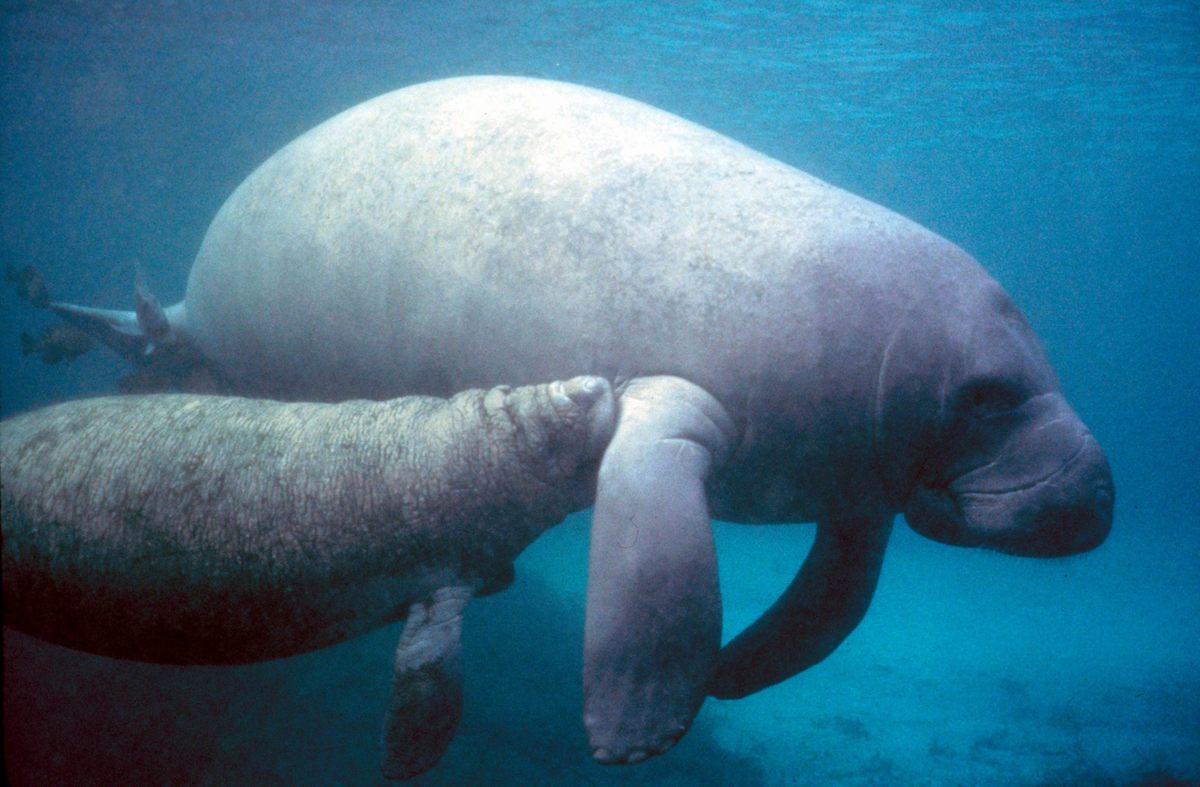
The West Indian manatee (Trichechus manatus) is a slow-moving aquatic herbivore of the coastal waters, rivers and springs of the southeastern United States, the Caribbean and northern South America.
The West Indian manatee (Trichechus manatus) is a slow-moving aquatic herbivore of the coastal waters, rivers and springs of the southeastern United States, the Caribbean and northern South America. It is listed as Vulnerable by the IUCN. Manatees are sirenians, whose nearest relatives are elephants and hyraxes.
🧬 Field Guide Specimen: Open West Indian Manatee in the CRV Science Field Guide to log the specimen, see its place among the Mammals lineages in the Cladogram Explorer, and test your recall in the Red List conservation game.
Sea Cows: What Do Manatees Eat and How Do They Chew?
Manatees graze on seagrasses and other aquatic plants, eating roughly a tenth of their body weight a day. Their cheek teeth are replaced continuously from the back of the jaw as the front ones wear down, an adaptation to abrasive, sandy vegetation. A paddle-shaped tail and a low metabolic rate suit a slow, energy-efficient life.
Threats: Boats, Cold and Starvation
Boat collisions are a leading cause of death. Manatees also suffer from cold stress when water falls below about 20 °C, from red tide toxins, and from seagrass die-offs, as in Florida's Indian River Lagoon, where seagrass loss contributed to a record die-off in 2021. Florida manatees were reclassified from endangered to threatened under US law in 2017.
Evolutionary Placement: Afrotherian Sea Cows
Sirenians belong to Paenungulata with elephants and hyraxes, within the African clade Afrotheria. Fossil sirenians had legs, showing that the lineage moved from land to water independently of whales. See Rock Hyrax for a surviving cousin.
West Indian Manatee at a Glance
| Property | Value |
|---|---|
| Scientific name | Trichechus manatus |
| Kingdom | Animalia |
| Phylum | Chordata |
| Class | Mammalia |
| Superorder | Afrotheria |
| Order | Sirenia |
| Field Guide group | Mammals: Eutheria (Placentals) |
| Diagnostic feature (Field Guide) | Paddle-shaped horizontal tail flipper, prehensile muscular upper lips, continuous horizontal tooth replacement. |
| IUCN Red List status | Vulnerable (VU), assessed 2024 |
| Closest relatives | Elephants and hyraxes |
See Also
- Rock Hyrax — a land-living relative
- Eutrophication — nutrient pollution that fuels harmful algal blooms