Asian Elephant
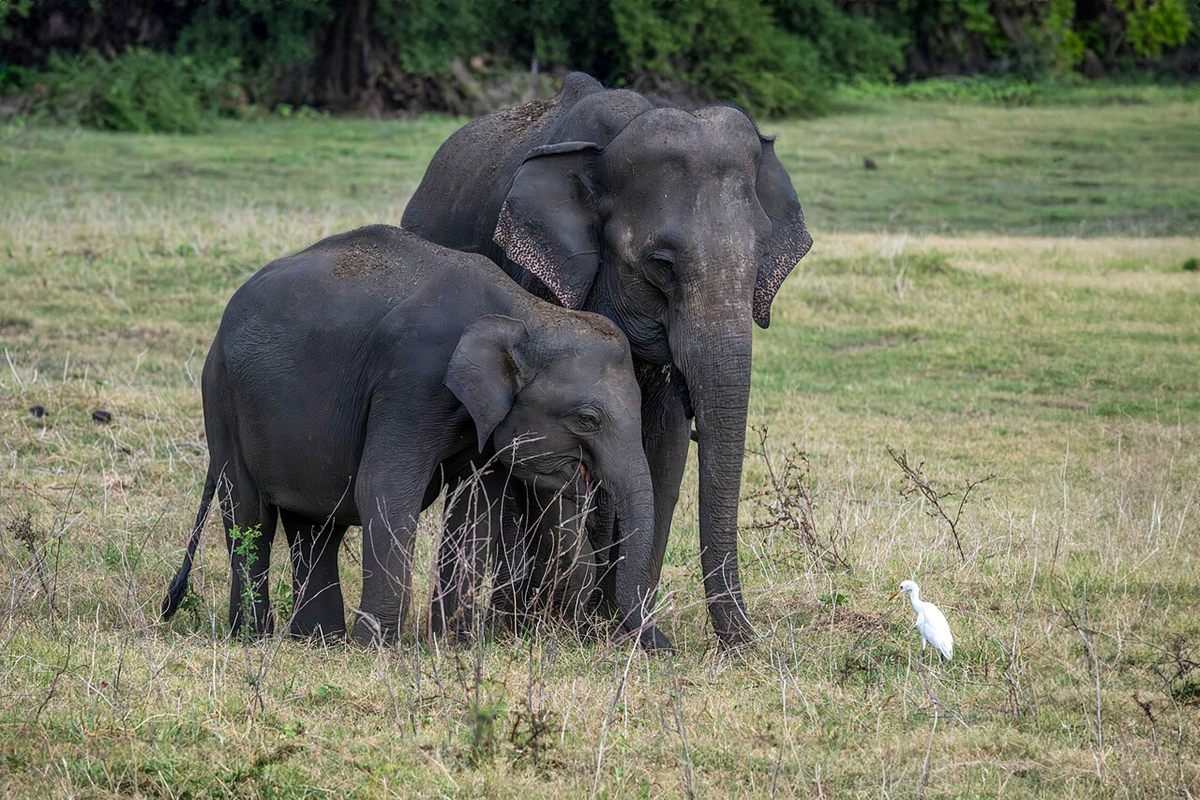
The Asian elephant (Elephas maximus) is the largest land animal in Asia, living in forests and grasslands from India to Southeast Asia. It is listed as Endangered, with a few tens of thousands left in the wild.
The Asian elephant (Elephas maximus) is the largest land animal in Asia, living in forests and grasslands from India to Southeast Asia. It is listed as Endangered, with a few tens of thousands left in the wild.
🧬 Field Guide Specimen: Open Asian Elephant in the CRV Science Field Guide to log the specimen, see its place among the Mammals lineages in the Cladogram Explorer, and test your recall in the Red List conservation game.
A Muscular Trunk
The trunk, a fusion of nose and upper lip, contains tens of thousands of muscle bundles and no bones. It can pick up a single grass blade, spray water and sniff for food or water miles away. Elephants are related to hyraxes and manatees, forming the Paenungulata. See Rock Hyrax.
Peto's Paradox: Why Do Large Animals Rarely Get Cancer?
Large, long-lived animals have many more cells that could turn cancerous, yet elephants have low cancer rates. African elephants carry about twenty copies of the tumor-suppressor gene TP53, and cells with damaged DNA tend to die rather than divide. See Cancer.
Conflict and Conservation
Habitat fragmentation and crop raiding lead to conflict with farmers, and poaching for ivory and skin affects the species. Elephants live in matriarchal herds and are domesticated in parts of Asia.
Asian Elephant at a Glance
| Property | Value |
|---|---|
| Scientific name | Elephas maximus |
| Kingdom | Animalia |
| Phylum | Chordata |
| Class | Mammalia |
| Order | Proboscidea |
| Family | Elephantidae |
| Field Guide group | Mammals: Eutheria (Placentals) |
| Diagnostic feature (Field Guide) | Illustrates proboscidean skeletal engineering, infrasonic communication, and tool use. |
| IUCN Red List status | Endangered (EN), assessed 2020 |
| Closest relatives | Other elephants, then manatees and hyraxes |
See Also
- Rock Hyrax — a small relative
- West Indian Manatee — a relative in the sea
- Cancer — Peto's paradox