Woolly Mammoth
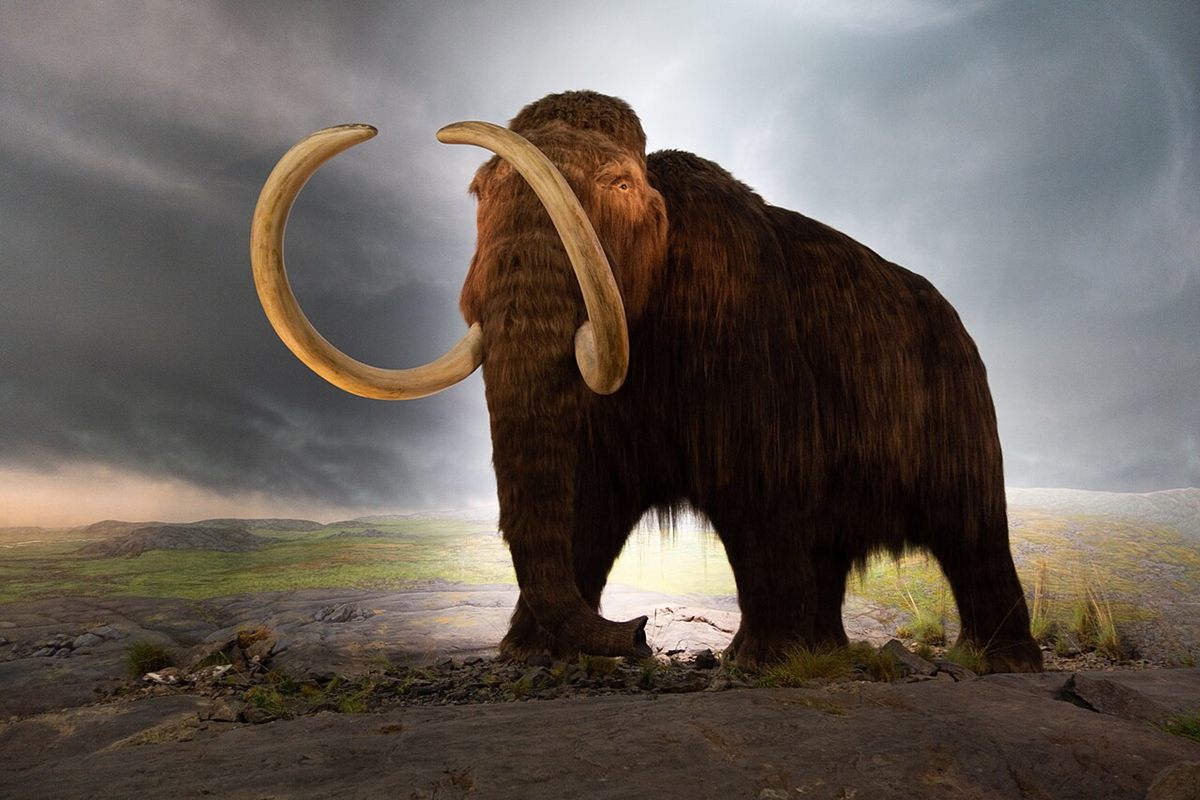
The woolly mammoth (Mammuthus primigenius) was a shaggy, long-tusked elephant of the cold steppes of Eurasia and North America.
The woolly mammoth (Mammuthus primigenius) was a shaggy, long-tusked elephant of the cold steppes of Eurasia and North America. Most populations vanished about 10,000 years ago, but a small group on Wrangel Island in the Arctic survived until roughly 4,000 years ago.
🧬 Field Guide Specimen: Open Woolly Mammoth in the CRV Science Field Guide to log the specimen, see its place among the Mammals lineages in the Cladogram Explorer, and test your recall in the Red List conservation game.
Built for the Cold
Mammoths had long hair, a thick layer of fat, small ears and tails to reduce heat loss, and a humped back that stored fat. Their tusks could grow more than 4 meters long in older males. Frozen carcasses preserved in Siberian permafrost have provided samples with soft tissue, stomach contents and DNA.
DNA From the Ice Age
Ancient DNA shows that mammoths are closest to Asian elephants. Genome sequencing of the Wrangel Island animals found signs of inbreeding and harmful mutations accumulating in a population that numbered only a few hundred.
Why Did They Vanish?
Climate warming at the end of the last Ice Age changed the steppe vegetation, and hunting by humans probably added pressure; the relative roles are debated. Companies have announced attempts at "de-extinction" using elephant cells, which remain controversial.
Woolly Mammoth at a Glance
| Property | Value |
|---|---|
| Scientific name | Mammuthus primigenius |
| Kingdom | Animalia |
| Phylum | Chordata |
| Class | Mammalia |
| Order | Proboscidea |
| Family | Elephantidae |
| Field Guide group | Mammals: Eutheria (Placentals) |
| Diagnostic feature (Field Guide) | Dense two-layer shaggy coat of long guard hairs and insulating underwool, long curved spiral tusks up to 4 meters, hump of brown fat. |
| IUCN Red List status | Extinct (EX), prehistoric |
| Last survivors | Wrangel Island, about 4,000 years ago |
See Also
- Asian Elephant — its closest living relative
- Saber-toothed Cat — another Ice Age predator