Saber-toothed Cat
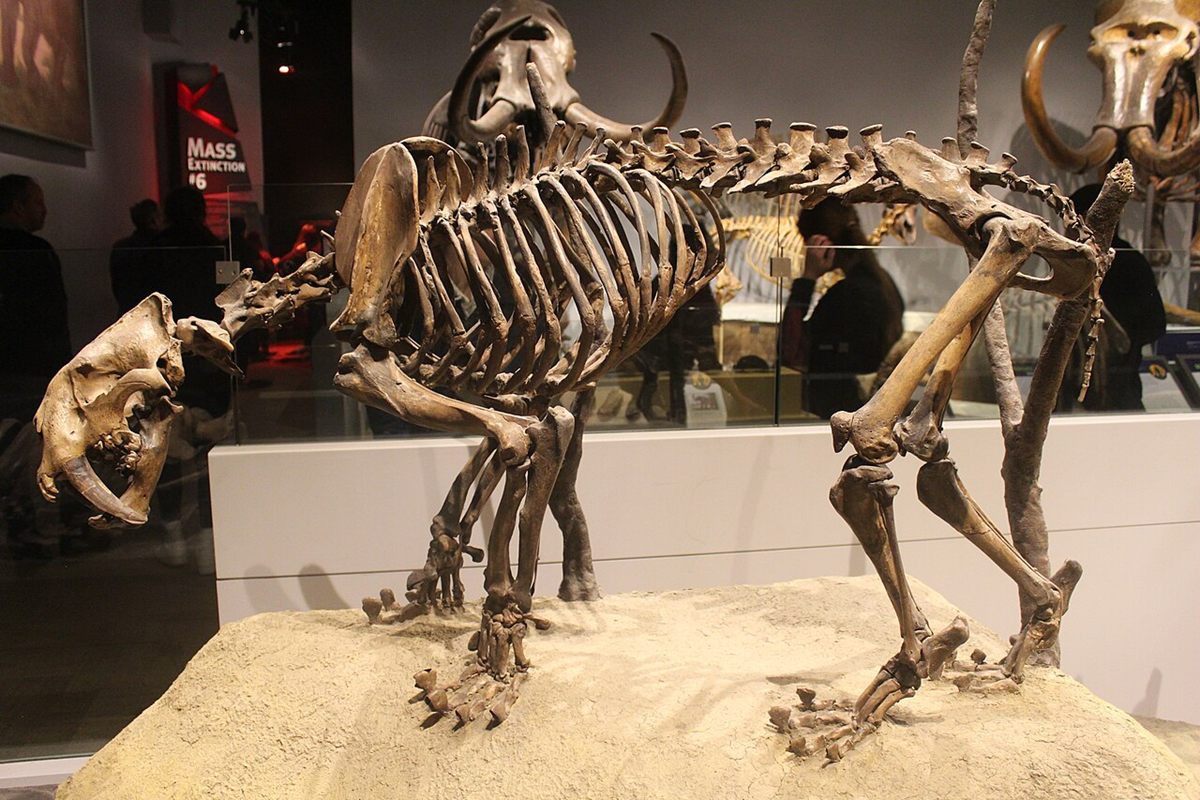
The saber-toothed cat (Smilodon fatalis) was a powerful predator of the Americas during the Pleistocene, with upper canine teeth up to about 28 centimeters long.
The saber-toothed cat (Smilodon fatalis) was a powerful predator of the Americas during the Pleistocene, with upper canine teeth up to about 28 centimeters long. It died out about 10,000 years ago, and thousands of its bones have been recovered from the La Brea Tar Pits in Los Angeles.
🧬 Field Guide Specimen: Open Saber-toothed Cat in the CRV Science Field Guide to log the specimen, see its place among the Mammals lineages in the Cladogram Explorer, and test your recall in the Red List conservation game.
Built for a Killing Stab
Smilodon had a short, muscular body with huge forelimbs and a jaw that could open very wide. The long, thin canines were delicate compared with a lion's, so scientists think the cat held prey down with its strong forelimbs and delivered a precise bite to the throat rather than a struggle-prone bite.
Treasure of the Tar Pits
The asphalt seeps of La Brea trapped herbivores and attracted predators, which got stuck themselves. More than two thousand Smilodon individuals have been recovered, giving a rich view of the animal's growth, injuries and social life.
Not a Tiger
The "saber-toothed tiger" was not a close relative of tigers but belonged to its own subfamily of cats, Machairodontinae. Its extinction at the end of the Ice Age coincided with the loss of many large mammals, including the mammoth. See Woolly Mammoth.
Saber-toothed Cat at a Glance
| Property | Value |
|---|---|
| Scientific name | Smilodon fatalis |
| Kingdom | Animalia |
| Phylum | Chordata |
| Class | Mammalia |
| Order | Carnivora |
| Family | Felidae |
| Field Guide group | Mammals: Eutheria (Placentals) |
| Diagnostic feature (Field Guide) | Massive hyper-elongated serrated maxillary canines reaching 28 cm, powerful robust forelimbs for wrestling large Pleistocene megafauna. |
| IUCN Red List status | Extinct (EX), prehistoric |
| Canine length | Up to about 28 centimeters |
See Also
- Woolly Mammoth — a fellow Ice Age casualty
- Jaguar — a living big cat