Jaguar
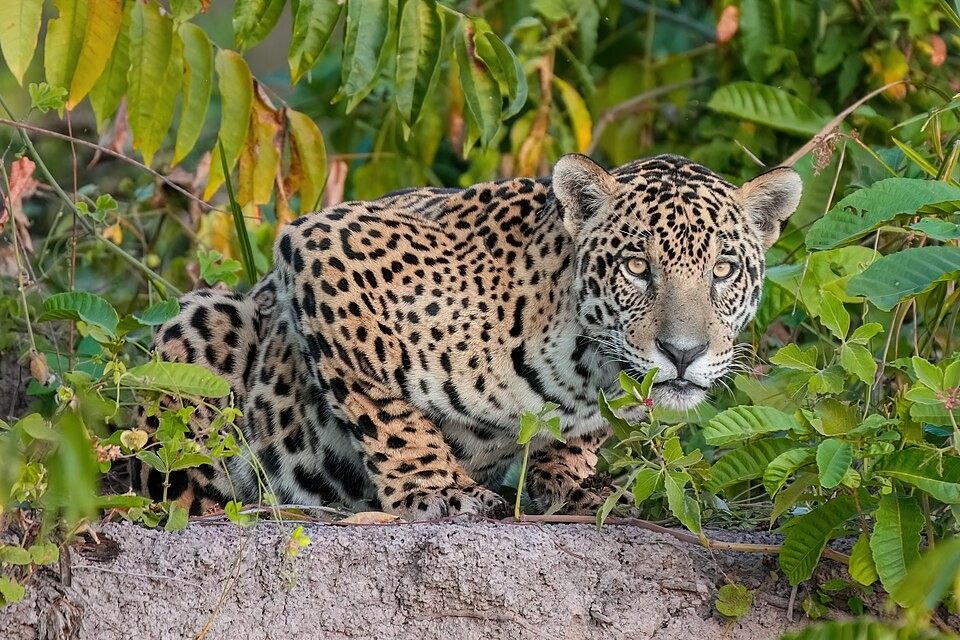
The jaguar (Panthera onca) is the largest cat of the Americas, a stocky, rosette-spotted predator ranging from Mexico to Argentina. It is listed as Near Threatened, having lost about half of its historic range.
The jaguar (Panthera onca) is the largest cat of the Americas, a stocky, rosette-spotted predator ranging from Mexico to Argentina. It is listed as Near Threatened, having lost about half of its historic range.
🧬 Field Guide Specimen: Open Jaguar in the CRV Science Field Guide to log the specimen, see its place among the Mammals lineages in the Cladogram Explorer, and test your recall in the Red List conservation game.
A Powerful Bite
The jaguar has one of the strongest bites of any big cat relative to its size, enough to crack turtle shells and pierce the skulls of caimans. It often kills by biting through the skull. The cat is a skilled swimmer and hunts in rivers and swamps.
Rosettes and Black Panthers
The coat has rosettes with spots inside, unlike a leopard's empty rosettes. Some jaguars are melanistic (black), caused by a dominant genetic change.
Corridors for a Wide-Ranging Predator
Jaguars need large areas, and deforestation, cattle ranching and persecution have fragmented their habitat. Conservation programs promote wildlife corridors linking populations from Mexico to Argentina. See Deforestation.
Jaguar at a Glance
| Property | Value |
|---|---|
| Scientific name | Panthera onca |
| Kingdom | Animalia |
| Phylum | Chordata |
| Class | Mammalia |
| Order | Carnivora |
| Family | Felidae |
| Field Guide group | Mammals: Eutheria (Placentals) |
| Diagnostic feature (Field Guide) | Robust muscular stocky felid with rosettes containing central dark spots, exceptionally powerful bite capable of piercing turtle carapaces. |
| IUCN Red List status | Near Threatened (NT), assessed 2017 |
| Range | Mexico to northern Argentina |
See Also
- Snow Leopard — another big cat
- Deforestation — habitat fragmentation