American Hookworm
The American hookworm (Necator americanus) is a blood-feeding intestinal roundworm of humans. Despite the name it is thought to have originated in the Old World, and it is now the main hookworm in much of Africa, the Americas and Asia.
The American hookworm (Necator americanus) is a blood-feeding intestinal roundworm of humans. Despite the name it is thought to have originated in the Old World, and it is now the main hookworm in much of Africa, the Americas and Asia.
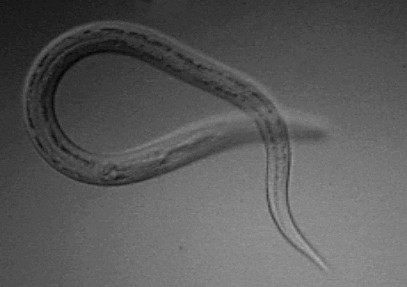
🧬 Field Guide Specimen: Open American Hookworm in the CRV Science Field Guide to log the specimen, see its place among the Ecdysozoa lineages in the Cladogram Explorer, and test your recall in the Red List conservation game.
Skin Penetration: How Does It Get In?
Larvae in damp soil burrow through the skin, usually of bare feet, causing an itchy rash, and then migrate through lungs to the gut. Adults attach to the intestinal lining with cutting plates and feed on blood.
A Public Health Campaign
In 1909 the Rockefeller Sanitary Commission began a campaign against hookworm in the American South, treating people and promoting latrines and shoes. It helped establish public health programs in the region.
Research and Immune Modulation
Hookworm vaccines are under development. Because hookworms suppress inflammation, small trials have tested deliberate infection with a low dose as a therapy for immune diseases such as celiac disease, with mixed results.
American Hookworm at a Glance
| Property | Value |
|---|---|
| Scientific name | Necator americanus |
| Kingdom | Animalia |
| Phylum | Nematoda |
| Class | Chromadorea |
| Order | Strongylida |
| Family | Ancylostomatidae |
| Field Guide group | Ecdysozoa: Nematoda (Roundworms & Parasites) |
| Diagnostic feature (Field Guide) | Pair of dorsal and ventral semilunar cutting plates flanking oral cavity, characteristic dorsal hook curvature. |
| Class | Chromadorea (Nematoda) |
| Entry route | Skin penetration |
See Also
- Old World Hookworm — its relative
- Immunology — helminths and the immune system