Human Whipworm
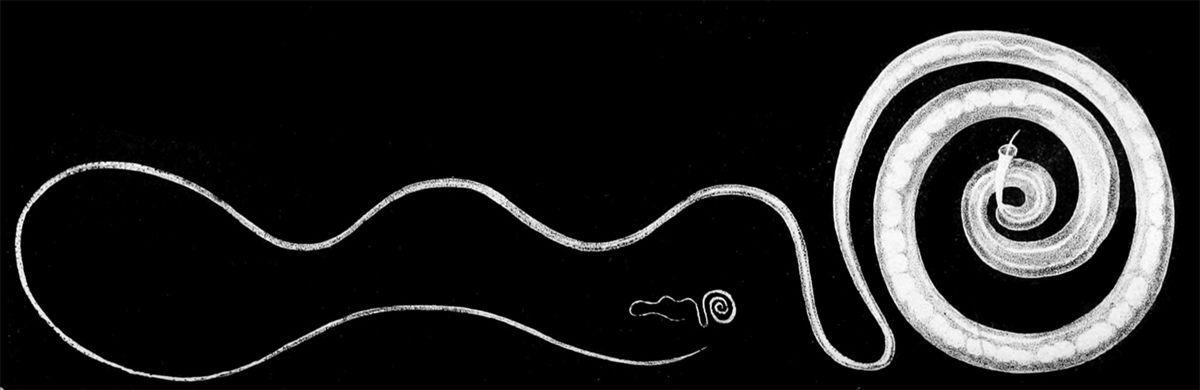
The human whipworm (Trichuris trichiura) is a roundworm named for its whip shape: a thin front end embedded in the lining of the large intestine and a thicker rear end.
The human whipworm (Trichuris trichiura) is a roundworm named for its whip shape: a thin front end embedded in the lining of the large intestine and a thicker rear end. It is one of the three main soil-transmitted helminths, with hundreds of millions of infections worldwide.
🧬 Field Guide Specimen: Open Human Whipworm in the CRV Science Field Guide to log the specimen, see its place among the Ecdysozoa lineages in the Cladogram Explorer, and test your recall in the Red List conservation game.
Barrel-Shaped Eggs: How Is It Transmitted?
Eggs with a distinctive plug at each end pass in feces and develop in warm, shaded soil for a few weeks before they become infective. They are swallowed with contaminated food or hands.
Heavy Infections
Light infections are often silent, but heavy infections in children can cause bloody diarrhea, anemia, growth problems and rectal prolapse. Worms live for a year or more.
Ancient Infection
Whipworm eggs were found in the intestines of Ötzi, the 5,300-year-old Iceman mummy, confirming that people have carried this parasite for thousands of years.
Human Whipworm at a Glance
| Property | Value |
|---|---|
| Scientific name | Trichuris trichiura |
| Kingdom | Animalia |
| Phylum | Nematoda |
| Class | Enoplea |
| Order | Trichocephalida |
| Field Guide group | Ecdysozoa: Nematoda (Roundworms & Parasites) |
| Diagnostic feature (Field Guide) | Distinctive whip-shaped anatomy with ultra-slender anterior thread burrowed into cecal mucosa and thick posterior handle. |
| Order | Trichocephalida |
| Egg shape | Barrel-shaped with polar plugs |
See Also
- Giant Roundworm — a fellow soil-transmitted helminth
- American Hookworm — a fellow soil-transmitted helminth