Old World Hookworm
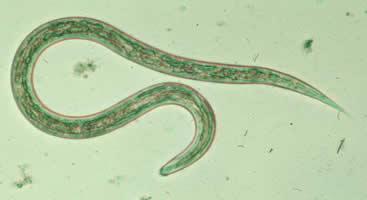
The Old World hookworm (Ancylostoma duodenale) is a parasitic roundworm that lives in the human small intestine and feeds on blood. Together with the American hookworm, it infects hundreds of millions of people in warm regions.
The Old World hookworm (Ancylostoma duodenale) is a parasitic roundworm that lives in the human small intestine and feeds on blood. Together with the American hookworm, it infects hundreds of millions of people in warm regions.
🧬 Field Guide Specimen: Open Human Hookworm in the CRV Science Field Guide to log the specimen, see its place among the Ecdysozoa lineages in the Cladogram Explorer, and test your recall in the Red List conservation game.
Blood Loss in the Gut: Why Anemia?
The adult worm attaches to the intestinal wall with cutting plates in its mouth and sips blood, releasing anticoagulants as it feeds. Heavy infections cause iron-deficiency anemia, which stunts the growth and learning of children and complicates pregnancy.
Life Cycle
Eggs pass in feces and hatch in warm, moist soil. The larvae can penetrate bare skin or be swallowed, travel through the lungs and are coughed up and swallowed again to reach the intestine.
Control
Wearing shoes, sanitation and regular deworming with albendazole or mebendazole reduce infection. Hookworm is among the soil-transmitted helminths targeted by the World Health Organization.
Old World Hookworm at a Glance
| Property | Value |
|---|---|
| Scientific name | Ancylostoma duodenale |
| Kingdom | Animalia |
| Phylum | Nematoda |
| Class | Chromadorea |
| Order | Strongylida |
| Family | Ancylostomatidae |
| Field Guide group | Ecdysozoa: Nematoda (Roundworms & Parasites) |
| Diagnostic feature (Field Guide) | Ventral cutting plates and oral teeth in buccal capsule for latching onto intestinal mucosa and feeding on host blood. |
| Class | Chromadorea (Nematoda) |
| Main symptom | Iron-deficiency anemia |
See Also
- American Hookworm — a related hookworm
- Mosquito-borne disease — other neglected tropical infections