Anthracite
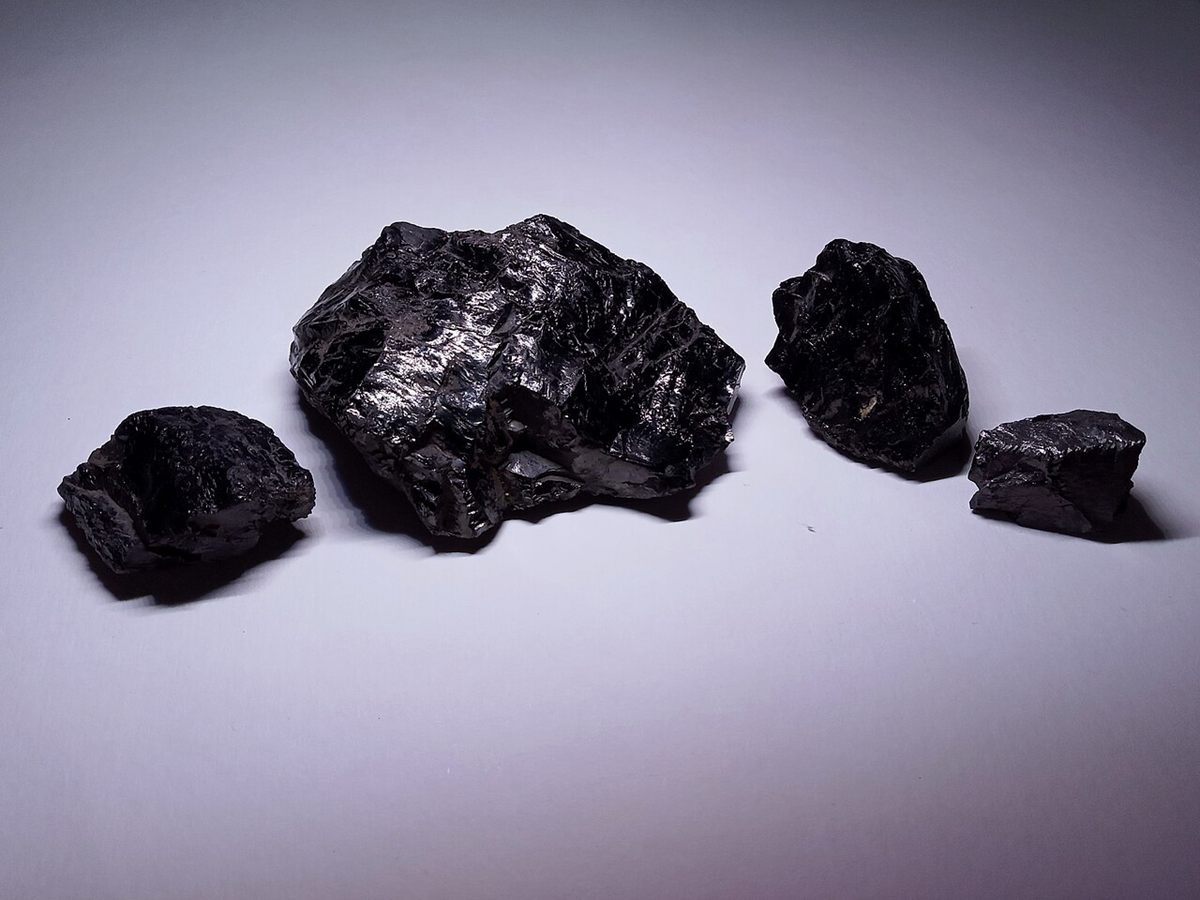
Anthracite is the highest rank of coal, a hard, jet-black, lustrous rock with about 92 to 98 percent carbon. It is sometimes treated as a metamorphic rock, because it has been transformed by heat and pressure in folded mountain belts.
Anthracite is the highest rank of coal, a hard, jet-black, lustrous rock with about 92 to 98 percent carbon. It is sometimes treated as a metamorphic rock, because it has been transformed by heat and pressure in folded mountain belts.
🪨 Geology Guide Specimen: Open Anthracite Coal in the CRV Science Rock & Mineral ID Guide to log the specimen, compare it with the other 6 subgroups of Metamorphic, and test your eye in LithoClade.
Highest Rank: How Does Coal Reach Anthracite?
Anthracite is the end of the series that runs from peat through lignite and bituminous coal. Strong heating and tectonic deformation drive off nearly all volatile matter and rearrange the carbon into larger ordered sheets. Further heating would turn it into graphite.
Properties: Why Does It Look So Different?
Anthracite is dense for a coal, has a brilliant, almost metallic luster and a conchoidal fracture, and it does not smudge the fingers. Because it holds little volatile matter, it ignites with difficulty but burns hot with little smoke, a blue flame and little soot.
Coal Fields: Where Is Anthracite Found?
Anthracite is rare compared with other coal. Famous fields include northeastern Pennsylvania, where folding of the Appalachians raised the rank of coal, and parts of Wales, Russia and China. See fossil fuels.
Anthracite at a Glance
| Property | Value |
|---|---|
| Type / variety | High-Rank Submetallic Metamorphic Coal |
| Composition | 92–98% Fixed Carbon (Aromatic Graphene-Like Sheets; <8% Volatiles) |
| Geology Guide group | Metamorphic Rocks (Foliated, Granoblastic & High-P) |
| Rock Classification | Non-Foliated (Granoblastic & Contact) |
| Mohs hardness | Mohs 2.75–3.5 |
| Texture / habit | Massive, homogeneous, non-banded with curved conchoidal fracture |
| Density | 1.45–1.75 g/cm³ |
| Lustre and cleavage | Brilliant jet-black submetallic iridescent lustre that does not smudge fingers |
| Geological setting | Tectonically folded foreland basins at 180–280 °C (e.g., eastern Pennsylvania) |
| Diagnostic feature (Geology Guide) | Lightweight (1.5 g/cm³), jet-black rock with a mirror-bright submetallic lustre and smooth curved conchoidal fracture that does not soil fingers and burns with a smokeless blue flame. |
| Carbon content | About 92-98% |
| Burning | Hot and nearly smokeless |
See Also
- Bituminous Coal — the next rank down
- Lignite — the lowest rank
- Fossil Fuels — the energy and climate context