Chalcanthite
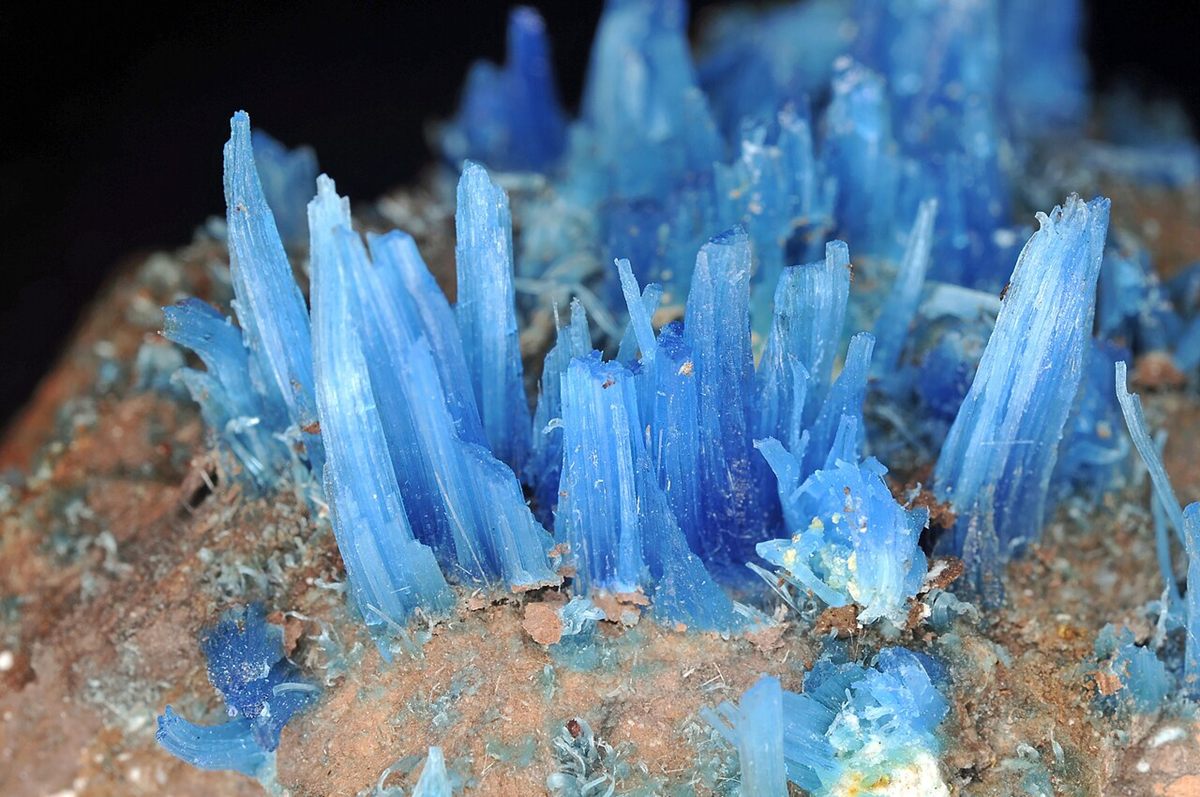
Chalcanthite is hydrated copper sulfate, CuSO₄·5H₂O, a vivid blue, water-soluble mineral that forms in dry copper mines and the oxidized zones of copper deposits. It is the natural form of the 'blue vitriol' of chemistry.
Chalcanthite is hydrated copper sulfate, CuSO₄·5H₂O, a vivid blue, water-soluble mineral that forms in dry copper mines and the oxidized zones of copper deposits. It is the natural form of the "blue vitriol" of chemistry.
🪨 Geology Guide Specimen: Open Chalcanthite in the CRV Science Rock & Mineral ID Guide to log the specimen, compare it with the other 8 mineral classes of Dana / Strunz Classes, and test your eye in LithoClade.
A Soluble Mineral: Why Is It So Rare in the Wild?
Chalcanthite dissolves in water, so it survives only in very dry places such as the Atacama Desert and in mine tunnels, where it forms crusts and stalactites on the walls as copper-rich water evaporates. Its hardness is 2.5, and the color is a bright, electric blue.
Source: Where Does the Copper Sulfate Come From?
Weathering of copper sulfides, such as chalcopyrite, releases copper and sulfuric acid. In a dry climate the solution evaporates and leaves chalcanthite, often with other copper sulfates.
The Iron Nail Test: What Happens to Iron?
A clean iron nail placed in a solution of copper sulfate is soon coated with metallic copper, because iron is more reactive and displaces copper. The same reaction, called cementation, has been used to recover copper from mine waters, and copper sulfate is also used in fungicides.
Chalcanthite at a Glance
| Property | Value |
|---|---|
| Type / variety | CuSO₄·5H₂O • Triclinic Hydrated Copper Sulfate |
| Composition | CuSO₄·5H₂O (Copper Pentahydrate) |
| Geology Guide group | Minerals (8 Major Chemical Groups) |
| Mineral Group | Sulfates |
| Mohs hardness | Mohs 2.5 |
| Texture / habit | Sharp triclinic wedges, fibrous veins, or stalactitic cave drips |
| Density | 2.28 g/cm³ |
| Lustre and cleavage | Translucent electric royal-blue vitreous crystals; readily soluble in water |
| Geological setting | Hyper-arid oxidized copper mine walls and post-mining stalactites (e.g., Atacama, Arizona) |
| Diagnostic feature (Geology Guide) | Vivid, translucent electric-blue triclinic crystal or stalactite (Mohs 2.5) that forms in hyper-arid copper zones, dissolves in water, and plates a thin film of metallic copper onto a wet iron nail. |
| Formula | CuSO₄·5H₂O |
| Solubility | Dissolves readily in water |
See Also
- Copper — the metal in chalcanthite
- Chalcopyrite — a source sulfide
- Malachite — a less soluble copper mineral