Malachite
Malachite is a green copper carbonate hydroxide, Cu₂CO₃(OH)₂, a hardness 3.5 to 4 mineral that forms in the weathered zones of copper deposits.
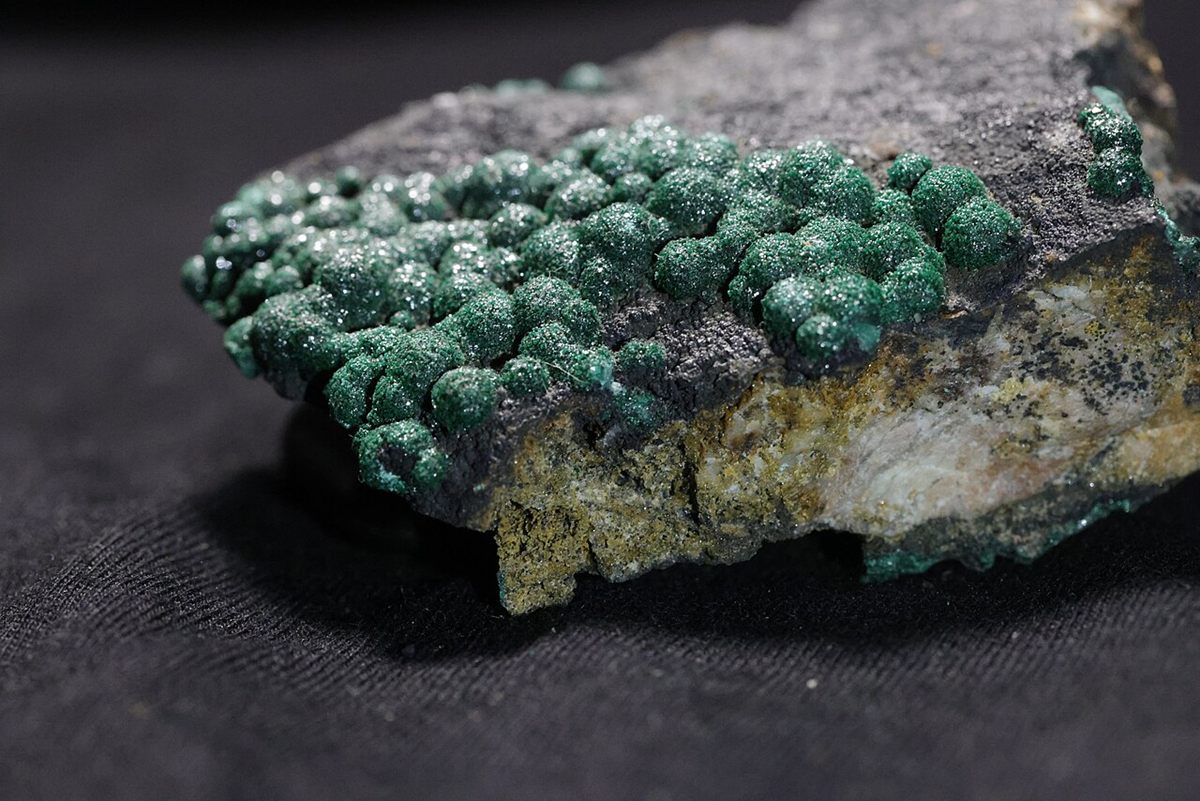
Malachite is a green copper carbonate hydroxide, Cu₂CO₃(OH)₂, a hardness 3.5 to 4 mineral that forms in the weathered zones of copper deposits. It often grows in grape-like masses with concentric bands, and it has been used as an ore, a pigment and an ornamental stone.
🪨 Geology Guide Specimen: Open Malachite in the CRV Science Rock & Mineral ID Guide to log the specimen, compare it with the other 8 mineral classes of Dana / Strunz Classes, and test your eye in LithoClade.
Oxidized Copper: How Does Malachite Form?
Banding: Why Does It Look Like Bullseyes?
Malachite typically forms botryoidal (grape-like) and stalactitic masses with concentric light and dark green bands, produced as layers precipitate one after another. Polished slices give the swirling patterns used in jewelry, boxes and carved columns, as in the famous malachite rooms of Russian palaces.
Ore and Pigment: What Is It Used For?
Malachite is about 57 percent copper and was among the earliest copper ores smelted. Ground malachite was a green pigment in ancient Egypt and in European painting. It fizzes in acid and leaves a pale green streak.
Malachite at a Glance
| Property | Value |
|---|---|
| Type / variety | Cu₂CO₃(OH)₂ • Monoclinic Copper Carbonate |
| Composition | Cu₂CO₃(OH)₂ (57.4 wt% Copper) |
| Geology Guide group | Minerals (8 Major Chemical Groups) |
| Mineral Group | Carbonates |
| Mohs hardness | Mohs 3.5–4 |
| Texture / habit | Botryoidal (grape-like) masses with concentric light- and dark-green eye banding |
| Density | 3.90–4.05 g/cm³ |
| Lustre and cleavage | Silky-to-velvety banded emerald and forest green; pale green streak; fizzes in HCl |
| Geological setting | Weathered oxidized upper zones of copper ore deposits worldwide |
| Diagnostic feature (Geology Guide) | Botryoidal (grape-cluster) masses and stalactites sliced to reveal swirling bullseye bands of vivid emerald and forest green (Mohs 3.5–4) that leave a pale green streak and fizz in hydrochloric acid. |
| Formula | Cu₂CO₃(OH)₂ |
| Streak | Pale green |