Chert
Chert is a hard, dense sedimentary rock made of microscopic quartz crystals, with a waxy luster and a smooth, curved (conchoidal) fracture.
Chert is a hard, dense sedimentary rock made of microscopic quartz crystals, with a waxy luster and a smooth, curved (conchoidal) fracture. Flint is a dark variety that forms as nodules in chalk. Because it breaks into razor-sharp edges, chert was the main raw material for stone tools for most of human history.
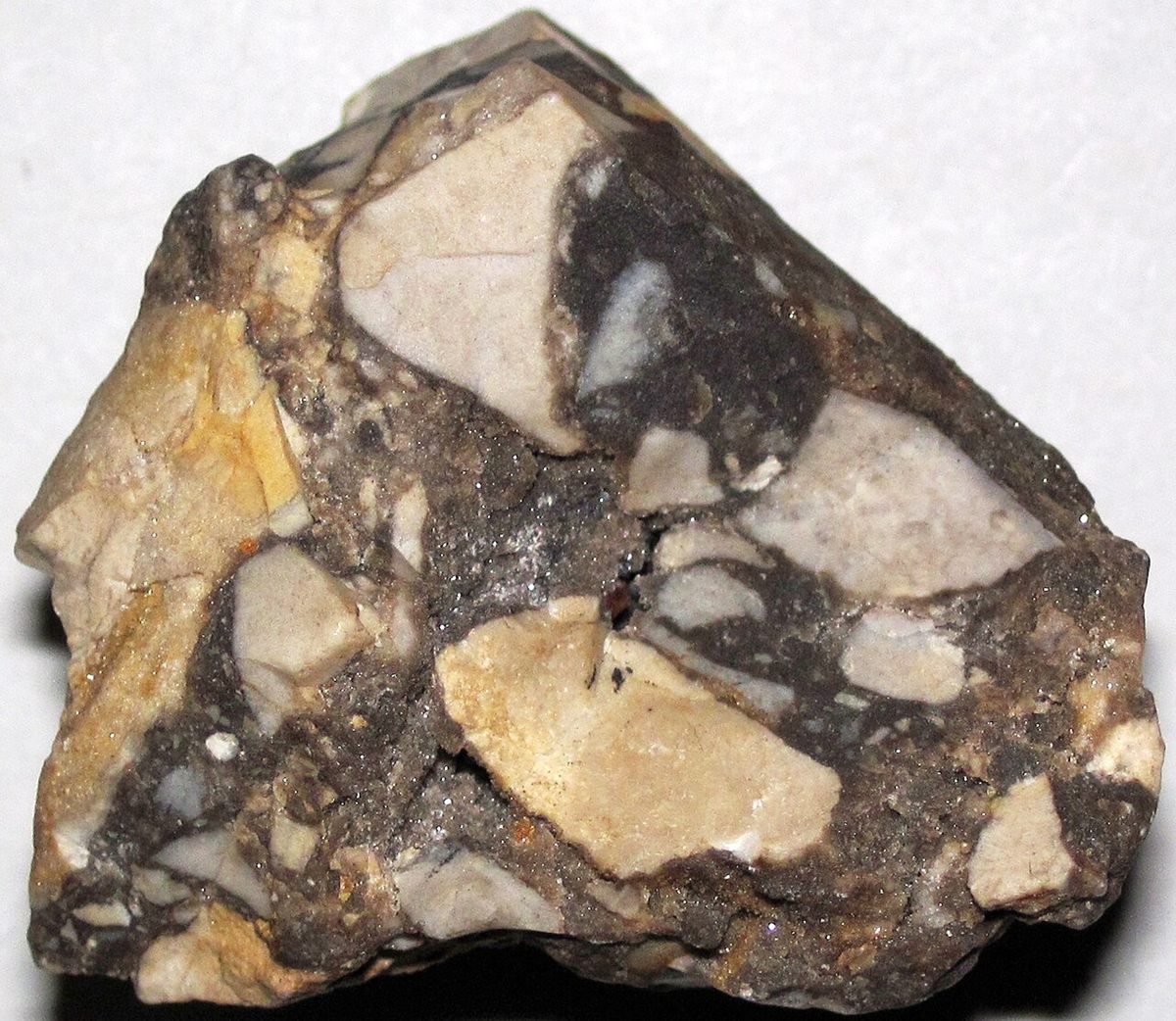
🪨 Geology Guide Specimen: Open Chert (Flint) in the CRV Science Rock & Mineral ID Guide to log the specimen, compare it with the other 6 subgroups of Sedimentary, and test your eye in LithoClade.
Microcrystalline Quartz: What Is Chert Made Of?
Chert is over 98 percent silica (SiO₂), in the form of microquartz grains and fibrous chalcedony too small to see without a microscope. It has a hardness of 7, so it scratches steel and glass, and its tiny interlocking crystals give it its toughness and its conchoidal fracture.
Origins: Where Does the Silica Come From?
Much chert begins as biogenic ooze. Radiolarians, diatoms and sponges build skeletons of opaline silica, which settle on the sea floor. During burial the opal dissolves and reprecipitates, first as a disordered form called opal-CT and finally as microquartz. Nodular flint forms in chalk and limestone where dissolved silica replaces the carbonate around a nucleus, and some chert has a hydrothermal or volcanic source of silica.
Toolmaking: Why Was Chert So Important to Prehistoric People?
Struck with a hammerstone, chert flakes to extremely sharp edges that can be shaped into knives, scrapers and spear and arrow points. Flint and chert tools appear across the world's archaeological record, and trade in good chert moved the stone hundreds of kilometers. Flint also strikes sparks from steel, because the blow shaves off tiny glowing fragments of the metal. See chalk, where flint nodules are common.
Chert at a Glance
| Property | Value |
|---|---|
| Type / variety | Microcrystalline Conchoidal Authigenic Silica |
| Composition | >98% Microcrystalline & Cryptocrystalline Quartz / Chalcedony (SiO₂) |
| Geology Guide group | Sedimentary Rocks (Clastic, Chemical & Biogenic) |
| Rock Classification | Siliceous, Iron & Organic |
| Mohs hardness | Mohs 7 (scratches steel and glass easily) |
| Texture / habit | Dense, ultra-smooth cryptocrystalline mass with waxy lustre |
| Density | 2.60–2.65 g/cm³ |
| Lustre and cleavage | Waxy-to-subvitreous with razor-sharp curved conchoidal fracture |
| Geological setting | Deep-sea radiolarian/sponge-spicule oozes and diagenetic nodules in chalk/limestone |
| Diagnostic feature (Geology Guide) | Extremely hard (Mohs 7), waxy-lustred nodule or bedded layer that strikes sparks against steel and breaks along smooth, shell-like conchoidal curves; prized in prehistory for knapping arrowheads. |
| Flint | A dark nodular variety of chert in chalk |
| Name | Chert, an English word of uncertain origin |