Chalk
Chalk is a soft, fine-grained, white limestone made mostly of the microscopic calcite plates of marine algae.
Chalk is a soft, fine-grained, white limestone made mostly of the microscopic calcite plates of marine algae. It forms thick deposits from the Cretaceous Period, whose name comes from the Latin word for chalk, and it makes landmarks such as the White Cliffs of Dover.
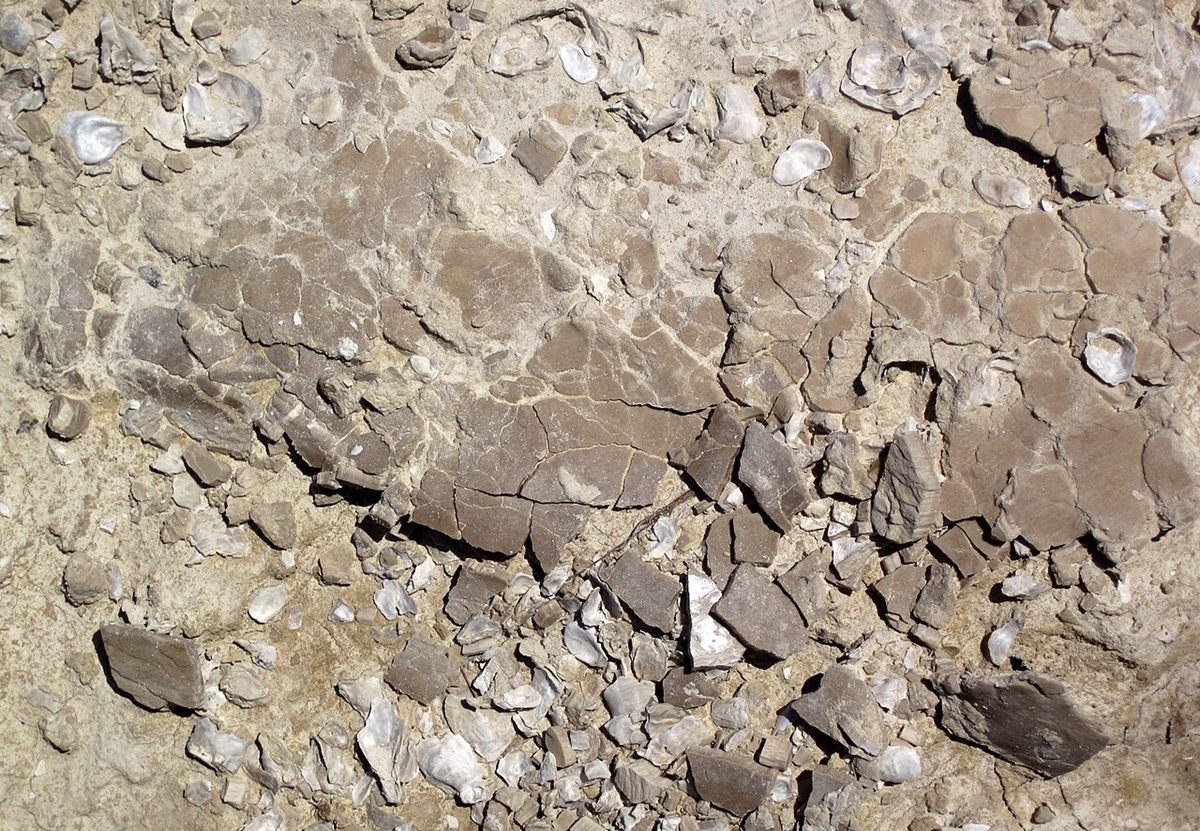
🪨 Geology Guide Specimen: Open Chalk in the CRV Science Rock & Mineral ID Guide to log the specimen, compare it with the other 6 subgroups of Sedimentary, and test your eye in LithoClade.
Coccoliths: What Is Chalk Made Of?
Coccolithophores are single-celled marine algae that surround themselves with tiny calcite plates called coccoliths. When they die the plates settle to the sea floor in vast numbers, and they accumulate as a soft ooze that later hardens into chalk. See phytoplankton for their place in the food web.
Cretaceous Seas: Why Did Chalk Dominate Then?
In the Cretaceous, sea level was high and shallow seas flooded continents, and the warm greenhouse climate favored coccolithophores. The resulting chalks are thick and widespread across northern Europe, North America and elsewhere, and they often contain nodules of flint.
Uses and Importance: From Cliffs to Oil Fields
Chalk is used in cement, whiting, agricultural lime and putty. Today's blackboard chalk is usually made of gypsum, not chalk. Beneath the North Sea, porous chalk forms reservoirs for oil and gas, such as the Ekofisk field, and chalk aquifers supply drinking water in southern England.
Chalk at a Glance
| Property | Value |
|---|---|
| Type / variety | Pelagic Coccolithophore Biomicrite Chalk |
| Composition | 98% Microscopic Calcite Plates (Coccoliths, <0.005 mm) of Marine Algae |
| Geology Guide group | Sedimentary Rocks (Clastic, Chemical & Biogenic) |
| Rock Classification | Carbonates (Limestones & Dolostone) |
| Mohs hardness | Mohs 1–2 (bulk friable; calcite grains are Mohs 3) |
| Texture / habit | Soft, porous, earthy white powder that marks dark surfaces |
| Density | 1.80–2.40 g/cm³ |
| Lustre and cleavage | Snow-white matte earthy appearance; effervesces strongly in acid |
| Geological setting | Cretaceous pelagic seas (e.g., White Cliffs of Dover, Niobrara) |
| Diagnostic feature (Geology Guide) | Soft, snow-white, porous marine rock that rubs off on fingers and fizzes violently in weak acid, built from trillions of microscopic wheel-shaped armor plates shed by planktonic algae. |
| Main component | Coccoliths of calcareous algae |
| Famous example | White Cliffs of Dover |
See Also
- Fossiliferous Limestone — limestone with larger fossils
- Phytoplankton — the producers that include coccolithophores
- Ocean Acidification — a threat to calcifying plankton