Diorite
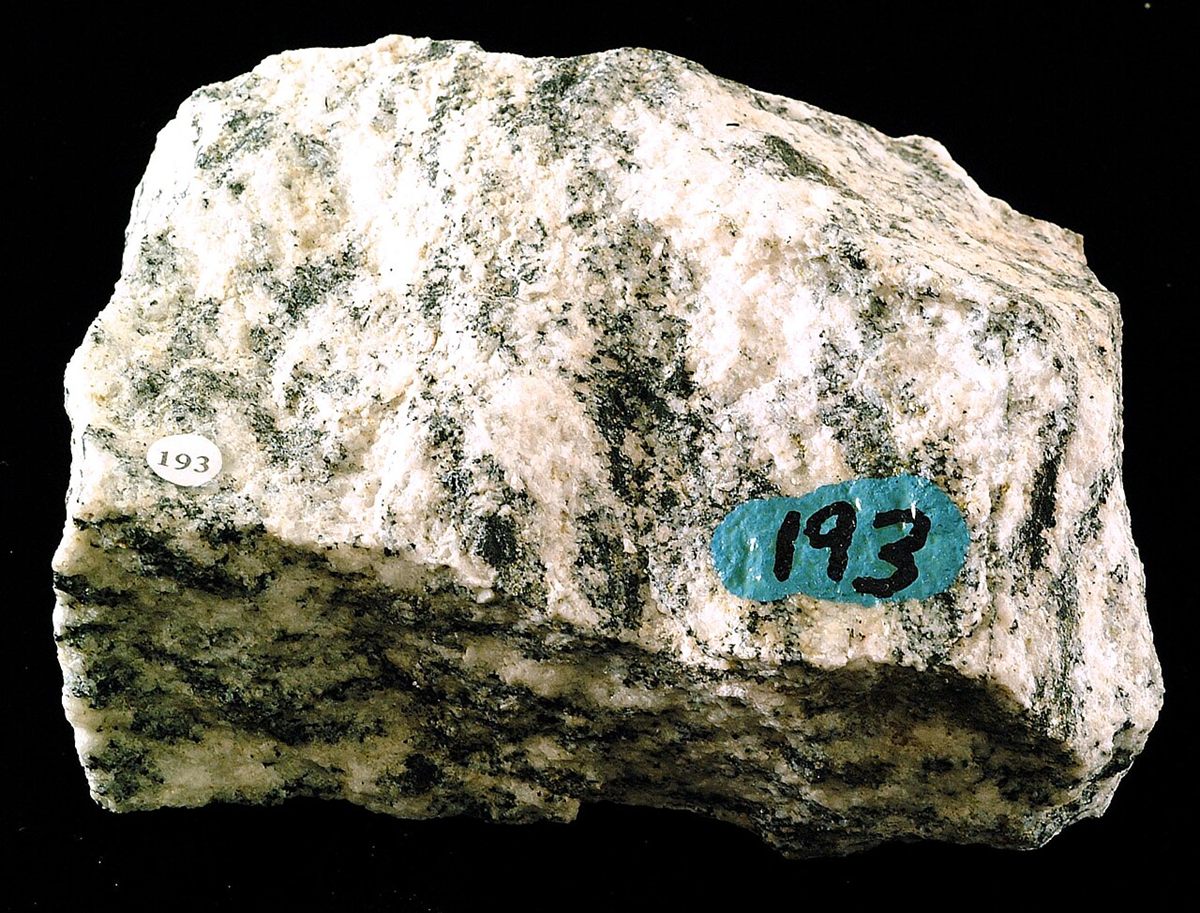
Diorite is a coarse-grained plutonic rock of intermediate composition, made of roughly equal parts light plagioclase and dark hornblende or biotite, with little or no quartz.
Diorite is a coarse-grained plutonic rock of intermediate composition, made of roughly equal parts light plagioclase and dark hornblende or biotite, with little or no quartz. Its black-and-white "salt-and-pepper" look and its setting in volcanic arcs mark it as the intrusive equivalent of andesite.
🪨 Geology Guide Specimen: Open Diorite in the CRV Science Rock & Mineral ID Guide to log the specimen, compare it with the other 7 subgroups of Igneous, and test your eye in LithoClade.
Composition: What Separates Diorite from Granite and Gabbro?
Arc Plutons: Where Does Diorite Form?
Diorite crystallizes in the roots of volcanic arcs, often alongside granodiorite and tonalite in the same batholiths. It represents magma that cooled underground rather than erupting, the plutonic counterpart of the andesite found in the volcanoes above.
Building Stone: Why Was Diorite Prized Anciently?
Diorite is dense, tough and takes a high polish, so it was carved into statues and monuments in ancient times. Some famous "diorites," including the Egyptian stone of the statue of Khafre, have been reidentified as other rocks such as anorthositic gneiss, a reminder that archaeologists' stone names were often looser than modern ones.
Diorite at a Glance
| Property | Value |
|---|---|
| Type / variety | Plagioclase–Hornblende Diorite |
| Composition | Andesine Plagioclase (50–65%) + Black Hornblende/Biotite (<5% Quartz) |
| Geology Guide group | Igneous Rocks (Plutonic & Volcanic) |
| Rock Classification | Intermediate (Diorite–Andesite) |
| Mohs hardness | Mohs 6–6.5 |
| Texture / habit | Coarse equigranular 'salt-and-pepper' mosaic |
| Density | 2.80–2.95 g/cm³ |
| Lustre and cleavage | High-contrast white feldspar and black amphibole prisms |
| Geological setting | Cordilleran and island-arc magma roots |
| Diagnostic feature (Geology Guide) | Coarse-grained 'salt-and-pepper' plutonic rock composed of roughly equal proportions of chalky white sodium-calcium plagioclase and jet-black hornblende amphibole, with almost no free quartz. |
| Extrusive equivalent | Andesite |
| Quartz content | Little or none |