Dunite
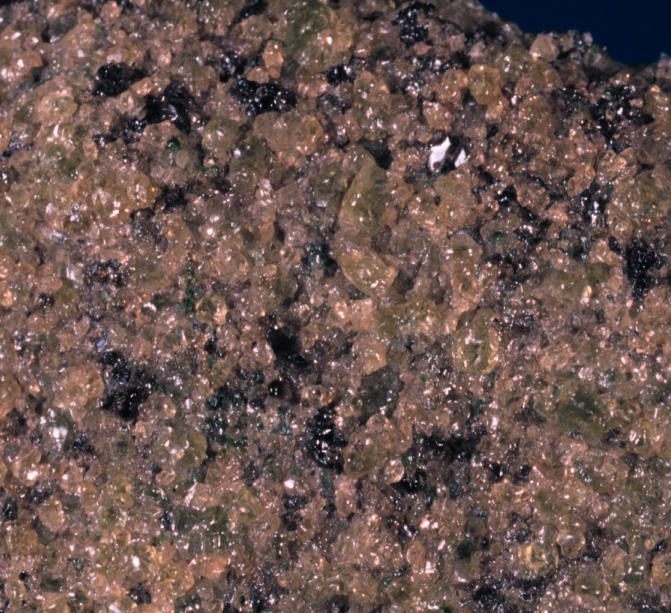
Dunite is an ultramafic rock made of more than 90 percent olivine, usually magnesium-rich forsterite. The name comes from Dun Mountain in New Zealand, whose olive-green rock, weathering to rusty brown, gave the original description.
Dunite is an ultramafic rock made of more than 90 percent olivine, usually magnesium-rich forsterite. The name comes from Dun Mountain in New Zealand, whose olive-green rock, weathering to rusty brown, gave the original description.
🪨 Geology Guide Specimen: Open Dunite in the CRV Science Rock & Mineral ID Guide to log the specimen, compare it with the other 7 subgroups of Igneous, and test your eye in LithoClade.
Nearly Pure Olivine: How Does a Rock Form from One Mineral?
Dunite can form in two ways. In a magma chamber, dense olivine crystals sink and pile up as a cumulate. In the mantle, extensive melting removes other minerals and leaves olivine behind, and melt rising through channels dissolves pyroxene to make dunite lenses in peridotite.
Chromite: What Are the Black Specks?
Dunite often contains small black octahedral crystals of chromite, a chromium-rich spinel. Chromite can be concentrated into massive layers and pods within dunite, which are the main source of chromium for stainless steel and chemicals.
Weathering and Gems: Why Is Fresh Dunite Hard to Find?
Olivine weathers easily, so exposed dunite develops a tan or rusty rind of altered minerals. Gem-quality olivine is called peridot. Dunite is used as a source of olivine sand for foundries and is being investigated for carbon removal by mineral reaction.
Dunite at a Glance
| Property | Value |
|---|---|
| Type / variety | Monomineralic Olivine Dunite |
| Composition | >90% Forsterite Olivine ((Mg,Fe)₂SiO₄) + Accessory Black Chromite |
| Geology Guide group | Igneous Rocks (Plutonic & Volcanic) |
| Rock Classification | Ultramafic & Mantle |
| Mohs hardness | Mohs 6.5–7 |
| Texture / habit | Sugary equigranular olive-green mosaic |
| Density | 3.25–3.35 g/cm³ |
| Lustre and cleavage | Glassy green granular interior with tan weathered rind |
| Geological setting | Basal cumulate zones of magma chambers & depleted mantle |
| Diagnostic feature (Geology Guide) | Bright yellowish-green, sugary-textured rock composed of over 90% pure magnesium-rich olivine grains peppered with tiny black octahedra of chromite spinel. |
| Olivine content | More than 90% |
| Named for | Dun Mountain, New Zealand |
See Also
- Peridotite — the broader mantle rock family
- Komatiite — a magnesium-rich ancient lava
- Chromium — the metal in chromite