Greywacke
Greywacke is a hard, dark, poorly sorted sandstone with angular grains of quartz, feldspar and rock fragments set in a matrix of fine clay and chlorite. It is typically deposited by turbidity currents in deep marine settings.
Greywacke is a hard, dark, poorly sorted sandstone with angular grains of quartz, feldspar and rock fragments set in a matrix of fine clay and chlorite. It is typically deposited by turbidity currents in deep marine settings.
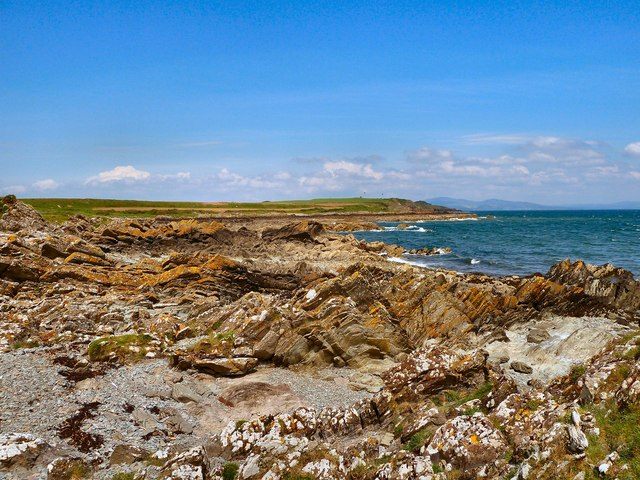
🪨 Geology Guide Specimen: Open Greywacke in the CRV Science Rock & Mineral ID Guide to log the specimen, compare it with the other 6 subgroups of Sedimentary, and test your eye in LithoClade.
Turbidites: How Do Underwater Avalanches Build Beds?
Turbidity currents are dense, sediment-laden flows that run down submarine slopes and canyons and spread over the deep sea floor. As they slow, the coarse grains settle first and the mud last, producing graded beds with sandy bases and muddy tops. Stacks of these beds are the typical record of greywacke basins.
Matrix: Why Is It an Immature Sandstone?
Greywacke contains more than about 15 percent fine matrix, and its grains include unstable feldspar and rock fragments. This is a sign of rapid deposition from muddy flows, with little reworking. Some of the matrix may also form later as soft rock fragments are squeezed and altered.
Tectonic Setting: Where Is Greywacke Found?
Greywacke is common in trenches, accretionary wedges and foreland basins, where steep slopes and fast erosion feed turbidity currents. Examples include the Torlesse greywackes of New Zealand and parts of the Franciscan Complex of California, which are tied to plate tectonics.
Greywacke at a Glance
| Property | Value |
|---|---|
| Type / variety | Immature Argillaceous Turbidite Greywacke |
| Composition | Angular Quartz + Plagioclase + Lithic Rock Fragments in >15% Chlorite/Clay Matrix |
| Geology Guide group | Sedimentary Rocks (Clastic, Chemical & Biogenic) |
| Rock Classification | Medium Clastic (Sandstones) |
| Mohs hardness | Mohs 5.5–6.5 |
| Texture / habit | Poorly sorted angular 0.06–2 mm grains in dark muddy matrix |
| Density | 2.65–2.75 g/cm³ |
| Lustre and cleavage | Hard, dark greenish-grey appearance with graded bedding |
| Geological setting | Deep-ocean submarine canyons and trench turbidity currents |
| Diagnostic feature (Geology Guide) | Hard, dark greenish-grey rock where poorly sorted, angular 0.1–2 mm grains of quartz, feldspar, and volcanic rock fragments are bound inside more than 15% fine clay-and-chlorite matrix. |
| Matrix content | More than about 15% |
| Typical deposit | Turbidite |
See Also
- Quartz Arenite — the mature, clean sandstone
- Plate Tectonics — the trench and collision settings of greywacke
- Black Shale — a quieter deep-water mudrock