Blueschist
Blueschist is a blue-grey metamorphic rock colored by glaucophane, a sodium-rich amphibole. It forms at high pressure and relatively low temperature, in cold, rapidly subducting oceanic crust.
Blueschist is a blue-grey metamorphic rock colored by glaucophane, a sodium-rich amphibole. It forms at high pressure and relatively low temperature, in cold, rapidly subducting oceanic crust.
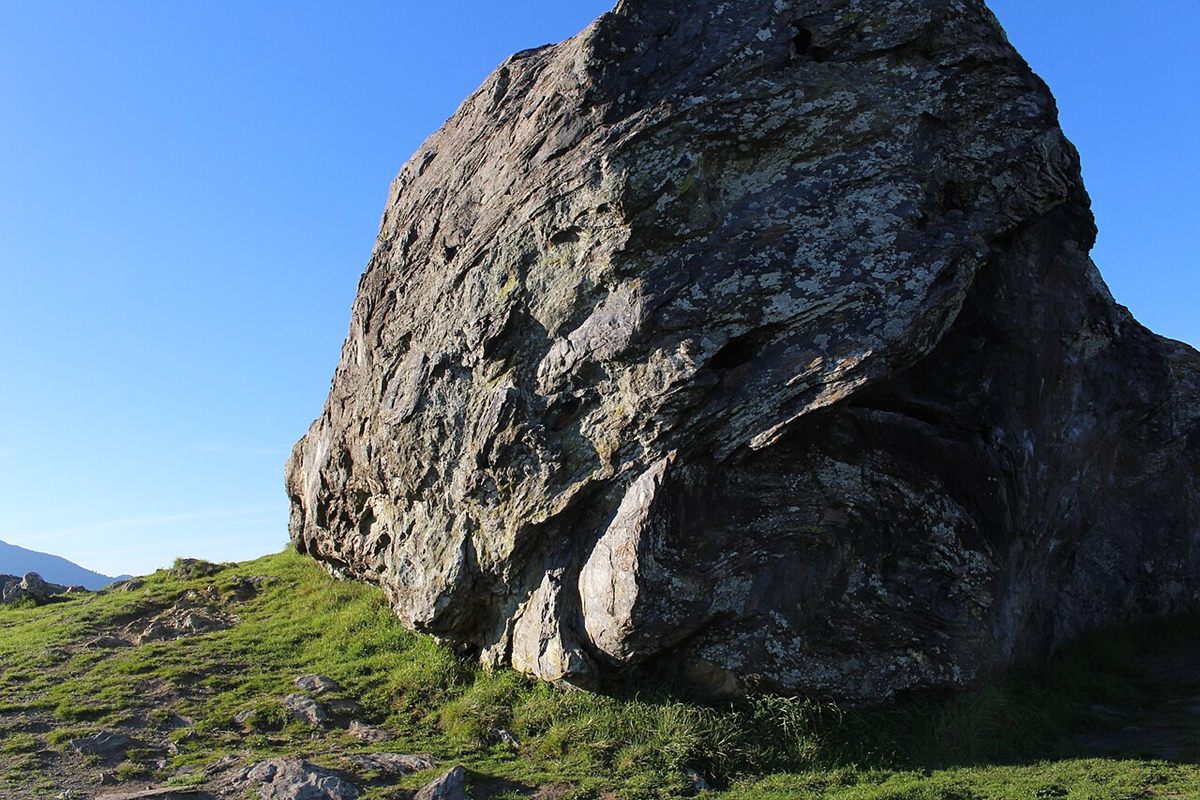
🪨 Geology Guide Specimen: Open Glaucophane Blueschist in the CRV Science Rock & Mineral ID Guide to log the specimen, compare it with the other 6 subgroups of Metamorphic, and test your eye in LithoClade.
Cold and Deep: What Conditions Make Blueschist?
Blueschist forms at depths of roughly 15 to 35 kilometers and temperatures of 200 to 450 degrees Celsius. Such a low temperature for that depth is typical of old, cold oceanic plates that sink fast, so heat has little time to catch up. Lawsonite, epidote and garnet commonly occur with the glaucophane.
A Clue to Plate Tectonics: Why Is Blueschist Rare in Old Rocks?
Blueschists older than about 800 million years are essentially unknown. Some geologists see this as a sign that cold, deep subduction began in the Neoproterozoic, while others think that older blueschists simply did not survive, so the interpretation is debated.
Localities: Where Is Blueschist Found?
Blueschist at a Glance
| Property | Value |
|---|---|
| Type / variety | High-Pressure Sodic-Amphibole Blueschist |
| Composition | Indigo-Blue Glaucophane (Na-Amphibole) + Lawsonite / Epidote + Garnet |
| Geology Guide group | Metamorphic Rocks (Foliated, Granoblastic & High-P) |
| Rock Classification | High-Pressure Subduction |
| Mohs hardness | Mohs 5.5–6.5 |
| Texture / habit | Lineated and foliated felt of indigo-blue amphibole needles |
| Density | 3.05–3.25 g/cm³ |
| Lustre and cleavage | Silky slate-blue to lavender-indigo needle fabric |
| Geological setting | Cold, rapidly subducting oceanic trenches (15–35 km depth, 200–450 °C) |
| Diagnostic feature (Geology Guide) | Distinctive indigo- to lavender-blue rock composed of aligned needles of sodium amphibole (glaucophane) and white lawsonite, formed only where cold oceanic crust plunges rapidly to 20–35 km depth before heating up. |
| Blue mineral | Glaucophane |
| Typical temperature | About 200-450 °C |
See Also
- Eclogite — the deeper, hotter successor
- Greywacke — a common trench sandstone in the Franciscan Complex
- Serpentinite — a rock often found with blueschist