Human Pinworm
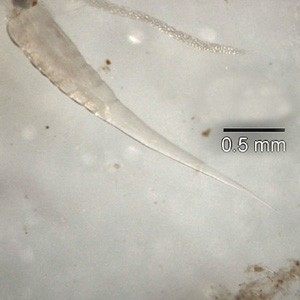
The human pinworm (Enterobius vermicularis) is a small, white nematode that lives in the large intestine. It is the most common worm infection in temperate countries, particularly in school-age children, and is harmless apart from itching.
The human pinworm (Enterobius vermicularis) is a small, white nematode that lives in the large intestine. It is the most common worm infection in temperate countries, particularly in school-age children, and is harmless apart from itching.
🧬 Field Guide Specimen: Open Human Pinworm in the CRV Science Field Guide to log the specimen, see its place among the Ecdysozoa lineages in the Cladogram Explorer, and test your recall in the Red List conservation game.
Night-Time Egg Laying
At night the gravid female crawls out of the anus and lays thousands of sticky eggs on the surrounding skin, causing itching. Scratching transfers the eggs to fingers, bedding and surfaces, and they are swallowed by the same or another person.
Diagnosis and Treatment
The classic diagnosis uses a strip of clear tape pressed against the skin in the morning and examined under a microscope. A single dose of mebendazole or albendazole, repeated two weeks later, clears infection; washing bedding and hands helps stop reinfection.
An Old Companion
Pinworm eggs have been found in ancient coprolites and mummies, showing that the parasite has lived with humans for thousands of years. Unlike many other worms, it has no soil stage.
Human Pinworm at a Glance
| Property | Value |
|---|---|
| Scientific name | Enterobius vermicularis |
| Kingdom | Animalia |
| Phylum | Nematoda |
| Class | Chromadorea |
| Order | Oxyurida |
| Field Guide group | Ecdysozoa: Nematoda (Roundworms & Parasites) |
| Diagnostic feature (Field Guide) | Small threadlike nematode with bulbous esophageal swelling and sharply pointed caudal pin-tail in adult females. |
| Order | Oxyurida |
| Typical size | About 1 centimeter |
See Also
- Giant Roundworm — a larger intestinal nematode
- Immunology — host responses to parasites