Little Skate
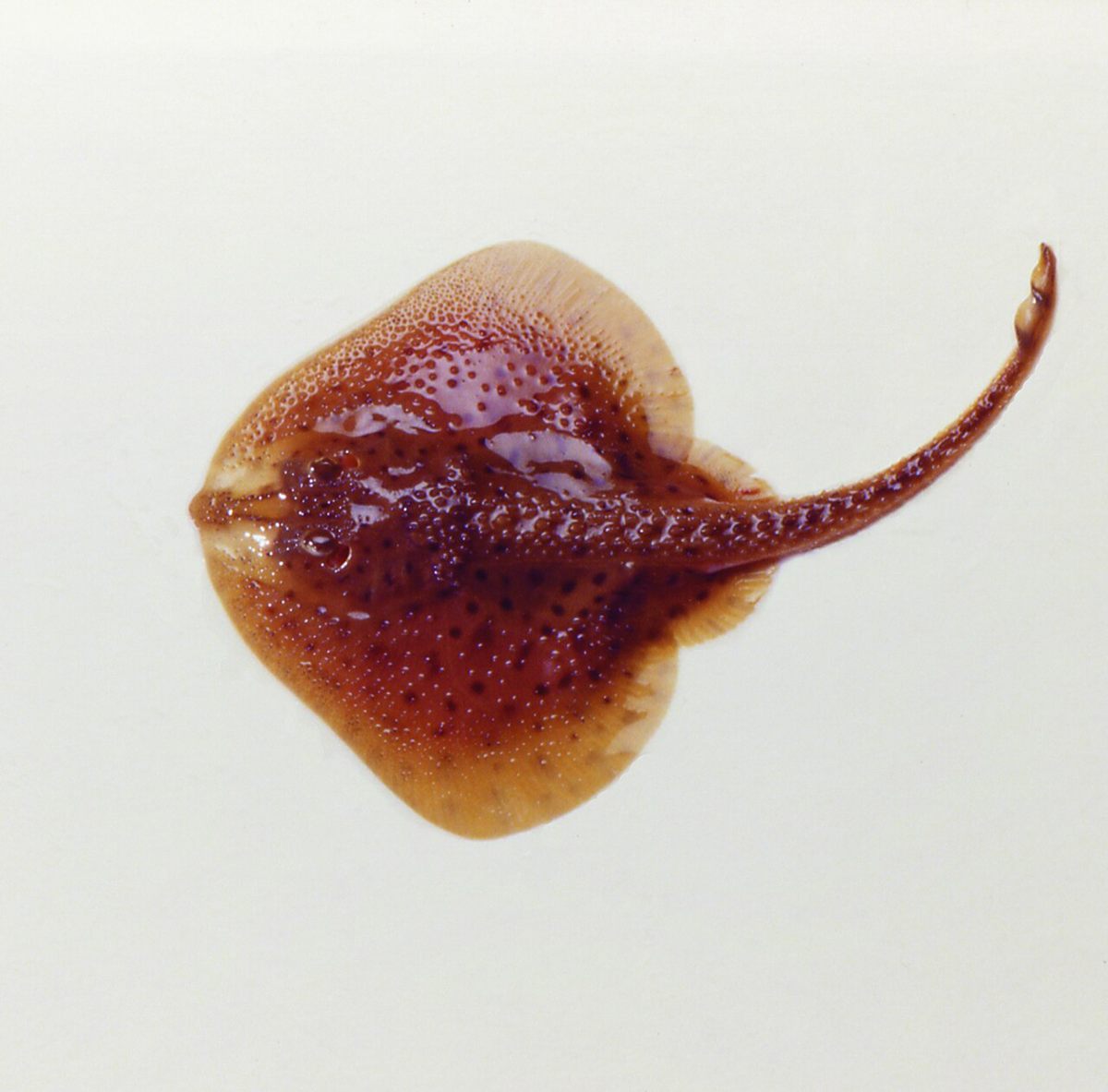
The little skate (Leucoraja erinacea) is a flat, cartilaginous fish of the Northwest Atlantic seafloor, related to rays and sharks. Its leathery egg cases, known as mermaid's purses, wash up on beaches.
The little skate (Leucoraja erinacea) is a flat, cartilaginous fish of the Northwest Atlantic seafloor, related to rays and sharks. Its leathery egg cases, known as mermaid's purses, wash up on beaches.
🧬 Field Guide Specimen: Open Little Skate in the CRV Science Field Guide to log the specimen, see its place among the Vertebrates lineages in the Cladogram Explorer, and test your recall in the Red List conservation game.
Little Skate at a Glance
| Property | Value |
|---|---|
| Scientific name | Leucoraja erinacea |
| Kingdom | Animalia |
| Phylum | Chordata |
| Class | Chondrichthyes |
| Subclass | Elasmobranchii |
| Field Guide group | Marine and Freshwater Fish |
| Diagnostic feature (Field Guide) | A primary model for electromotor systems, electroreception (Ampullae of Lorenzini), and paired fin evolution. |
| IUCN Red List status | Least Concern (LC), assessed 2020 |
| Class | Chondrichthyes |
| Egg case | Mermaid's purse |
Evolutionary Systematics and Comparative Anatomy
Leucoraja erinacea (formerly Raja erinacea) is a benthic batoid belonging to the family Rajidae within the order Rajiformes, superorder Batoidea, subclass Elasmobranchii, class Chondrichthyes. Whereas selachian elasmobranchs such as the Spiny Dogfish (Squalus acanthias) have fusiform bodies with lateral gill slits and free pectoral fins, batoids (skates, stingrays, guitarfishes, and electric rays) are dorsoventrally compressed, possess five pairs of ventral gill slits located beneath the pectoral disc, and expand their pectoral fins anteriorly to fuse with the lateral walls of the neurocranium and rostrum. Within Batoidea, true skates (Rajidae) are distinguished from stingrays (Myliobatiformes) by being oviparous rather than viviparous, lacking venomous caudal barbs, possessing a slender muscular tail bearing two small dorsal fins near the tip and a weak lateral electric organ, and having bilobed pelvic fins whose anterior lobes function as jointed walking appendages.
Adults of L. erinacea reach a total length of 40 to 54 cm, a pectoral disc width of 25 to 35 cm, and a body mass of 0.4 to 0.9 kg. The dorsal surface of the rhombic disc is greyish-brown to olive-tan scattered with small, circular dark-brown spots, contrasting with an unpigmented white or pale grey ventral surface. The endoskeleton consists of unossified hyaline cartilage surfaced in load-bearing regions (such as the jaws, hyomandibula, propterygium, and vertebral centra) with a crust of hexagonal tesserae mineralized with carbonated hydroxyapatite (Ca10(PO4)6(OH)2). Over the dorsal skin, dermal denticles (placoid scales) are modified into sharp, recurved thorns arranged along the orbital rims, the scapular region, and lateral rows flanking the tail—though unlike the sympatric winter skate (Leucoraja ocellata), mature adult L. erinacea typically lose the median midline row of thorns along the back behind the shoulders.
In Evolutionary developmental biology, L. erinacea has emerged as a cornerstone model organism for investigating the evolutionary origin of paired vertebrate appendages and tetrapod walking circuits. Chromosome-level assembly of the 2.13-gigabase L. erinacea genome in 2023 demonstrated that the anterior outgrowth of the skate pectoral fin—which merges with the head to form the wide batoid wing—is driven by a three-dimensional chromatin topologically associating domain (TAD) rearrangement around the planar cell polarity gene Prickle1 and canonical Wnt/PCP signaling, while the bilobed pelvic fins express the identical HoxD/HoxA, Sonic hedgehog (Shh), and Fgf8 genetic regulatory networks and Foxp1-dependent spinal motor neuron pools that control alternating left-right bipedal and quadrupedal walking in terrestrial tetrapods.
Physiology, Biomechanics, and Sensory Biology
Rajiform Swimming, Benthic Punting, and Caudal Electromotor Discharges
Leucoraja erinacea employs two distinct modes of locomotion across the sandy and gravelly continental shelf. During active swimming above the seabed, it uses rajiform undulation: sequential activation of dorsal and ventral radial fin muscles propagates 1.0 to 1.5 sinusoidal waves from the anterior margin of the wide pectoral fins to the posterior margin, generating lift and thrust with low vortex wake energy loss. When foraging quietly along the sediment surface, however, L. erinacea switches to benthic punting (underwater walking) using the thickened, three-jointed anterior lobes (crura) of its pelvic fins. Driven by a spinal central pattern generator (CPG) homologous to the limb CPG of land vertebrates, the left and right pelvic crura protract, plant against the sand, and retract either synchronously (punting) or in alternating left-right steps to push the skate forward without stirring up sediment plumes or generating hydrodynamic noise that would alert prey or predators.
Running longitudinally along each side of the slender tail—where lateral tail musculature was evolutionarily transformed—lies a pair of weak, spindle-shaped electric organs composed of disc-shaped electrocytes derived from striated myocytes. Innervated by spinal electromotor neurons, these caudal electric organs emit low-voltage, monophasic head-negative pulses lasting 70 to 200 milliseconds with peak amplitudes of 20 to 500 millivolts in the surrounding water, functioning not to stun prey (unlike Torpedo electric rays) but for conspecific electrocommunication during social aggregation and courtship.
Ampullae of Lorenzini and Urea-TMAO Osmoregulation
To detect prey buried beneath the sand and receive conspecific electric organ discharges, the ventral and dorsal surfaces of the rostrum and pectoral disc are perforated by hundreds of jelly-filled pores leading into the ampullae of Lorenzini. Each ampulla consists of an epidermal pore connected by a subcutaneous canal filled with a proton-conducting keratan-sulfate hydrogel to a basal cluster of sensory alveoli lined with hair-cell electroreceptors. Expressing voltage-gated L-type calcium channels (CaV1.3) paired with calcium-activated big-conductance potassium (BK) channels, these receptors detect DC and low-frequency AC bioelectric fields as faint as 1 to 5 nanovolts per centimeter (10-9 V cm-1)—allowing the skate to locate the respiratory gill-muscle potentials of a buried amphipod, polychaete, or razor clam from several centimeters away in total darkness.
Because its mouth is pressed against the sandy bottom, L. erinacea avoids drawing sand across its delicate gill lamellae while resting by inhaling oxygenated seawater through a pair of large dorsal spiracles equipped with muscular one-way valves behind the eyes, and expelling the water through the five pairs of ventral gill slits. Like other marine elasmobranchs, L. erinacea is an ureosmotic osmoregulator: rather than losing water osmotically to seawater (~1,000 mOsm kg-1), it maintains its blood plasma slightly hyperosmotic to seawater (~1,020 to 1,050 mOsm kg-1) by retaining 350 to 400 mM urea (CO(NH2)2) synthesized via the hepatic ornithine-urea cycle alongside 150 to 200 mM trimethylamine N-oxide (TMAO, (CH3)3NO), which counteracts urea-induced protein denaturation at a 2:1 molar ratio, while excreting excess monovalent ions (Na+ and Cl-) via a specialized rectal salt gland.
Trophic Ecology, Life History, and Reproduction
Benthic Predation and Seasonal Shelf Migrations
Leucoraja erinacea is endemic to the western North Atlantic continental shelf from the southern Gulf of St. Lawrence and Nova Scotia south to Cape Hatteras, North Carolina, with peak abundance on Georges Bank, the Gulf of Maine, and the Southern New England shelf. It inhabits sandy, gravelly, and muddy bottoms from the shallow subtidal zone down to 90 m (occasionally 150 m) depth across water temperatures of 1 °C to 21 °C, undertaking seasonal inshore-offshore migrations into shallower coastal bays in spring and summer and retreating to deeper, warmer shelf waters in winter.
Foraging primarily at night, L. erinacea pounces over buried or epibenthic invertebrates, trapping prey beneath its flat ventral disc before crushing and grinding them with pavement-like rows of small, rounded teeth (which develop sharper cusps in mature breeding males to grasp the female's pectoral fin margin during copulation). Stomach content analyses show a diet dominated by decapod crustaceans—especially crangonid sand shrimp (Crangon septemspinosa), cancer crabs (Cancer irroratus), and hermit crabs (Pagurus)—along with gammaridean amphipods, errant polychaete worms (Nereis, Nephtys), bivalve siphons (Ensis, Yoldia), squid (Doryteuthis pealeii), and small benthic fishes such as sand lance (Ammodytes) and gobies. In turn, juveniles and adults are preyed upon by sandbar and spiny dogfish sharks, monkfish (Lophius americanus), Atlantic cod, halibut, and grey seals.
Internal Fertilization and the "Mermaid's Purse" Egg Case
Fertilization in Leucoraja erinacea is internal, mediated by the male's paired cartilaginous claspers (mixopterygia), tubular intromittent modifications of the medial pelvic fin margins that insert into the female cloaca. Females reach sexual maturity at 3.5 to 4.5 years of age (42 to 46 cm total length) and spawn year-round in the Mid-Atlantic and Southern New England, with distinct peaks in late spring (May–July) and late autumn (October–December).
Every 3 to 7 days during spawning bouts, the female extrudes a pair of dark brown to black, rectangular collagenous egg capsules—popularly known as mermaid's purses—measuring 45 to 65 mm long and 30 to 45 mm wide (excluding the four curved, hollow fibrous horns at the corners, two long anterior horns and two shorter posterior horns, coated in sticky mucus to anchor the capsule to seaweed, shell hash, or coarse sand). Secreted by the nidamental (shell) gland, the capsule wall consists of six laminated layers of quinone-tanned type I-like selachian collagen that resist microbial decay and mechanical abrasion. For the first 8 to 12 weeks of embryonic development, the four hollow corner horns remain plugged by solidified albumen jelly while the embryo breathes by diffusion through the capsule wall; midway through development, enzymes dissolve the horn plugs, opening small slits through which the embryo beats its muscular tail filament continuously to pump fresh oxygenated seawater through the capsule. After 5 to 6 months of incubation at 15 °C (or 9 to 12 months in cold Gulf of Maine waters), a miniature, fully formed 9- to 10-cm juvenile skate emerges through a transverse seam at the anterior end of the purse, having absorbed its entire external yolk sac.
Frequently Asked Questions
How does the little skate "walk" along the seafloor without legs?
Although the wide pectoral fins of Leucoraja erinacea flap in waves for swimming, its pelvic fins are divided into two lobes, the front pair of which form muscular, three-jointed leg-like appendages called crura. Controlled by spinal cord neural circuits and Hox developmental genes shared with four-legged land vertebrates, the skate plants and pushes these pelvic lobes in alternating left-right steps to punt silently across the sand.
How does an embryo breathe inside a sealed "mermaid's purse" egg case for half a year?
During the first two to three months after a female little skate lays her leathery collagen egg case, the tiny embryo has low oxygen demand and breathes by passive diffusion across the capsule wall. Once the embryo grows larger, enzymatic plugs inside the four hollow corner horns dissolve, opening tiny vents; the embryo then whips a temporary muscular extension of its tail tip back and forth to pump fresh seawater continuously through the case until hatching.
Why is the electric organ of the little skate located in its tail, and what is it used for?
Unlike torpedo rays, which have powerful kidney-shaped electric organs in their pectoral wings capable of delivering 50- to 200-volt shocks to stun fish, the little skate has weak electric organs running down both sides of its narrow tail. Derived from modified tail muscle cells, these organs emit mild pulses of under 0.5 volts used as social and courtship signals detected by the ampullae of Lorenzini of other skates.
References
- Marlétaz, F., de la Calle-Mustienes, E., Acemel, R. D., Paliou, C., Naranjo, S., Martínez-García, P. M., ... & Gómez-Skarmeta, J. L. (2023). The little skate genome and the evolutionary emergence of wing-like finery. Nature, 616(7957), 495–503. https://doi.org/10.1038/s41586-023-05868-1
- Jung, H., Baek, M., D'Elia, K. P., Boisvert, C., Currie, P. D., Tay, B. H., ... & Dasen, J. S. (2018). The ancient origins of neural substrates for land walking. Cell, 172(4), 667–682. https://doi.org/10.1016/j.cell.2018.01.013
- Bellono, N. W., Leitch, D. B., & Julius, D. (2017). Molecular basis of ancestral vertebrate electroreception. Nature, 543(7645), 391–396. https://doi.org/10.1038/nature21401
- Palm, B. D., Koester, D. M., Driggers, W. B., & Sulikowski, J. A. (2011). Seasonal variation in fecundity, reproductive cycle, and size at maturity of the little skate, Leucoraja erinacea, in the Gulf of Maine. Environmental Biology of Fishes, 92(4), 535–548. https://doi.org/10.1007/s10641-011-9874-z