Magnetite
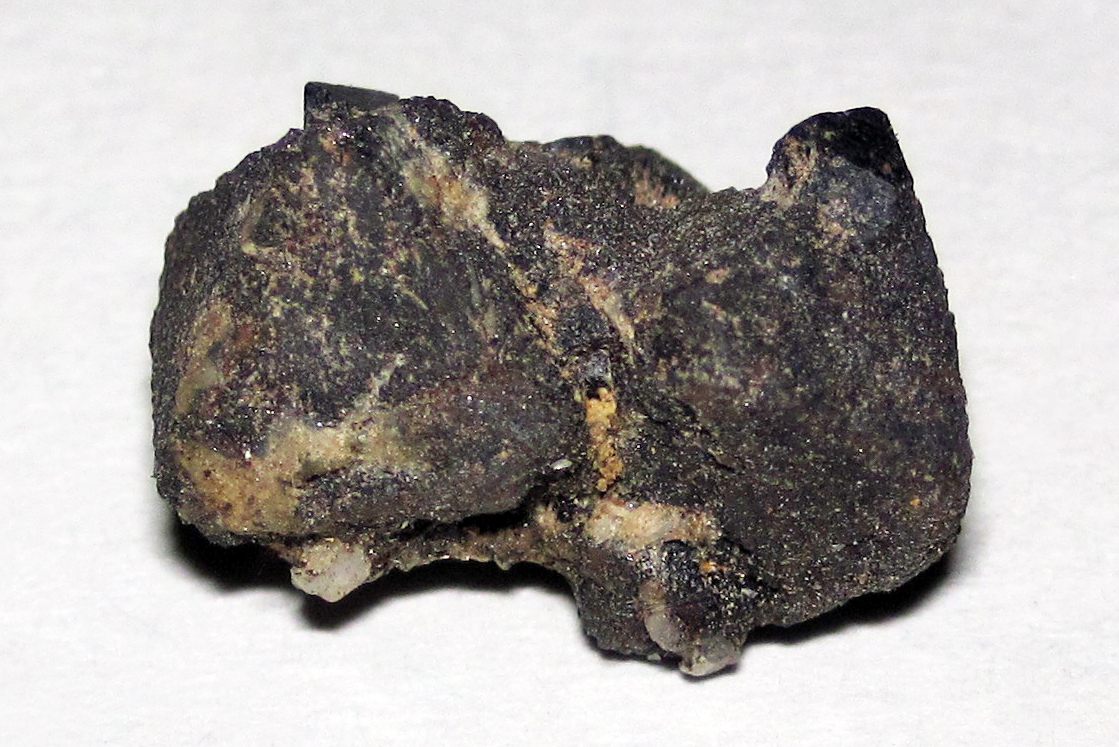
Magnetite is an iron oxide, Fe₃O₄, with isometric crystals, a hardness of 5.5 to 6.5 and a black streak. It is the most strongly magnetic of the common natural minerals, and a naturally magnetized piece is called lodestone.
Magnetite is an iron oxide, Fe₃O₄, with isometric crystals, a hardness of 5.5 to 6.5 and a black streak. It is the most strongly magnetic of the common natural minerals, and a naturally magnetized piece is called lodestone.
🪨 Geology Guide Specimen: Open Magnetite (Lodestone) in the CRV Science Rock & Mineral ID Guide to log the specimen, compare it with the other 8 mineral classes of Dana / Strunz Classes, and test your eye in LithoClade.
Natural Magnet: Why Is Magnetite Magnetic?
Magnetite contains both ferrous and ferric iron in an inverse spinel structure whose magnetic moments line up, so it is strongly ferrimagnetic and a paperclip sticks to it. Lodestones are pieces that have been magnetized, probably by the huge currents of lightning strikes, and they were the first compasses.
Records of the Magnetic Field: What Does Magnetite Preserve?
Grains of magnetite in cooling lava and sediments lock in the direction of Earth's magnetic field at the time, so they preserve a record of its past. The stripes of alternating magnetization on the sea floor are among the best evidence for sea-floor spreading, as in plate tectonics.
Ore and Life: Where Else Does It Matter?
Magnetite is about 72 percent iron and a major ore, found in igneous rocks, skarns, banded iron formations and black beach sands. Some bacteria and many animals build tiny magnetite crystals, which they use to sense the magnetic field.
Magnetite at a Glance
| Property | Value |
|---|---|
| Type / variety | Fe₃O₄ • Isometric Spinel-Group Iron Oxide |
| Composition | Fe²⁺Fe³⁺₂O₄ (72.4 wt% Iron • Inverse Spinel Structure) |
| Geology Guide group | Minerals (8 Major Chemical Groups) |
| Mineral Group | Oxides & Hydroxides |
| Mohs hardness | Mohs 5.5–6.5 |
| Texture / habit | Sharp 8-sided isometric octahedra with triangular striated faces |
| Density | 5.17–5.18 g/cm³ |
| Lustre and cleavage | Metallic iron-black lustre with a jet-black streak; strongly ferromagnetic |
| Geological setting | Igneous accessory mineral, skarns, banded iron formations, and black beach sands |
| Diagnostic feature (Geology Guide) | Heavy (density 5.18 g/cm³), iron-black crystal forming sharp 8-sided octahedra with a jet-black streak; it is the most strongly magnetic natural mineral on Earth, capable of picking up steel paperclips. |
| Formula | Fe₃O₄ |
| Streak | Black |
See Also
- Hematite — the red iron oxide
- Banded Iron Formation — a rock rich in magnetite and hematite
- Plate Tectonics — where magnetic records prove sea-floor spreading