Parrot's Beak Lamp Shell
The parrot's beak lamp shell (Hemithiris psittacea) is a small brachiopod of Arctic and cold northern seas, named for the beak-like hinge of its shell. It lives attached to rocks.
The parrot's beak lamp shell (Hemithiris psittacea) is a small brachiopod of Arctic and cold northern seas, named for the beak-like hinge of its shell. It lives attached to rocks.
🧬 Field Guide Specimen: Open Parrot's Beak Lamp Shell in the CRV Science Field Guide to log the specimen, see its place among the Lophotrochozoa lineages in the Cladogram Explorer, and test your recall in the Red List conservation game.
Strongly Ribbed Shells
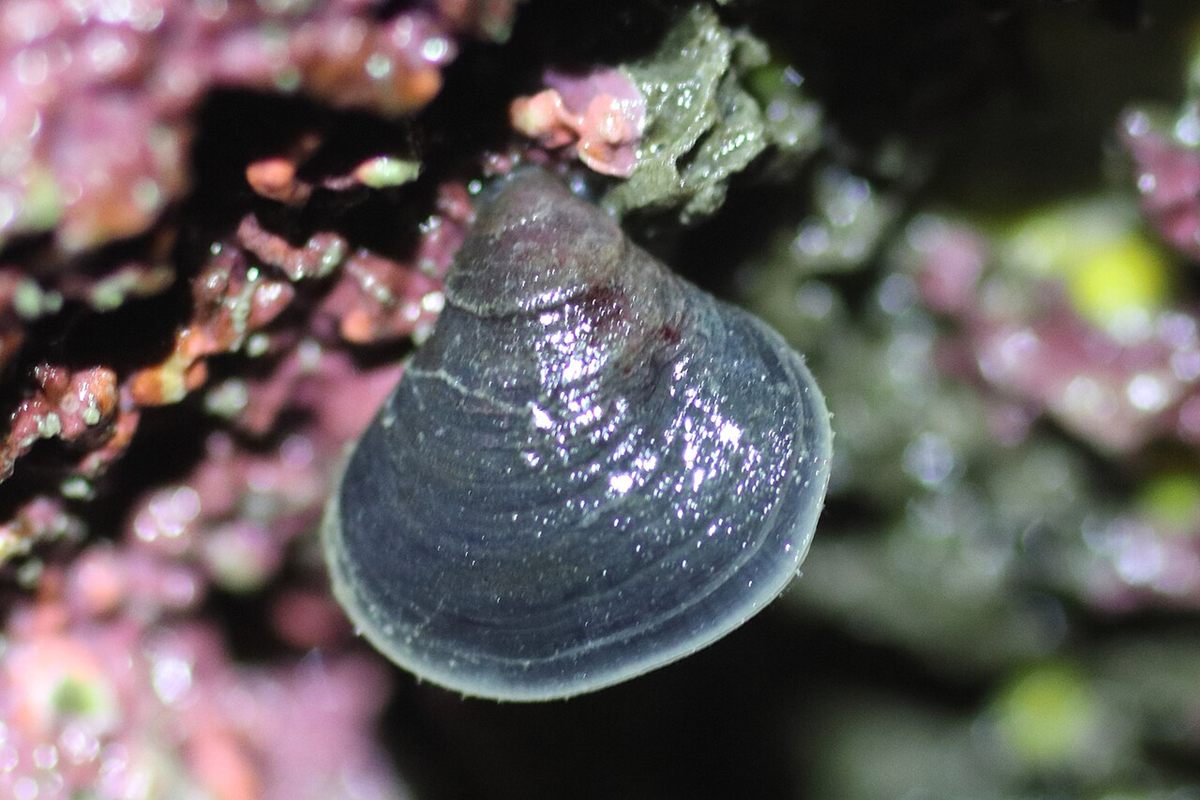
The shell is a few centimeters long, with ridges, and has a pronounced curved beak. It is attached to rock by a short stalk (pedicle). Its feeding organ is a coiled lophophore.
Cold-Water Brachiopod
Brachiopods are common in cold, deep water today, but were far more diverse in the Paleozoic. See Transverse Lamp Shell.
Rhynchonellids
This order of brachiopods was important in the Mesozoic. The group has persisted to the present with few species. See Lingula.
Parrot's Beak Lamp Shell at a Glance
| Property | Value |
|---|---|
| Scientific name | Hemithiris psittacea |
| Kingdom | Animalia |
| Phylum | Brachiopoda |
| Class | Rhynchonellata |
| Order | Rhynchonellida |
| Family | Hemithirididae |
| Field Guide group | Lophotrochozoa: Worms, Shells & Allies |
| Diagnostic feature (Field Guide) | Small dark purplish-black two-part armor with a sharply hooked beak; the halves sit top and bottom, not left and right, and enclose a feathery feeding crown. |
| Phylum | Brachiopoda |
| Habitat | Cold northern seas |
See Also
- Transverse Lamp Shell — a related brachiopod
- Lingula — an unchanged brachiopod