Lingula
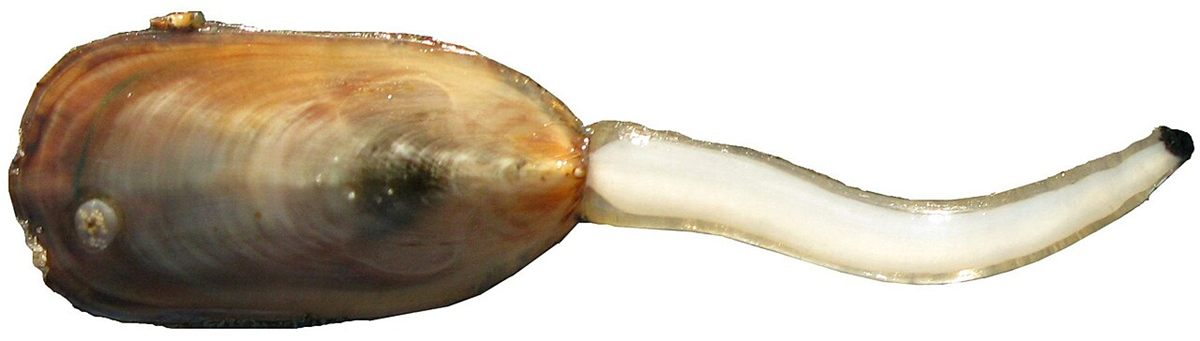
Lingula anatina is a brachiopod that lives in vertical burrows in intertidal sand and mud in the Indo-Pacific.
Lingula anatina is a brachiopod that lives in vertical burrows in intertidal sand and mud in the Indo-Pacific. Shells that look almost identical are found in rocks about half a billion years old, which has made the genus Lingula a standard example of a "living fossil".
🧬 Field Guide Specimen: Open Lingula Lamp Shell in the CRV Science Field Guide to log the specimen, see its place among the Lophotrochozoa lineages in the Cladogram Explorer, and test your recall in the Red List conservation game.
A Shell of Phosphate
Unlike the calcite shells of many brachiopods and most molluscs, the valves of Lingula are made of chitin and calcium phosphate. A long, muscular stalk (pedicle) anchors the animal and lets it retract deep into the burrow when disturbed.
How Unchanged Is It?
The overall form of lingulid shells has changed little since the Cambrian or Ordovician, but the lineage has certainly continued to evolve at the molecular level. The apparent stasis may reflect a stable burrowing lifestyle in shallow seas. See Transverse Lamp Shell.
Food and Survival
Lingula is eaten in parts of East Asia. It survived mass extinctions that eliminated most brachiopods, and its tolerance of low-oxygen mud may have helped.
Lingula at a Glance
| Property | Value |
|---|---|
| Scientific name | Lingula anatina |
| Kingdom | Animalia |
| Phylum | Brachiopoda |
| Class | Lingulata |
| Field Guide group | Lophotrochozoa: Worms, Shells & Allies |
| Diagnostic feature (Field Guide) | Tongue-shaped greenish valves on the top and bottom of the body, a long fleshy burrowing stalk, and a body plan unchanged since the Cambrian. |
| Phylum | Brachiopoda |
| Shell material | Chitin and calcium phosphate |
See Also
- Transverse Lamp Shell — a calcite-shelled brachiopod
- Neopilina — another living fossil