Red Fox
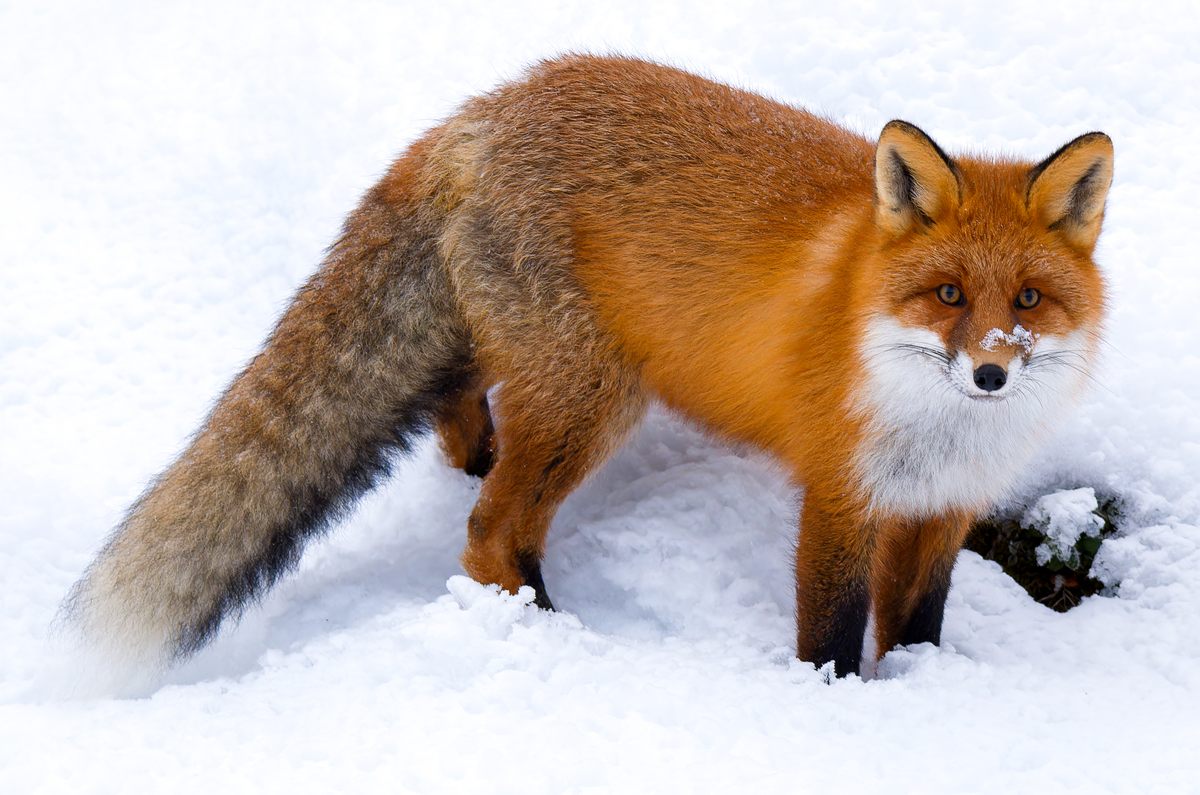
The red fox (Vulpes vulpes) has the widest geographic range of any wild carnivore, occurring across the Northern Hemisphere and, after introduction, Australia. A flexible omnivore that thrives in cities and countryside alike, it is listed as Least Concern.
The red fox (Vulpes vulpes) has the widest geographic range of any wild carnivore, occurring across the Northern Hemisphere and, after introduction, Australia. A flexible omnivore that thrives in cities and countryside alike, it is listed as Least Concern.
🧬 Field Guide Specimen: Open Red Fox in the CRV Science Field Guide to log the specimen, see its place among the Mammals lineages in the Cladogram Explorer, and test your recall in the Red List conservation game.
An Adaptable Generalist
Red foxes eat rodents, rabbits, birds, insects and fruit, and cache surplus food. Unlike other canids they have vertical, cat-like pupils. They pounce on hidden prey under snow, and a study found they tend to jump toward the northeast, suggesting they use Earth's magnetic field as a range-finding aid.
The Silver Fox Experiment
In 1959 Dmitri Belyaev and Lyudmila Trut began breeding foxes for tameness in Siberia. Within a few generations they obtained friendly, dog-like animals with floppy ears, curly tails and piebald coats, showing that selection for behavior can change many traits together, a model for the domestication of dogs.
Invasive Fox: Australia
Introduced in the 1800s for hunting, foxes have preyed heavily on native marsupials and ground birds, contributing to extinctions and declines. Control programs now target foxes and feral cats in conservation areas.
Red Fox at a Glance
| Property | Value |
|---|---|
| Scientific name | Vulpes vulpes |
| Kingdom | Animalia |
| Phylum | Chordata |
| Class | Mammalia |
| Order | Carnivora |
| Family | Canidae |
| Field Guide group | Mammals: Eutheria (Placentals) |
| Diagnostic feature (Field Guide) | Bushy tail, slender elongated snout, non-retractile claws, acute hearing adaptations. |
| IUCN Red List status | Least Concern (LC), assessed 2021 |
| Distribution | Northern Hemisphere; introduced to Australia |
See Also
- Gray Wolf — a larger canid
- Natural selection — selection and the domestication syndrome