Gray Wolf
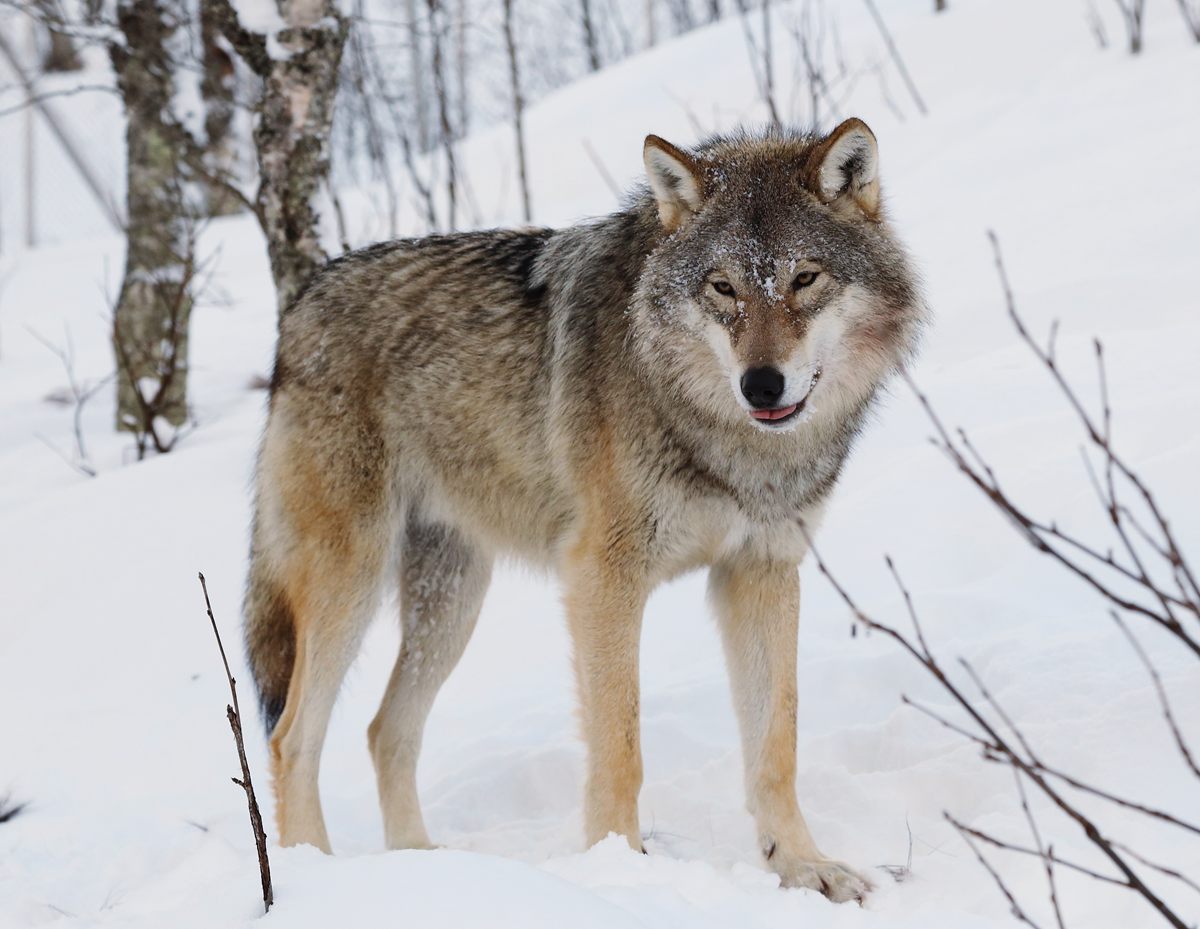
The gray wolf (Canis lupus) is the largest wild canid and, historically, the most widespread large carnivore on Earth.
The gray wolf (Canis lupus) is the largest wild canid and, historically, the most widespread large carnivore on Earth. It is listed as Least Concern globally, though it has been eliminated from much of its former range, and it is the wild ancestor of the domestic dog.
🧬 Field Guide Specimen: Open Gray Wolf in the CRV Science Field Guide to log the specimen, see its place among the Mammals lineages in the Cladogram Explorer, and test your recall in the Red List conservation game.
Packs and Cooperation
A pack is typically a breeding pair and their offspring from several years. Cooperative hunting lets wolves take prey much larger than themselves, such as elk and moose. Wolves communicate with howls, scent marks and body language.
Yellowstone: A Trophic Cascade?
Wolves were reintroduced to Yellowstone National Park in 1995 and 1996. Researchers reported that elk changed their grazing behavior and that willow and aspen recovered along streams, a textbook trophic cascade, though how much of the recovery is due to wolves is debated. See Food web.
Domestication
Dogs descend from a now-extinct population of wolves, domesticated at least 15,000 years ago. Wolves have since recolonized parts of Europe and North America, but conflicts with livestock owners continue.
Gray Wolf at a Glance
| Property | Value |
|---|---|
| Scientific name | Canis lupus |
| Kingdom | Animalia |
| Phylum | Chordata |
| Class | Mammalia |
| Order | Carnivora |
| Family | Canidae |
| Field Guide group | Mammals: Eutheria (Placentals) |
| Diagnostic feature (Field Guide) | Powerful cursorial stamina, non-retractile claws, single-chambered auditory bullae, social pack behavior. |
| IUCN Red List status | Least Concern (LC), assessed 2026 |
| Domestic descendant | Dog (Canis familiaris) |