Sea Gooseberry
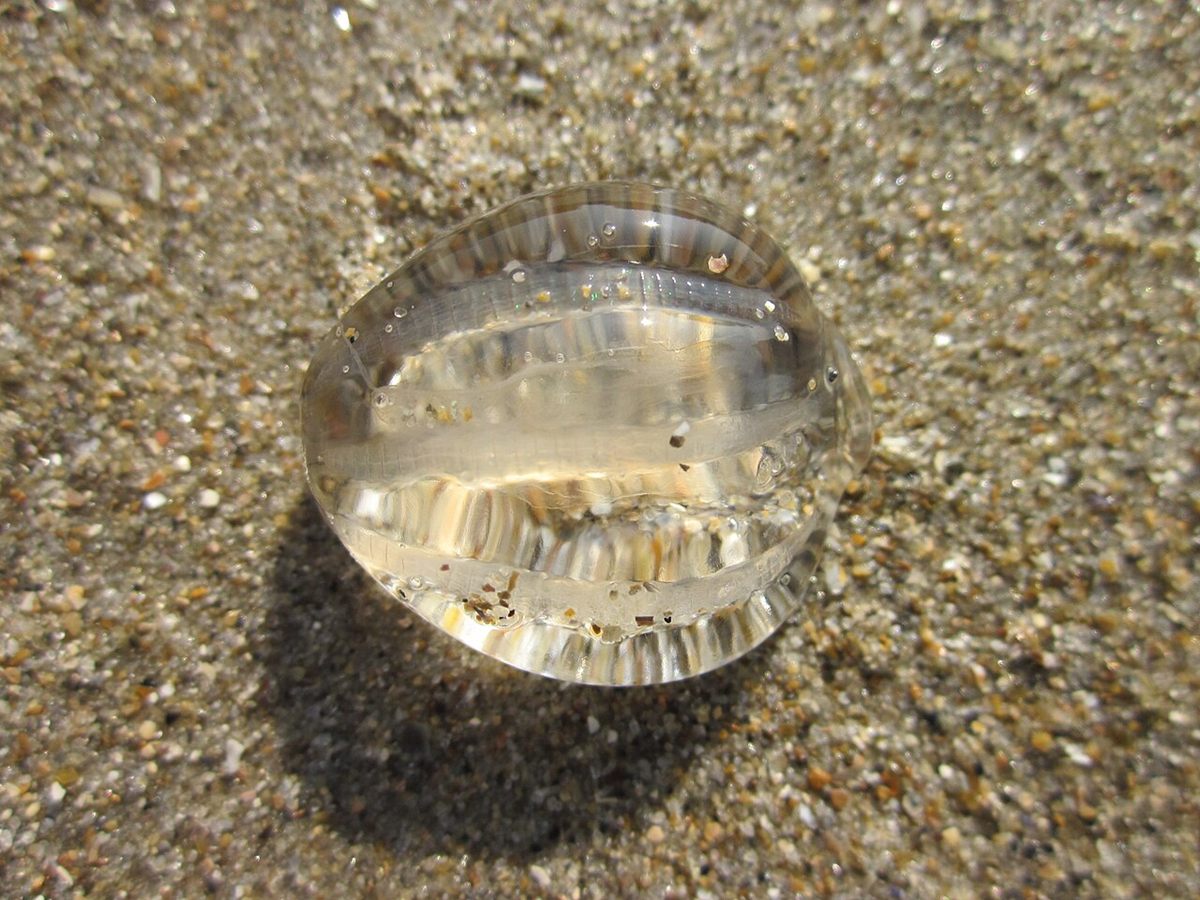
The sea gooseberry (Pleurobrachia pileus) is a round, transparent comb jelly about the size of a gooseberry that drifts in the plankton of the North Atlantic. Two long, sticky tentacles trail from its body.
The sea gooseberry (Pleurobrachia pileus) is a round, transparent comb jelly about the size of a gooseberry that drifts in the plankton of the North Atlantic. Two long, sticky tentacles trail from its body.
🧬 Field Guide Specimen: Open Sea Gooseberry in the CRV Science Field Guide to log the specimen, see its place among the Cnidaria+Ctenophora lineages in the Cladogram Explorer, and test your recall in the Red List conservation game.
Sea Gooseberry at a Glance
| Property | Value |
|---|---|
| Scientific name | Pleurobrachia pileus |
| Kingdom | Animalia |
| Phylum | Ctenophora |
| Class | Tentaculata |
| Order | Cydippida |
| Family | Pleurobrachiidae |
| Field Guide group | Cnidaria + Ctenophora (Radiata & Jellies) |
| Diagnostic feature (Field Guide) | Transparent, grape-sized oval body propelled by eight shimmering rows of fused cilia plates and trailing two long, retractable branched tentacles armed with sticky colloblasts instead of stinging cells. |
| Phylum | Ctenophora |
| Tentacles | Two, with adhesive cells |
Evolutionary Systematics & Comparative Anatomy
Pleurobrachia pileus is a pelagic marine ctenophore in the family Pleurobrachiidae and order Cydippida within the class Tentaculata. While classical morphology treated Cydippida as a natural group characterized by spherical bodies and paired retractable tentacles, molecular phylogenetics demonstrates that the cydippid body plan is plesiomorphic within Ctenophora: most non-cydippid orders, including the lobate Sea Walnut (Mnemiopsis leidyi) and the beroid Melon Comb Jelly (Beroe spp.), pass through a cydippid larval stage during ontogeny. Whole-genome sequencing of Pleurobrachia bachei and related species has shown that ctenophores possess a neural and muscular molecular toolkit largely distinct from that of bilaterians and cnidarians, lacking canonical neurotransmitters such as serotonin, dopamine, and acetylcholine in their synaptic signaling pathways and instead utilizing L-glutamate, glycine, and lineage-specific neuropeptides.
The gelatinous body of P. pileus is ovoid to spherical, measuring 10 to 25 mm in polar diameter, and exhibits biradial (rotational) symmetry organized around an oral–aboral axis intersected by tentacular and pharyngeal planes. Over 95% of the transparent mesoglea consists of water bound within a sulfated glycoprotein and collagenous extracellular matrix interspersed with true smooth muscle fibers and mesenchymal amoeboid cells. Externally, eight meridional comb rows (costae) of equal length run from near the aboral pole toward the oral pole. Each comb row comprises a linear series of transverse paddle-like plates called ctenes, and each ctene consists of thousands of macrocilia measuring up to 1 mm in length fused laterally by compartmenting lamellae.
Flanking the body on opposite sides of the tentacular plane are two deep epidermal invaginations—the tentacular sheaths—from which emerge a pair of solid, contractile muscular tentacles capable of extending 15 to 20 times the body length (up to 30 to 50 cm). Each primary tentacle bears a unilateral fringe of lateral filaments (tentilla). Unlike cnidarian tentacles armed with penetrating nematocysts, the epidermis of P. pileus tentilla is densely packed with colloblasts—mushroom-shaped adhesive cells tethered to the mesogleal core by a helical, contractile axial filament and crowned by an apical dome of eosinophilic secretory granules.
Physiology, Biomechanics & Sensory Biology
Locomotion in Pleurobrachia pileus is driven by the metachronal beating of the eight comb rows, making ctenophores the largest animals to swim primarily by ciliary propulsion. During forward (oral-first) swimming, the power stroke of each ctene is directed toward the aboral pole, while the metachronal wave of activation propagates from the aboral pole toward the mouth (antiplectic metachrony). Because the spacing between adjacent ctenes is on the order of micrometers within each plate, the periodic array of cilia acts as a diffraction grating that scatters ambient sunlight into iridescent rainbow bands. Unlike Mnemiopsis or Beroe, Pleurobrachia pileus lacks functional photoproteins and does not produce intrinsic bioluminescence; its nocturnal or sunlit glow is purely optical diffraction.
Ciliary coordination is regulated by the apical sensory organ located at the aboral pole. This structure houses a calcareous statolith composed of CaCO3 and MgCO3 concretions supported on four tufts of mechanosensory balancer cilia. Each balancer tuft innervates two adjacent comb rows via ciliated epidermal grooves: two in the tentacular plane and two in the sagittal (pharyngeal) plane. When the animal tilts relative to gravity, the mass of the statolith deflects the underlying balancer cilia, altering membrane Ca2+ conductance and modulating the beat frequency of the ipsilateral comb rows to execute a righting reflex.
Prey capture relies on a stereotyped hydro-mechanical sequence known as the spinning behavior. After drifting passively with its tentacular net deployed like a spider web, P. pileus detects the mechanical struggle of a trapped crustacean on a tentillum. The stimulated tentacle contracts rapidly while the comb rows on the ipsilateral side reverse their beat direction, causing the spherical body to spin rapidly through multiple revolutions. This rotational maneuver wraps the prey-bearing tentacle across the oral pole and wipes the captured item into the muscular stomodeum (pharynx), where extracellular proteolytic enzymes initiate digestion before food particles pass into the branched gastrovascular canal system and undigested residues exit via the mouth or two aboral anal pores.
Trophic Ecology, Life History & Reproduction
Pleurobrachia pileus is a selective ambush carnivore in temperate and boreal coastal shelf waters across the North Atlantic, North Sea, Baltic Sea, and Mediterranean Sea. Its diet is dominated by calanoid and cyclopoid copepods (Acartia, Temora, Calanus, and Pseudocalanus species), supplemented by cladocerans, barnacle nauplii, decapod zoeae, and fish eggs. When copepod densities are high, a single adult P. pileus can ingest 30 to 100 copepods per day, exerting top-down grazing pressure on herbivorous mesozooplankton during late spring and summer blooms. In turn, P. pileus is preyed upon by the intraguild predator Beroe gracilis, which swallows Pleurobrachia whole using expanded oral macrocilia, as well as by scyphozoan medusae, gadoid fishes, and lumpfish (Cyclopterus lumpus).
As a simultaneous hermaphrodite, each individual possesses eight meridional gonads—four ovaries and four testes—aligned beneath the endodermal linings of the meridional gastrovascular canals directly under the eight comb rows. Gametes are shed through the epidermis via temporary gonoducts into the water column, where external fertilization occurs (though self-fertilization is experimentally viable). Cleavage is holoblastic, biradial, and determinate, proceeding rapidly to form a free-swimming cydippid larva within 24 to 48 hours at 15 °C. Because the cydippid larva already possesses a statocyst, eight comb rows, and paired tentacles, development is direct without metamorphosis. Pleurobrachia pileus also exhibits Dissogony, a reproductive phenomenon in which cydippid larvae become transiently sexually mature and spawn viable gametes before resorbing their larval gonads, growing to adult somatic size, and maturing a second time.
Frequently Asked Questions
How do the tentacles of a sea gooseberry capture prey without stinging cells?
Unlike cnidarian jellyfish that inject venom via harpoon-like nematocysts, the sea gooseberry (Pleurobrachia pileus) lines its branched tentilla with specialized adhesive cells called colloblasts. When a swimming copepod brushes against a tentillum, mechanical shear ruptures the apical vesicles of the colloblasts, releasing a fast-setting glycoprotein mucilage that glues the crustacean's exoskeleton to the tentacle while a spiral root filament absorbs the struggle shock.
Does the sea gooseberry glow in the dark through bioluminescence?
No. Although many ctenophores—such as the sea walnut (Mnemiopsis leidyi) and Beroe species—synthesize Ca2+-activated photoproteins that emit blue-green bioluminescence in darkness, Pleurobrachia pileus lacks functional photocytes and does not bioluminesce. The shimmering rainbow colors visible along its body are caused by physical light diffraction across the microscopic arrays of fused cilia in its eight comb rows.
Why does a sea gooseberry spin rapidly in circles after catching a copepod?
Because its tentacles are up to 20 times longer than its body and cannot push food directly into the mouth, Pleurobrachia pileus uses a rotational wiping maneuver. Upon sensing prey entanglement, the animal contracts the active tentacle and reverses the ciliary beat on one side of its body, spinning around its oral axis so the trailing tentacle sweeps across the mouth opening and transfers the prey.
References
- Greene, C. H., Landry, M. R., & Monger, B. C. (1986). Foraging behavior and prey selection by the ambush entangling predator Pleurobrachia bachei. Ecology, 67(6), 1493–1501. https://doi.org/10.2307/1939080
- Moroz, L. L., Kocot, K. M., Citarella, M. R., Dosung, S., Norekian, T. P., Povolotskaya, I. S., ... & Kohn, A. B. (2014). The ctenophore genome and the evolutionary origins of neural systems. Nature, 510(7503), 109–114. https://doi.org/10.1038/nature13400
- Tamm, S. L. (2014). Cilia and the life of ctenophores. Invertebrate Biology, 133(1), 1–46. https://doi.org/10.1111/ivb.12042
- Yip, S. Y. (1984). The feeding of Pleurobrachia pileus Müller (Ctenophora) from Galway Bay. Proceedings of the Royal Irish Academy. Section B, 84B, 109–122. https://doi.org/10.2307/20494442