Skarn
Skarn is a coarse, colorful rock of calcium-rich silicate minerals that forms where hot, metal-bearing fluids from a magma chamber react with carbonate rock such as limestone.
Skarn is a coarse, colorful rock of calcium-rich silicate minerals that forms where hot, metal-bearing fluids from a magma chamber react with carbonate rock such as limestone. It is a product of contact metasomatism, in which the chemistry of the rock changes as well as its texture.
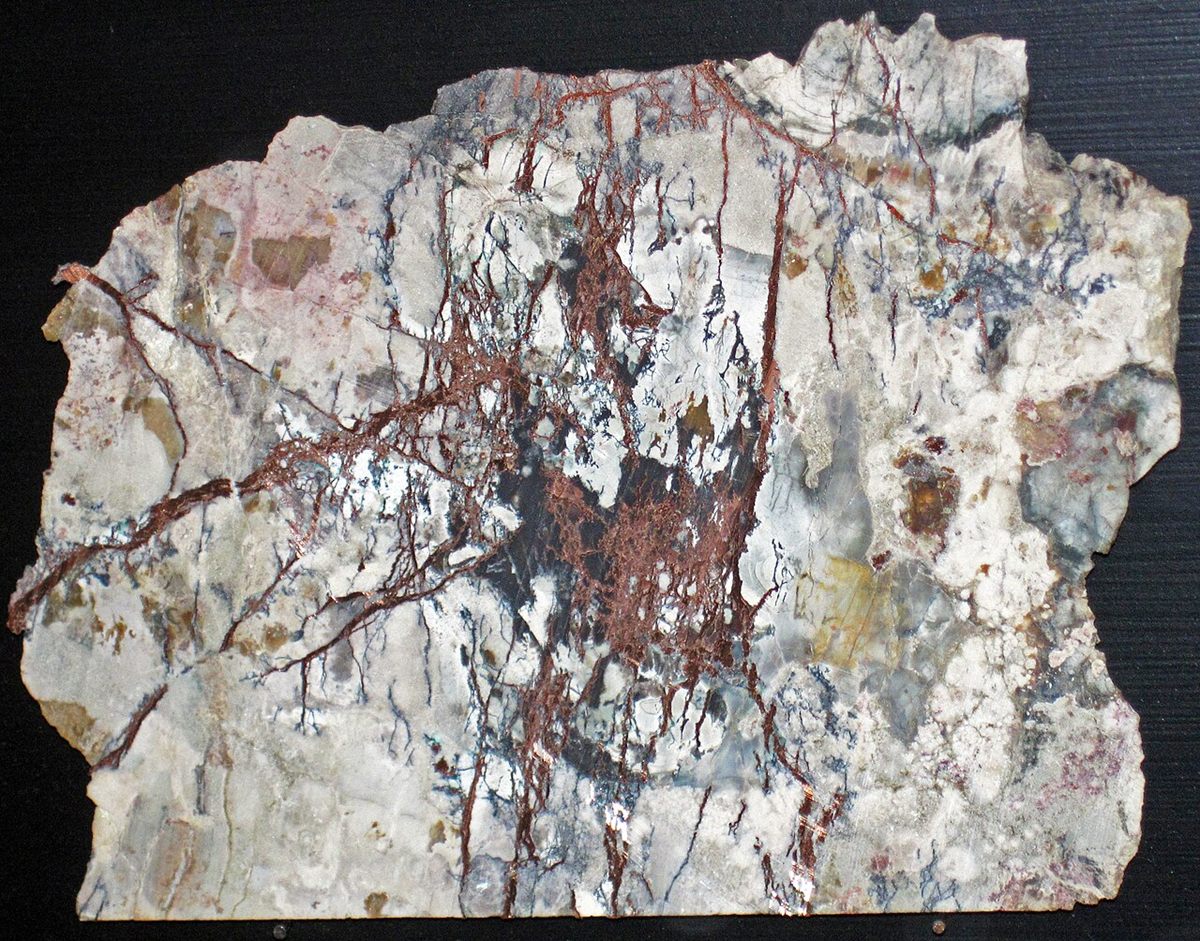
🪨 Geology Guide Specimen: Open Garnet–Pyroxene Skarn in the CRV Science Rock & Mineral ID Guide to log the specimen, compare it with the other 6 subgroups of Metamorphic, and test your eye in LithoClade.
Metasomatism: How Do Fluids Change the Rock?
Silica, iron, aluminum and other elements carried by fluids from an intrusion react with calcium and magnesium carbonate in the host. The carbonate is consumed and converted into calcium-silicate minerals, so the result is not simple recrystallization like marble.
Minerals: What Makes Skarn Colorful?
Typical skarn minerals include cinnamon-red to brown garnets of the grossular–andradite series, green diopside and hedenbergite pyroxene, green epidote, and wollastonite. Calcite and magnetite may be present too.
Ore Deposits: Why Are Skarns Prospected?
Skarn at a Glance
| Property | Value |
|---|---|
| Type / variety | Calc-Silicate Contact Metasomatic Tactite |
| Composition | Calcic Garnet (Grossular–Andradite) + Diopside–Hedenbergite Pyroxene + Epidote + Calcite |
| Geology Guide group | Metamorphic Rocks (Foliated, Granoblastic & High-P) |
| Rock Classification | Non-Foliated (Granoblastic & Contact) |
| Mohs hardness | Mohs 6–7.5 |
| Texture / habit | Coarse, unfoliated interlocking calc-silicate crystal aggregate |
| Density | 3.10–3.60 g/cm³ |
| Lustre and cleavage | Cinnamon-red grossular/andradite garnet and pistachio-green diopside/epidote |
| Geological setting | Chemical reaction zones where silica- and metal-rich magma fluids invade carbonate wall rocks |
| Diagnostic feature (Geology Guide) | Colorful, unfoliated coarse rock of cinnamon-red calcium garnet, pistachio-green epidote, and dark green diopside pyroxene formed where hot silica- and metal-rich fluids from a magma pluton reacted with carbonate wall rocks. |
| Protolith | Limestone or dolostone |
| Typical minerals | Garnet, pyroxene, epidote |