Sphalerite
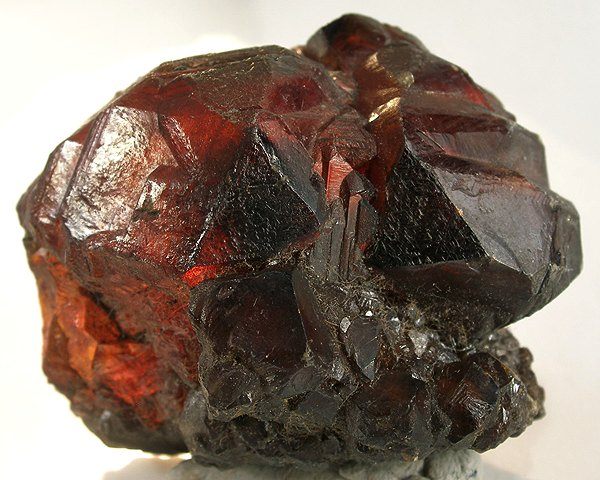
Sphalerite is zinc sulfide, (Zn,Fe)S, the main ore of zinc. It ranges from honey-yellow and ruby-red to black, with a resinous luster. The name comes from the Greek for 'treacherous,' because miners often mistook it for galena and found it yielded no lead.
Sphalerite is zinc sulfide, (Zn,Fe)S, the main ore of zinc. It ranges from honey-yellow and ruby-red to black, with a resinous luster. The name comes from the Greek for "treacherous," because miners often mistook it for galena and found it yielded no lead.
🪨 Geology Guide Specimen: Open Sphalerite in the CRV Science Rock & Mineral ID Guide to log the specimen, compare it with the other 8 mineral classes of Dana / Strunz Classes, and test your eye in LithoClade.
Variable Appearance: Why So Many Colors?
Pure zinc sulfide is pale, and iron makes it darker, so the black variety is called "blackjack" and clear red-brown crystals are "ruby jack." Sphalerite has a high, resinous to almost diamond-like luster and a pale yellow-brown streak, and it is brittle and soft, with a hardness of 3.5 to 4.
Cleavage: How Does It Break?
It has six directions of perfect cleavage, which meet at angles that produce dodecahedra. Powdered sphalerite in hydrochloric acid gives off the smell of rotten eggs, from hydrogen sulfide, a quick test.
Zinc and Other Metals: What Is It Used For?
Sphalerite at a Glance
| Property | Value |
|---|---|
| Type / variety | (Zn,Fe)S • Isometric Zinc Sulfide |
| Composition | (Zn,Fe)S (Up to 67 wt% Zinc) |
| Geology Guide group | Minerals (8 Major Chemical Groups) |
| Mineral Group | Sulfides |
| Mohs hardness | Mohs 3.5–4 |
| Texture / habit | Tetrahedral and dodecahedral crystals with complex twinning |
| Density | 3.90–4.10 g/cm³ |
| Lustre and cleavage | Non-metallic resinous-to-adamantine honey-yellow, ruby-red, or black ('blackjack'); PERFECT 6-directional dodecahedral cleavage; pale yellow-brown streak with rotten-egg H₂S odor in HCl |
| Geological setting | Carbonate-hosted Pb-Zn deposits, skarns, and hydrothermal veins |
| Diagnostic feature (Geology Guide) | Honey-amber, ruby-red ('ruby jack'), or dark brown crystal (Mohs 3.5–4) with a warm resinous-to-diamond lustre, six directions of perfect dodecahedral cleavage, and a pale caramel streak. |
| Formula | (Zn,Fe)S |
| Name origin | Greek sphaleros, "treacherous" |