Whiteschist
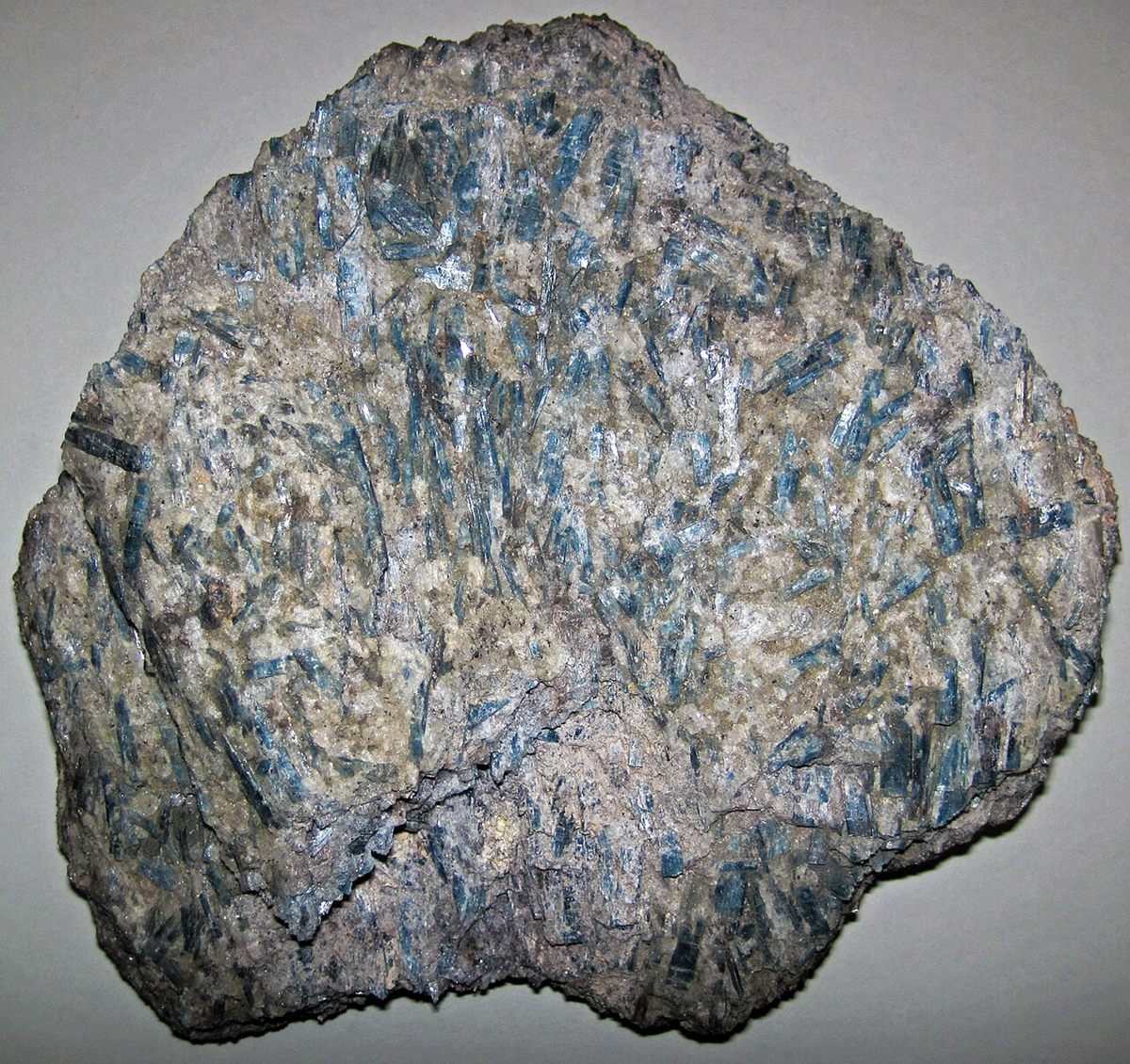
Whiteschist is a rare, pale metamorphic rock rich in talc and kyanite, formed at very high pressure from magnesium- and aluminum-rich rocks. It records the deep burial of continental crust, to about 100 kilometers in the best-known example.
Whiteschist is a rare, pale metamorphic rock rich in talc and kyanite, formed at very high pressure from magnesium- and aluminum-rich rocks. It records the deep burial of continental crust, to about 100 kilometers in the best-known example.
🪨 Geology Guide Specimen: Open Kyanite–Talc Whiteschist in the CRV Science Rock & Mineral ID Guide to log the specimen, compare it with the other 6 subgroups of Metamorphic, and test your eye in LithoClade.
Rare Chemistry: What Makes a Whiteschist?
The rock has an unusual composition, high in magnesium and aluminum but low in calcium and iron. Such chemistry is thought to come from the alteration of granite or sediment by hot fluids before burial. At high pressure the result is a soft, pearly white matrix of talc with blue blades of kyanite, and sometimes pyrope garnet.
Ultra-High Pressure: What Does It Record?
The famous whiteschists of the Dora-Maira massif in the Western Alps contain coesite, a very high-pressure form of silica, and large pyrope crystals. They show that slices of continental crust can be carried to mantle depths and then returned to the surface.
Contrast: Soft Matrix, Hard Blades
Whiteschist at a Glance
| Property | Value |
|---|---|
| Type / variety | High-Pressure Talc–Kyanite Metamorphic Schist |
| Composition | Pearly White Talc + Sky-Blue Kyanite Blades (Al₂SiO₅) ± Pyrope Garnet |
| Geology Guide group | Metamorphic Rocks (Foliated, Granoblastic & High-P) |
| Rock Classification | High-Pressure Subduction |
| Mohs hardness | Mohs 1 (talc matrix) to Mohs 5–7 (kyanite blades) |
| Texture / habit | Pearly white soapy matrix studded with long sky-blue aluminum-silicate blades |
| Density | 2.85–3.05 g/cm³ |
| Lustre and cleavage | Bright white pearly matrix contrasting with cornflower-blue bladed prisms |
| Geological setting | Deep continental-crust subduction (>1.0–2.5 GPa, 600–750 °C) |
| Diagnostic feature (Geology Guide) | Striking pale rock where sky-blue blades of high-density aluminum silicate (Al₂SiO₅) are embedded inside a pearly white magnesium-silicate matrix, recording deep burial of continental crust. |
| Key minerals | Talc and kyanite |
| Famous locality | Dora-Maira massif, Western Alps |