Dacite
Dacite is a volcanic rock intermediate between andesite and rhyolite, with about 63 to 69 weight percent silica.
Dacite is a volcanic rock intermediate between andesite and rhyolite, with about 63 to 69 weight percent silica. It erupts from viscous lavas of subduction-zone volcanoes, building steep lava domes and powering some of the most dangerous explosive eruptions, including Mount St. Helens in 1980. The name comes from the Roman province of Dacia, now Romania.
🪨 Geology Guide Specimen: Open Dacite in the CRV Science Rock & Mineral ID Guide to log the specimen, compare it with the other 7 subgroups of Igneous, and test your eye in LithoClade.
Composition: Where Does Dacite Sit in the Classification?
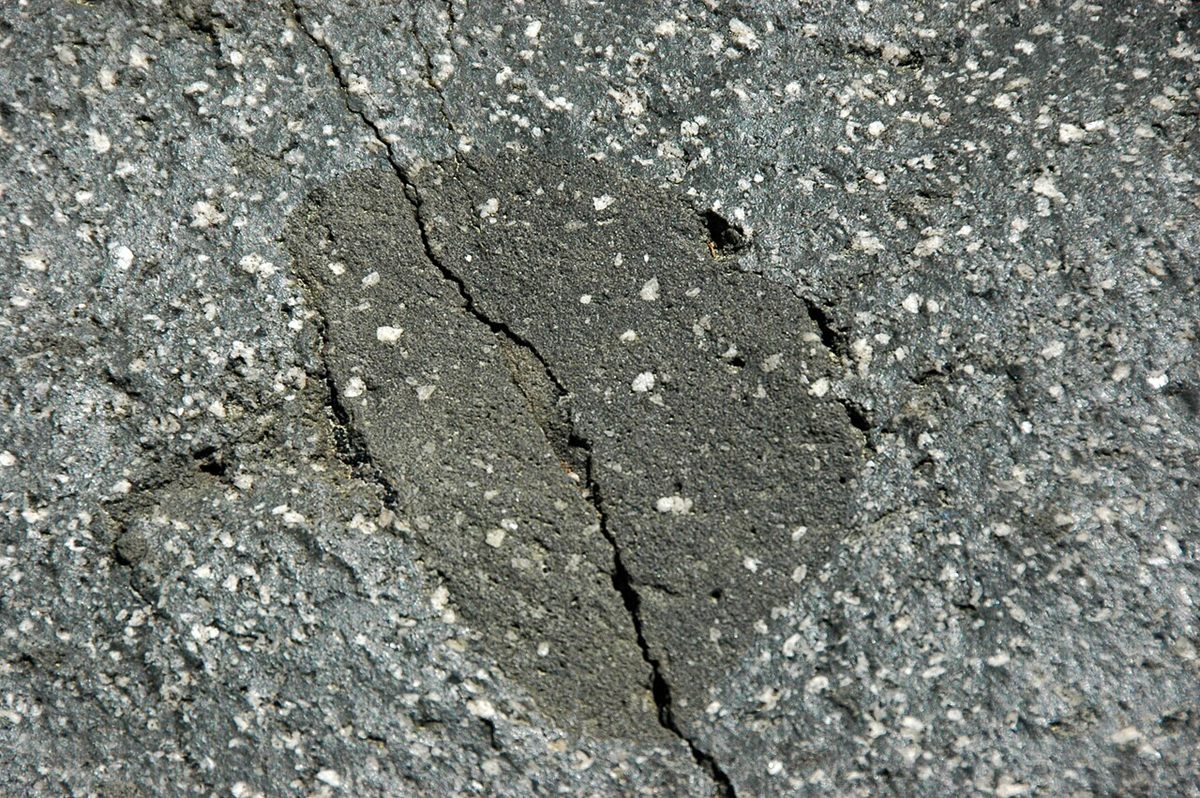
On the IUGS total alkali versus silica diagram, dacite lies between andesite and rhyolite. It is usually porphyritic, with phenocrysts of plagioclase, hornblende and biotite and often rounded, partly resorbed quartz "eyes," a sign that the magma was changing in temperature and composition before it erupted.
Lava Domes: Why Does Dacite Pile Up Instead of Flowing?
Dacite lava is so viscous and crystal-rich that it oozes out as a thick plug or dome rather than a flowing river. Domes grow until they become unstable and collapse into hot block-and-ash flows, or until trapped gas triggers an explosion. The domes built inside the crater of Mount St. Helens after 1980 are dacite.
Crustal Growth: Why Does Dacite Matter?
Dacite and its plutonic equivalent, granodiorite, approximate the average composition of the continental crust, so understanding how they form helps explain how continents grew and became differentiated over geological time.
Dacite at a Glance
| Property | Value |
|---|---|
| Type / variety | Porphyritic Plagioclase–Quartz Dacite |
| Composition | 63–69% SiO₂ • Plagioclase + Rounded Quartz + Biotite/Hornblende |
| Geology Guide group | Igneous Rocks (Plutonic & Volcanic) |
| Rock Classification | Felsic Volcanic & Glassy |
| Mohs hardness | Mohs 6–6.5 |
| Texture / habit | Porphyritic with fine light-grey matrix |
| Density | 2.50–2.68 g/cm³ |
| Lustre and cleavage | Chalky white plagioclase phenocrysts in pale grey matrix |
| Geological setting | Steep stratovolcano lava domes (e.g., Mount St. Helens) |
| Diagnostic feature (Geology Guide) | Light-to-medium grey lava-dome rock containing abundant blocky white plagioclase phenocrysts and resorbed translucent quartz eyes embedded in a pale, silica-rich microcrystalline matrix. |
| Named for | Dacia, a Roman province in present-day Romania |
| Plutonic equivalent | Granodiorite |
See Also
- Granodiorite — the plutonic equivalent
- Andesite — the less silica-rich neighbor
- Rhyolite — the more silica-rich neighbor