Gypsum
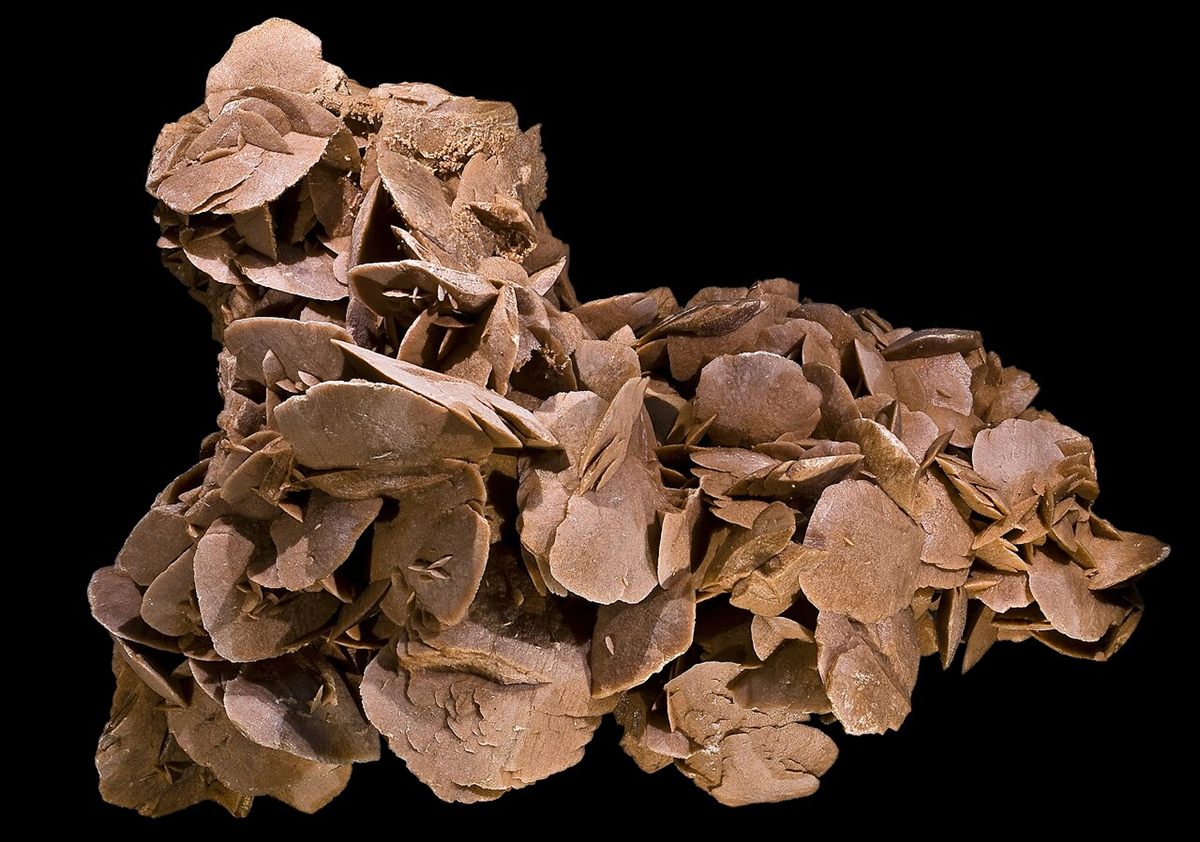
Gypsum is hydrated calcium sulfate, CaSO₄·2H₂O, a very soft monoclinic mineral with a hardness of 2, the standard for that number on the Mohs scale. Its clear crystals are called selenite, and sand-filled rosettes are known as desert roses.
Gypsum is hydrated calcium sulfate, CaSO₄·2H₂O, a very soft monoclinic mineral with a hardness of 2, the standard for that number on the Mohs scale. Its clear crystals are called selenite, and sand-filled rosettes are known as desert roses.
🪨 Geology Guide Specimen: Open Gypsum (Selenite / Desert Rose) in the CRV Science Rock & Mineral ID Guide to log the specimen, compare it with the other 8 mineral classes of Dana / Strunz Classes, and test your eye in LithoClade.
Soft and Sheet-Like: How Do You Recognize It?
A fingernail scratches gypsum, and its clear crystals peel into thin sheets that bend without springing back, unlike the elastic sheets of mica. Selenite, named for the Greek moon goddess Selene, can be water-clear with a pearly luster, and swallowtail twins are common.
Giant Crystals and Desert Roses: Where Does It Form?
Gypsum precipitates when brines evaporate, building beds of rock gypsum. In deserts, crystals grow in sand and take in grains, making desert roses. The Cave of the Crystals in Naica, Mexico, holds beams of selenite up to about 11 meters long that grew in warm, mineral-rich water.
Uses: Plaster and Drywall
Gypsum at a Glance
| Property | Value |
|---|---|
| Type / variety | CaSO₄·2H₂O • Monoclinic Calcium Sulfate |
| Composition | CaSO₄·2H₂O (Hydrous Calcium Mineral) |
| Geology Guide group | Minerals (8 Major Chemical Groups) |
| Mineral Group | Sulfates |
| Mohs hardness | Mohs 2 (reference standard for 2; easily scratched by a fingernail) |
| Texture / habit | Water-clear monoclinic blades (selenite), 'swallowtail' twins, or sand-inclusions rosettes ('desert rose') |
| Density | 2.32 g/cm³ |
| Lustre and cleavage | Vitreous-to-pearly lustre with perfect micaceous 1-directional cleavage (inelastic) |
| Geological setting | Evaporite basins, arid desert playas, and volcanic cave giants (e.g., Naica) |
| Diagnostic feature (Geology Guide) | Glass-clear monoclinic blades ('swallowtail' twins) or petal-like desert rosettes that define Mohs hardness 2—easily scratched by a fingernail and peeling into thin sheets that bend without springing back. |
| Formula | CaSO₄·2H₂O |
| Varieties | Selenite, alabaster, satin spar |
See Also
- Rock Gypsum — the sedimentary rock made of gypsum
- Anhydrite — the water-free calcium sulfate
- Calcium — the element in gypsum